Showing posts with label Wire. Show all posts

Saturday, August 18, 2018

Radio Brain Drain: An Interview With Colin Newman of Wire & Show # 736


Wire formed in London, England in 1976. And although they were inspired by and emerged from UK punk music scene, they approached music differently and were often difficult to categorize. They were post-punk before that was even a term that people used in a significant way. Their roots grew out of the Watford Art College. Colin Newman and George Gill formed an early incarnation of the band with guitarist Bruce Gilbert. They were initially known as Overload, but once bassist Graham Lewis and drummer Robert Gotobed (Grey) were added to the lineup, they would change their name to Wire. When the band was a five-piece, their sound was quite different. It was more aggressive, had more guitar solos. When George Gill was kicked out of the lineup, new material was written and a new sound began to take shape.

Wire first appeared on a live compilation album Live At The Roxy London WC2. The album was a compilation that compiled bands from the then burgeoning UK punk music scene and featured two early versions of the Wire songs “12XU” and “Lowdown.” The album was produced by Mike Thorne and through his connection to EMI, Wire would eventually get a recording contract with EMI and have music released through their Harvest label. Thorne was also on board to produce them. In fact, he would produce their first three albums. Influenced by music such as the Ramones, and early Pink Floyd, Wire pulled in different moods and tempos to create what would become known as Pink Flag. Mixing it all together, it created a combination of noise with a bit of prog rock influence, psych rock and pop. “Reuters” opens Pink Flag. The song evokes a certain mood, it pulls in elements of prog rock with an undeniable attitude. Yet the sound is difficult to describe as any one thing because it is many different things at once. With its dissonance, catchiness, crescendos and lyrics such as “On the borders, there’s movement/In the hills there’s trouble,” Wire paints a gritty picture for the opening moments of Pink Flag. Throughout the three minutes and four seconds of tension, it reaches a climax before we are taken through the rest of the album, which is a mix of songs cut to their essence sometimes lasting no longer than 28 seconds.

Pink Flag explores a landscape with 21 songs totalling about 36 minutes that deal with lyrics about media and perceptions that surround it, among other topics. “A Field Day For The Sundays” is just 28 seconds long, musically it rumbles with elements of garage rock and pop as the listener is subject to a witty, sarcastic blast of music and words dealing with suburban life. “Three Girl Rhumba,” “Brazil” and “It’s So Obvious” are some examples of Wire’s minimalist approach to the songs on this album. These songs seem like fragments, shards of music that are catchy, yet not over played. They end before they overstay their welcome. “Ex-Lion Tamer” is loaded with jagged guitar stabs and static-sounding guitar distortion. Lyrically with words such as “Next week will solve your problems/But now/Fish fingers all in a line/The milk bottles stand empty/Stay glued to your TV set,” Wire makes a comment of disillusioned people living their lives through what they see on television, instead of finding their own real life excitement. “Mr. Suit” is a barrage of music with satirical lyrics about rebellion, while at the same time celebrating it, “Strange” borrows from the fuzzy sounds of The Velvet Underground, as lyrically the song explores darker themes.

“Fragile” dives into pop with basslines that dance with melody in between scratchy guitars, minimalist drums and lyrics about a broken relationship, “Mannequin” is in a similar vein, as Newman sings lyrics about someone who “Is an energy void/A black hole to avoid.” “12XU” deconstructs rock music and lyrically seems to attack pop culture in an abstract, clever way, “Feeling Called Love” sounds inspired by the catchy roughness of The Troggs, and “Lowdown” is a slow dirge. This song was one of the first songs that Wire wrote together after George Gill left the band. The music was written by Newman based on lyrics given to him that were written by bassist Graham Lewis. The band then completed the final arrangement. This process has been one that has endured throughout Wire’s career, and while they did change up who did what for a particular song, a large majority of the songs within these three albums and in the band’s catalog have been written this way.

If 1977’s Pink Flag explored a musical landscape, 1978’s Chairs Missing ventured out into new, icy waters. Wire has always been a band that would experiment with new things and on this album, guitar pedals influenced many of the songs. Synthesizers are also featured throughout the songs. On Chairs Missing, Colin Newman was also added as another guitarist, in addition to being the lead vocalist. While he did play guitar on some tracks on Pink Flag, he primarily sang. This change was due to the textures and atmosphere that the band created on this album. Recorded once again at Advision Studios with Mike Thorne, “Practice Makes Perfect” starts off the album. The song builds with sonic landscapes as the basslines plunge into deep syrupy melodies amongst duelling guitar textures and lyrics such as “Practice makes perfect, yes I can prove it/Business or pleasure, the more that you do it.” With these words Wire displays an ethos, and an undeniable creative atmosphere in the opening moments of Chairs Missing.

“Another The Letter” is a short track, but one that features a prominent analog Oberheim sequencer that was played by producer Mike Thorne, while “Men 2nd,” “Marooned” and “Sand In My Joints” continue the ongoing nautical lyrical theme that is present throughout Chairs Missing. “Marooned” is a great idea of the atmosphere that Wire is able to create. With lyrics by Newman and guitarist Bruce Gilbert, this song floats with slow pulsating basslines, ringing guitar chords, drums that feature only hi-hats and cymbals and synthesizers/keyboards that dominate this songs landscape. Lyrically, the song tells the tale of a sailor “Adrift from Arctic waters” that captures a sense of madness that the character is experiencing in the song. “Sand In My Joints” is a fast punk song with jagged guitar sounds, grainy basslines and a guitar solo that consists of noises, the song is the first song to be recorded with bassist Graham Lewis on lead vocals. It references a theme of drowning in the physical and mental capacity with lyrics such as “I’m King Canute’s daughter/Like a lamb to the slaughter” and “I’ve got sand in my joints/I’m counting the grains/And they’re so sharp/I’m feeling the pain,” the song could take on many meanings, it is both witty and serious at the same time.

“Heartbeat” replicates an actual heartbeat and is loaded with atmosphere and lyrics that were inspired by being reviewed on stage. Additionally, the song features Flautist Kathryn Lukas to add more layers to the track. “Mercy” adds further dark textures and a sense of unease with its prog rock influences within almost six minutes time, while “Outdoor Miner” drifts into pop territory. Another Newman/Lewis composition, “Outdoor Miner” tells the story of a serpentine miner, an insect that lives in a house made of leaves. Lyrically, it may be as simple as that, but this song features abstract lyrics that can pull in different meanings. The song was extended and made longer for a single release and reached number 51 on the UK singles charts at the time. “I Am The Fly” features guitar effects that seem to replicate the movement of a fly. The song, also released as a single, was inspired by guitar pedal effects and Newman’s anti-blues obsession. It features lyrics such as “I am the fly in the ointment” and “I shake you down to say please as you/Accept the next dose of disease,” that make up this abstract outsider theme said to also have been about how punk was over. “I Feel Mysterious Today” touches on a witty lyricalness and music informed by pyschedelia and progressive rock, “From The Nursery” is a heavy hitting track in the vein of Pink Flag-era Wire, while “Used To” is layered with fuzzy guitar, melodic yet icy basslines and drums that feature only hi-hat by Robert Grey, “Too Late” ends Chairs Missing with its punky dynamics and lyrics that take on multiple meanings. It could be seen as a reference to Wire’s forward looking musical future.

Wire’s 154 was released in 1979. The album was different from its predecessors in a number of ways. The songs were longer, the tempos were slower and the experimentation with synthesizers and electronics were used in a larger way. The atmosphere that was explored on Chairs Missing was executed in more detail here and has a cohesiveness to it. Musically, that album started out similar to 1978’s Chairs Missing. Early versions of these songs can be found on the DVD/CD release of Wire On The Box: 1979, and also in the demo versions of songs found on the 2018 deluxe edition of 154. At the time of creating this album Wire had just completed a stint of live shows in Europe and the material was road tested. Tensions amongst the band were also high. They would split up shortly after this before returning with The Ideal Copy in 1987.

“I Should Have Known Better” opens 154. Sung by bassist Graham Lewis, this song is executed with cloudy sounding synthesizers and weightless sounding bass that mixes in with the guitars and precise drums. With lyrics such as “I’ve redefined the meaning of vendetta,” and “Your bite is worse than my aggression” this song also evokes an epic feeling and an emotional depth. “Two People In A Room” is a more aggressive song, while “The 15th” is more laid back with fuzzy guitars, bass that seems to levitate in between the drums as the synthesizers that come in add a sense of unease and eeriness. “The Other Window” is sung by Wire guitarist Bruce Gilbert. Lyrically the song draws on a theme of travel, which is prevalent on this album, while musically it revels in its dissonant locomotive rhythms. “Blessed State” also sung by Gilbert, deals with another ongoing theme of troubled relationships.

“A Touching Display” clocks in at almost seven minutes. Sung by bassist Graham Lewis, the song seems to concern itself with a lack of communication as it creates a heavy atmospheric complexity. The later half of the song features electric viola from avant-garde musician Tim Souster. “On Returning” follows next. This track is a more upbeat, energetic track sung by Newman as the synthesized sounds of a Yamaha CS80 is played in the background by producer Mike Thorne. The synthesized signals sound distressed as Newman sings on the topic of travel, holidays and sunburns. This song seems to pull from the opposite of the nautical theme that was prevalent on Chairs Missing. “Once Is Enough” creates its own world, mixing elements of layered vocals, the banging of various pots and pans and discordant sounds. “Map Ref. 41°N 93°W” is perhaps one of the strongest moments throughout the sonic journey of 154. When listening to the track you can hear its transcendent quality as the chorus hits with the lyrics “Interrupting my train of thought/ Lines of longitude and latitude/ Define and refine my altitude,” one can’t help but think of the lines that intersect in this song. This pop psychedelia influenced song has been described by Lewis as being a “travelogue” inspired by his travelling from L.A. to New York in 1978 and crossing the Midwest. It’s coordinates lead to Centerville, Iowa. “Indirect Inquiries” attacks with brooding, darker tones as “40 Versions” ends 154. “40 Versions” explores the idea of multiple personalities, but this song with lyrics such as “I never know which version I'm going to be/I get the feeling my mind is deceiving me” and “In between are where only edges can be seen of the spaces,”  takes on further context when considering the band’s artistic evolution from 1977-1979.

About a year after 154’s release, Wire would go their separate ways, exploring different musical projects and solo careers. They reconvened in 1985 and returned with the album The Ideal Copy in 1987, which explored more electronic sounds. These first three albums, however, show the evolution of a band driven by an undeniable creative ability. They have received critical acclaim for many of their more recent releases such as Object 47 (2008), Red Barked Tree (2010), Change Becomes Us (2013), and Silver/Lead (2017). From the early jagged sounding Pink Flag rhythms to the post punk sounds explored on Chairs Missing and finally to the atmospheric creative exploration of 154, Wire proved themselves to be different than the rest. They have continued to make interesting music that proves their ability to push creative expectations into new directions.

Checkout this interview that Dave and Adam of Revolution Rock did with Colin Newman of Wire:


Wire Play List:

1. Wire - Prove Myself (Demo) (1976 Demo - 2010)
2. Wire - After Midnight (Behind The Curtain - 1995)
3. Wire - It's So Obvious (Live) (1977.04.02 - Live At The Roxy, London - April 1st & 2nd 1977 / Live At CBGB Theatre, New York - July 18th 1978 - 2006)

Colin Newman Interview Part 1

4. Wire - Low Down (Pink Flag - 1977)
5. Wire - Mannequin (Pink Flag - 1977)
6. Wire - Ex Lion Tamer (Demo) (Pink Flag: Special Edition - 2018)
7. Wire - 12XU (Pink Flag - 1977)
8. Wire - Culture Vultures (1978 Peel Session) (The Peel Sessions Album - 1989)
9. Wire - I Feel Mysterious Today (Chairs Missing - 1978)
10. Wire - Two People In A Room (154 - 1979)

Colin Newman Interview Part 2

11. Wire - Ignorance No Plea (I Should Have Known Better) (Demo) (154: The Special Edition - 2018)
12. Wire - Once Is Enough (Demo) (154: The Special Edition - 2018)
13. Wire - Outdoor Miner (Demo) (Chairs Missing: The Special Edition - 2018)
14. Wire - French Film Blurred (Version 1) (Demo) (Chairs Missing: The Special Edition - 2018)
15. Wire - On Returning (154 - 1979)
16. Wire - Another The Letter (Live) (Wire On The Box: 1979 - 2004)
17. Wire - The 15th (Live) (Wire On The Box: 1979 - 2004)
18. Wire - I Am The Fly (Chairs Missing - 1978)

Colin Newman Interview Part 3

19. Wire - Map Ref. 41°N 93°W (154 - 1979)
20. Wire - The Other Window (154 - 1979)
21. Wire - Our Swimmer (Notre Dame) (Live) (Document and Eyewitness - 1981)
22. Wire - Song 1 (154 EP - 1979)
23. Wire - No Romans (Demo) (Chairs Missing: The Special Edition - 2018)
24. Wire - Love Ain't Polite (Demo) (Chairs Missing: The Special Edition - 2018)
25. Wire - Sand In My Joints (Chairs Missing - 1978)
26. Wire - Three Girl Rhumba (Pink Flag - 1977)
27. Wire - Dot Dash (Dot Dash Single - 1978)
28. Colin Newman - Alone (A-Z - 1980)

Colin Newman Interview Part 4

29. Colin Newman - Not Me (A-Z - 1980)
30. Wire - Read and Burn (Send - 2003)
31. Wire - Stealth of a Stork (Change Becomes Us - 2013)
32. Wire - Blogging (Wire - 2015)
33. Wire - Short Elevated Period (Silver/Lead - 2017)

Download this episode here.

On August 25th, 2018 a repeat of an episode featuring an interview with Television's Richard Lloyd aired. That show (episode 737) can be downloaded here and the play list can be found here.

Tuesday, January 14, 2014

Wire, Black Lips & Show # 491

Last week’s episode of Revolution Rock was a repeat. For those of you keeping count, each week the number increases on my post with each new episode of the program that airs. This week was the 491st episode of Revolution Rock, last week was a repeat of episode number 485 which had a feature on Windsor artist Paul Jacobs and was technically my 490th episode. Here is a video of Paul’s song "Sara’s Party" from his album Coffin Ride. You can see my play list and write on Paul Jacobs from that episode here.


Wire – 40 Versions (Rockpalast 1979)

“40 Versions” originally appeared on Wire’s 3rd full length album 154. The album was named after how many live shows that the band had played at that point. This video is from a live performance filmed for Rockpalast in 1979. It has been released officially and can be found on the release On The Box: Live 1979, it includes both a CD of audio and a DVD with video of this concert.


Black Lips – Boys In The Wood

Atlanta’s Black Lips are set to release their 7th studio album Underneath The Rainbow in March of 2014. The songs on the release are said to lean more towards a Roots Rock based sound, “Boys In The Wood” apparently being an ode to Lynyrd Skynrd and is about drinking bathtub gin and doing drugs. The band recently tweeted this about their new album "Just to clarify, our new album is not a country record, nor is it a southern rock album. It's elvis from the waist down."


The Play List:

1. Those Rogues – Wish I Could See You Again
2. Power Of Beckett – Lost Soul In Disillusion
3. Spiral Scratch – Still Rockin’
4. Lost Patrol – That’s Your Style (Early Version)
5. Sharon Jones & The Dap-Kings – People Don't Get What They Deserve
6. The Twisters – 9 Times Out of 10
7. Johnny Burnett – Tear It Up
8. Big Star – The Ballad Of El Goodo
9. Johnny West – He Was Saved By Poultry From The Shadow Of Beef
10. Neil Young – Bad Fog of Loneliness (Live)
11. Dog Day – Joyride
12. Crystal Stilts – Nature Noir
13. Speed – She’s All There
14. Space Trees – I Need You
15. Dick Dale – Surfin’ Rebel
16. Tay Falco’s Panther Burns – Snatch It Back
17. Moods – Rum Drunk
18. In-Sect – Let This Be A Lesson
19. The Black Lips – Boys In The Wood
20. Alex Chilton – I Wish I Could Meet Elvis
21. Gang Of Four – In The Ditch
22. Hookworms - ii
23. Wire – 40 Versions
24. Buzzcocks – Breakdown (Live At Lesser Trade Free Hall – July 21, 1978)
25. Buzzcocks - What Do I Get (Live At Lesser Trade Free Hall – July 21, 1978)

To download this weeks program, visit CJAM's schedule page for Revolution Rock and download the file for January 14. Or subscribe to Revolution Rock as a Podcast.

Tuesday, October 23, 2012

Wire Map Ref 41°N 93°W & Show # 427


Wire’s 1979 single 'Map Ref 41°N 93°W' is perhaps one of the coolest songs written about geography. The song was inspired by travelling through the US and the music reflects that. With its spacious guitar and melodic repetitive bassline, the song sounds like driving or travelling, it has a certain mystical quality to it. As a result it stands out amongst the tracks on 154 which was the album that it was featured on. 154 reflects a more fleshed out Post Punk Pop sound that was first displayed on their 1978 release Chairs Missing on songs such as “Outdoor Miner” and “I Am The Fly”. The songs that make up 154 are different than their previous two albums.  If Pink Flag was barebones Punk with some Garage tendencies, Chairs Missing built upon that sound with more of a New Wave sound adding more melody to the songs, 154 was the culmination of all those releases building on the sparse catchy sounds that they began developing the year before. The bands experimentation with sound and song structure always added to what made their music so interesting, as would be the case with 154. 

If you were to look up the songs actual co-ordinates Map Ref 41°N 93°W you would find Centerville, Iowa, something that was determined by Wire bassist Graham Lewis when writing the lyrics to this song. The song lyrically is a realization based on travelling through the US. Graham Lewis elaborates more in Wire … Everybody Loves A History:

"'Map Ref 41°N 93°W' - There's actually a place called something like Centretown, Iowa. The song is about travelling. I flew from L.A. to New York in 1978 and crossed the mid-west, and it went on and on and on and on. It was just incredible that this grid system was imposed on an enormous stretch of land. The other verse refers to travelling through Holland, by road, seeing all the dykes which is another grid system. 'Curtains undrawn' -- seeing these blocks of flats, like dolls houses with people sitting in them all day with curtains undrawn. It's a travelogue."

When 'Map Ref 41°N 93°W' was released as a single it did not chart. The b-side to this single was the song “Go Ahead” a song that was not featured on the 154 album, it has very foreign sounding guitar rhythms, having an overall almost industrial Joy Division sound.  The lyrics to the song bring up chart positions and media coverage, which could have been influenced by the prevented success of their “Outdoor Miner” single from 1978’s Chairs Missing, the song was prevented from having chart success due to a payola scandal at the time. But returning to the a-side, when listening to the track you can hear its transcendent quality as the chorus hits with the lyrics “Interrupting my train of thought/ Lines of longitude and latitude/ Define and refine my altitude”, one can’t help but think of the lines that intersect in this song. Wire’s longitude and latitudes may have taken many adventures musically and while this singe wasn’t a large success commercially, it displays Wire at their best at that point in time in their career in the centre of their own musical landscape.


This Week's Play List:

1. The Obits – Let Me Dream If I Want To
2. Modern Superstitions – Black Moon
3. Random Variables – High School of My Heart
4. Lou Reed - Romeo & Juliet
5. Built To Spill - Dystopian Dream Girl
6. The Stoves - Can't Slow Down
7. The Zellots - Soldiers
8. The Gruesomes - Leave My Kitten Alone
9. The Fall - Couldn't Get Ahead
10. The Pointed Sticks - The Witch
11. Papermaps – Break
12. Dum Dum Girls – Season In Hell
13. Laughing Clowns – Law of Nature
14. The Vaccines – Bad Mood
15. Wire – Map Ref. 41° N 93° W
16. Pere Ubu - Final Solution
17. Modest Mouse - Cowboy Dan
18. Neil Young - For The Turnstiles
19. Black Lips – The Ballad of Ray Marsh (Outtake)
20. Public Image Limited - Annalisa

To download this weeks program, visit CJAM's schedule page for Revolution Rock and download the file for October 23. Or subscribe to Revolution Rock as a Podcast.

Tuesday, February 09, 2010

Outdoor Miners...The Story of Wire...Show # 286


Wire formed in London, England in 1976, the group consisted of Watford Art College students. Collin Newman was on vocals/guitar, Bruce Gilbert on guitar, Graham Lewis on bass/vocals and Robert Gotobed on drums. Influenced by the emerging UK Punk scene at the time, Wire began playing live shows and gained the interest of Mike Thorne, who was a producer that had connections with EMI Records. Thorne, who was recording local Punk acts at The Roxy for a live compilation album, recorded Wire and included two of their songs on the compilation (titled Live At The Roxy). Shortly after this, Wire entered a studio to record their first full length album Pink Flag.

Produced by Mike Thorne, Pink Flag featured 21 songs. The overall sound of the album is raw with blunt sounding guitars and a certain kind of atmosphere (as all of Wire's albums feature), while combining visual elements as well as musical ones. Lyrically the album is contains intelligent and contextualized lyrics. The album was recorded almost entirely of live takes with no overdubs. The only songs that featured overdubs were parts of the song "Lowdown" and the song "Strange". Some of the songs on the album are thirty seconds long, but the overall cohesiveness of the album is great. Pink Flag features songs such as "Three Girl Rhumba", "Ex-Lion Tamer" a song about Batman, "A Field Day For The Sundays", and "Champs" a song seemingly about car racing. The 21 song album is a series of short music explosions combined the stripped down elements of Punk, Power Pop, and Pop. The songs are so catchy and short that the songs are cut to their bare essentials and then usually end. Other great tracks featured on Pink Flag are "Fragile", "12 X U", "It's So Obvious", and "A Feeling Called Love". The albums cover is credited to Graham Lewis and Bruce Gilbert. It is a photo of a pink flag on a flag pole, blowing in the wind that was seen (minus the flag) on the way to a live show. The album received critical acclaim, but in terms of sales it did not do very well.

Wire's second full length album, Chairs Missing would be released in 1978. The album featured what some people may call more of a New Wave sound. The production was different, the band experimented with their sound branching out from the sound of Punk, incorporating more Pop and dimension to their sound. Influences of Psychedelia and 70's Prog Rock are apparent in addition to the production techniques of Mike Thorne (who also played keyboards on the album). Chairs Missing features songs such as the dreary "Practice Makes Perfect", the sparse and textured "French Film Blurred", the fast paced keyboard rocker "Another The Letter" and the song "Heartbeat", which literally replicates a heart beat (musically). In addition to these tracks (and others), there are the songs "I Am The Fly", which is a song featuring strange, spring sounding guitar effects and "Outdoor Miner". While "I Am The Fly" was recorded prior to the album and a great pop song, the song "Outdoor Miner" is also an interesting piece of Pop music. Lyrically the song, which is about a serpentine miner, was written by bassist Graham Lewis and the music was written by Collin Newman. EMI Records liked the song so much that they asked Wire to extend its length (which was 1:44), which they accepted. Adding a middle section that featured Piano, Wire released "Outdoor Miner" as a single and it started climbing the UK singles charts. It would only go to #51. Overall Chairs Missing would go to #48 on the UK album charts.

Wire began touring, basically non-stop. They also made their first US appearance in the summer of 1978. Shortly after, in March Wire began a European tour with Roxy Music. Wire were at a high creative peak at this point and their live shows reflected that. Most of the shows contained new material that had not been recorded, although most of it would appear on their next album 154. Named after the number of gigs the band had played at that point, 154 showed Wire once again going into a different direction. The album was very melodic, smooth sounding and features more synthesizers and keyboards than any other previous Wire album. The album features songs such as "Two People In A Room" and "The 15th", which are short Wire songs similar to their earlier albums, but display a new sense of structure. There are also other songs, that are often moody and dramatic such as "A Touching Display" and "A Mutual Friend". The album also features yet another Pop song, like only Wire could make. The song "Map Ref. 41°N 93°W" is a song that picks up where songs such as "Outdoor Miner" left off, the song is a multi-textured and layered track. This album shows off the evolution process of the band, which if you are comparing to their other albums is highly evolved. They started out with the stripped down, bare-essential Rock/Punk with Pink Flag, brought more Pop and experimentation with Chairs Missing, and finally developed into a the album that was 154. Initial copies of 154 came with a bonus four track EP, that featured the songs "Song 1", "Get Down (Parts 1 and 2)", "Let's Panic Later" and "Small Electric Piece".

154 (1979) & Map Ref. 41°N 93°W Single (1979)

Following the release of 154, Wire began having creative differences which would eventually result in the end of the first period of the group. The band played a live show at the Electric Ballroom in 1980, which was a chaos fueled show where the band played several new songs (some of which were never recorded in the studio). The show was recorded on an 8-track recorder that was not set up properly, so the mix from the show was mixed in a distorted mix with two tracks. Released as Document and Eyewitness in 1981, this live album marked the end of Wire. After the release of this album, Wire took a five year break.

In 1985, Wire came back together as a band, this time fully integrating electronic instruments such as synthesizers, keyboards, drum machines and sequencers into their music, even more so than before. The first evidence of Wire's new sound came in 1986, in the form of an EP, titled Snakedrill EP. A full length album came in 1987, that would be titled The Ideal Copy. The album featured Wire's new approach to music via more electronic music based instruments (some have said that it resembles New Order), and it helped gain them more exposure in the US. After a US tour, another album followed in 1988 titled A Bell Is A Cup...Until It Is Struck. The album, which has been called by some as one of Wire's best albums, takes the bands electronic based music into a Pop music style with stream of consciousness lyrics.


The bands next album It's Beginning To And Back Again was released in 1989. The album was a collection of reworkings of live versions of songs from their album A Bell Is A Cup...Until It Is Struck. "Eardrum Buzz" from this album became the highest charting single Wire ever had in the US going to #2 on the US Modern Rock charts (it went to #68 in the UK). After Wire's next album Manscape, drummer Robert Gotobed would leave the group due to all the digital techniques that they began to use. For Manscape (which was released in 1990) Wire embraced more studio and computer based recording techniques. Without Gotobed on drums, Wire dropped the letter "E" from their name and became Wir. They released an album titled The First Letter in 1991 as Wir. This album which many think was ahead of its time, featured electronic soundscapes and not many vocals. The band went on a hiatus again after this.  The individual band members pursued solo careers.

In 1999, Wire began rehearsing again with Robert Gotobed (who started going by his original name Robert Grey) back on drums. In 2000, Wire played London's Royal Festival Hall in the UK, a short tour of the US followed. During this tour a large majority of the bands live set was older Wire material. Following more touring Wire decided to continue as a band. Their first recording in what can be called the third phase of Wire (the first being 1976-1980, the second being 1985-1991) was an EP called Read & Burn 01. Released in 2002, the EP was the first in a series of Wire releases, the EP demonstrated a sound similar to Pink Flag-era Wire. The second EP came the same year and was titled Read & Burn 02. The EP was just as loud and angry as the previous EP (Read & Burn 01). Send was released in 2003. It featured seven songs from the Read & Burn EP's in addition to four new tracks.

In 2006 some of Wire's earlier albums were re-issued and in 2007, Pink Flag was re-issued. These newer releases featured no bonus tracks (unlike the 1989 and 1994 versions) because the band felt that bonus tracks distorted the original artistic statements that they intended to make. A third EP, titled Read & Burn 03 was also released in 2007. The EP had a sound reminiscent of the sound created during 154-era Wire. Object 47 was released in 2008. This album marked an number of things in the bands career. First it was the first full length album that did not feature guitarist Bruce Gilbert. Second it marked the 47th release in Wire's discography (hence the title of the album). The overall sound of the album is extremely catchy. The album features songs such as "One Of Us" a melodic Post-Punk song and the stop and start song "Perspex Icon". Wire is currently working on a new album. 

More information:

Pinkflag.com (Wire's Official Website)
The Making of Pink Flag (Mike Thorne's Website)
The Making of Chairs Missing (Mike Thorne's Website)
The Making of 154 (Mike Thorne's Website)
Wireviews.com

This Week's Play List:

1. Wire - Dot Dash
2. Wire - A Field Day For The Sundays
3. Elvis Costello - Less Than Zero
4. The Rezillos - Mystery Action
5. Lost Patrol - Outta My Mind
6. The Perks - Escape
7. Blue Peter - Living In The Eighties
8. Crash 80s - Thrills
9. The Diodes - Tired of Waking Up Tired
10. Klark Kent - Don't Care
11. Subway Sect - Exit No Return
12. Shrink - Valid or Void
13. Wreckless Eric - Take The Cash (K.A.S.H.)
14. Colin Newman - & Jury
15. The Stranglers - Walk On By
16. Public Image Limited - Chant
17. Raptors - Running Away
18. Relief Maps - The Water Song
19. XX Teens - Only You
20. Devo - Girl U Want
21. The Rapture - Whoo! Alright Yeah.. Uh Huh
22. Radio 4 - (Always A) Target
23. Wire - The 15th

To download this weeks program, visit CJAM's schedule page for Revolution Rock and download the file for February 9th. Or subscribe to Revolution Rock as a Podcast.

Tuesday, July 21, 2009

Album Art Clash!....Show # 258

This week my program featured a selection of some of my favourite album artwork. This included single artwork and album artwork. There was also a co-host this week, Adam from Fear of Music (on Tuesdays from 1-2:30 PM). I was also featured as a co-host on his radio program where he also did a show on artwork. You can check out his list on his Fear of Music blog. Below is a description of the choices made as well as some that did not make it onto my show this week due to time restraints.

Album Artwork Selections:

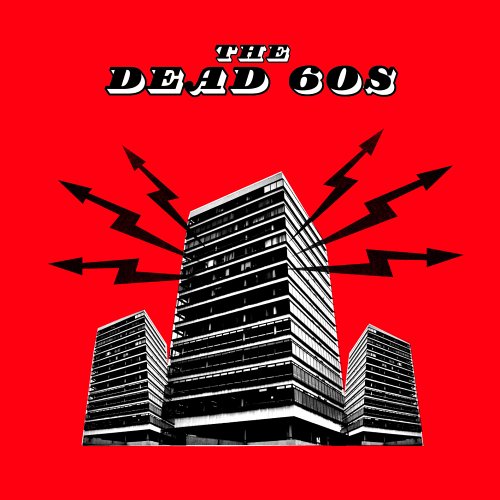
The Dead 60s - The Dead 60s (2005)


This album was released in the UK in 2005 and several months later in the US. The track listing differs from the UK and US versions and so did the artwork. The actual artwork is a pop art styled version of an actual building in Liverpool, where the band comes from. The Concord House is the office building on the cover and it is located near the Liverpool Lime Street railway station. The UK version of the album features a red background while the US version has a yellow one.


XTC - Go 2 (1978)


Designed by a group of British album artwork designers known as Hipgnosis, Go 2 features a different kind of artwork. In fact there is an essay on the front of the albums cover instead of any picture or artwork. Originally released in 1978, this album featured a different track listing in the UK than in the US. The albums title (Go 2) was named in part due to a Japanese strategy game called Go. The two was put after the word go because it was the bands second album.


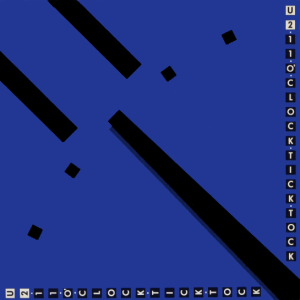
U2 - 11 O’clock Tick Tock (Single 1980)

11 O’clock Tick Tock was U2's third single. It was released just before the release of their first full length album Boy. Produced Martin Hannett (known for his work with Joy Division), this single featured the bands early post punk influenced sound. The actual artwork features a close up picture of a clock (pointing to 11) with a blue/purple coloured background. Along the side of the single cover the words "U2 11 O’clock Tick Tock" are featured in blocks. Three versions of the song exist, all of which are different takes of the song. There is the original single mix, a slightly longer mix for a Martin Hannett tribute album and a version of the Pride single.


Devo - Be Stiff EP (1977)


The artwork for this six track EP was created by Barney Bubbles (a graphic designer) and Brian Griffin (a photographer). The cover featured a man holding up a letter "E" with his hands over the top of his head. The EP was produced by Devo themselves and features some different versions of songs that would be found on the bands first album. "Jocko Homo", "Mongoloid", "(I Can't Get Me No) Satisfaction", and "(I Saw My Baby Gettin') Sloppy". There are also two songs "Be Stiff" and "Social Fools" not featured on any of the bands original albums. All of these tracks can now be found on various compilations, anthologies and reissues of the bands albums.


The Cure - Boys Don't Cry (1980)


This album was actually a US version of the bands first album Three Imaginary Boys. It also features a different track listing than the original UK album. The albums cover features palm trees, a sun and burned/frayed looking bottom. The cover always reminds me of Egypt, maybe it's because of the song "Fire in Cairo", but either way it is an interesting album cover. This album is also an early representation of the band, who would later be known as Gothic. At this point in the bands career they were making Punk/New Wave sounding tracks.


Franz Ferdinand - You Could Have It So Much Better (2005)


The album artwork for Franz Ferdinand's second album is similar to artwork by Russian avant-garde photographer Alexander Rodchenko. It was inspired by his portrait of Lilya Birk. The album itself reflected a more punk inspired Franz Ferdinand than their first album.


The Diodes - Action-Reaction (1980)


The third album by Canadian punk band The Diodes showed off a more Power Pop and Hard Rock style. The albums cover is a variety of space looking ray guns, one is missing. It is another interesting cover from a Canadian band that is underrated. The album will be re-issued on CD in September. Currently it is available on itunes.


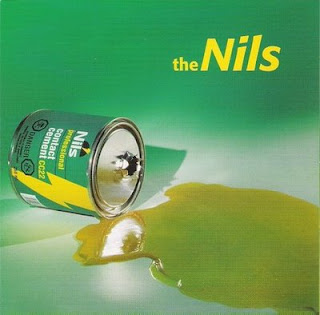
The Nils - Green Fields in Daylight (1997)


This album is in fact a compilation album from the Canadian punk and pop band The Nils. The Montreal band lasted from 1978 until 1994. The band started at a young age by Alex Soria and his brother Carlos. The compilation features more than 20 tracks collecting early demos, recordings, songs from the bands EP's and full length album. The artwork on the albums cover is a spilled over can of contact cement. Shades of green dress the albums cover.


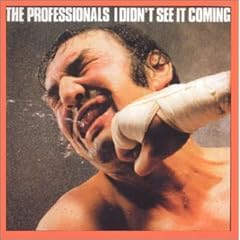
The Professionals - I Didn't See It Coming (1981)


Formed by Steve Jones and Paul Cook (of Sex Pistols), The Professionals released I Didn't See It Coming in 1981. The album was actually a re-recorded version of the bands first album which was never released (it was eventually released in 1990 and in 1997). The cover is pretty simple, a guy getting punched in the face. An effective and eye catching album cover.


The Damned - Don't Cry Wolf (Single 1977)


Don't Cry Wolf was a single taken from the bands second album Music For Pleasure. This album would be The Damned's last with guitarist Brian James, it was also produced by Nick Mason (of Pink Floyd). The B-side to Don't Cry Wolf is the song "One Way Love". The B-side (which is also on Music For Pleasure) has some almost country like guitar licks on it. The song is an excellent example of the guitar work of Brian James. The single artwork features what looks like scalpels in a star shaped pattern surrounding the bands name and the songs title.


The D4 - 6Twenty (2001)


The 2001 album from New Zealand Garage Rockers, The D4 was named after a guitar amplifier. The cover features the band members silhouetted in black and red, while guitarist Dion Palmer aims his guitar in a gun-like fashion. The album itself is great representation of high energy Rock and Roll. The album had six singles released, none of which charted in the US. Some singles from the album did make it on to the UK singles charts.


Queens of the Stone Age - Era Vulgaris (2007)


The artwork for Era Vulgaris features two light bulb characters, one which is a green light bulb that has an eye patch (known as "Patchy") and Bulby a yellow bulb smoking a cigarette. The light bulb cartoons were created by Liam Lynch and the overall art direction was done by Jason Nato & Doug Cunnigham of Morning Breath Inc. Josh Homme has stated in an interview that light bulb represents an idea that you think is really great, but in reality it is not. Era Vulgaris was the fifth album by Queens of the Stone Age.


Sloan - Navy Blues (1998)


Sloan's follow up to 1996's One Chord To Another was Navy Blues. The album featured songs such as "She Says What She Means" and "Money City Maniacs". Navy Blues combined elements of the bands 60s Pop/Beatles style with 70s Hard Rock. The albums artwork features a picture of each band member separated by lines that are similar to work done by Saul Bass (American graphic designer and film maker). For an animated, filmic extension of the album cover check out the video for "Money City Maniacs".


Neil Young - On The Beach (1974)


This was an album that has interesting things to pick out on the cover. There is part of what looks like a Cadillac buried in the sand, a patio table and chairs, a person out in the distance and a hanger hanging under the umbrella (there are more things too if you look closely). This album was originally released in 1974 and for a long time it was out of print on vinyl and it not available on CD. In 2003 it was finally released on CD.


Joe Strummer & The Mescaleros - Streetcore (2003)


The artwork to the third album by Joe Strummer & The Mescaleros is credited to Art Dog and Joe Strummer. The album which was released posthumously showed the Mescaleros returning to a more Rock/Clash like form. Streetcore featured songs such as "Coma Girl", "Get Down Moses", "Long Shadow" and "All In A Day", all of which display differing musical styles while still staying true to the edge of Rock and Roll. The cover displays a coil that looks like it is dripping, five black stars placed in two different locations on a bright orange background.


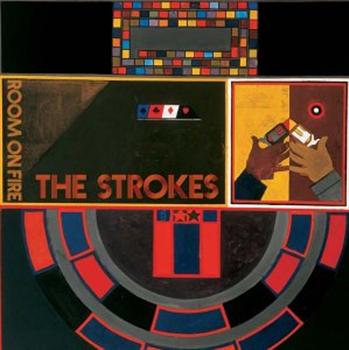
The Strokes - Room On Fire (2003)


The Strokes second album was panned by critics when it was originally released. The albums cover features what looks like a black jack card table (or some sort of card table that would be used in a casino), two hands of opposing colours firing at each other and the bands album title. The album musically was influenced by New Wave music such as Talking Heads, The Cars and the bands previous Garage Rock influences.


The Kinks - Kink Kontroversy (1965)


Originally released in 1965, Kink Kontroversy mixed early Kinks Garage Rock style with Blues. The albums cover features five squares. The main square features a close up Dave Davies playing guitar. Atop of it there are four squares each of which has a different Kinks band member inside. The albums title is a play on the bands onstage antics, and fighting which led to them being banned in the US.


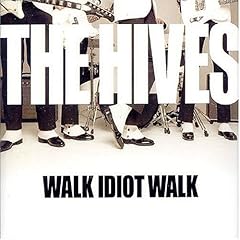
The Hives - Walk Idiot Walk (Single 2004)


The single to the Hives song "Walk Idiot Walk" featured two B-sides "Genepool Convulsions" and "Keel Hauling Class of '89". The single is a song that comes from The Hives 2004 album Tyrannosaurus Hives. The single also contains the music video made for the song. The video features the band in a white room with a scrabble board that changes letters in the background. The cover is a shot of the band members holding their instruments on a white background, which is a similar style to the music video for the single.


Sex Pistols - Nevermind The Bollocks (1977)


The one and only album by Sex Pistols featured cut out ransom styled lettering. In the UK the letters were outlined in pink, while the background is yellow. For the US release the colours differ. The letters are outlined in green with a light pink background. The cover was designed by Jamie Reed and has since been copied by numerous punk bands. Without an album like this, who knows what rock music would sound like today?


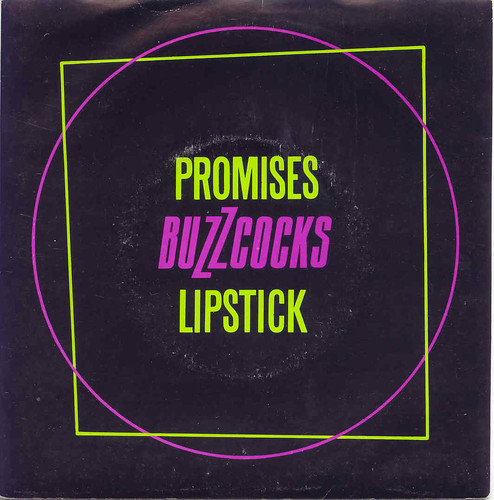
Buzzcocks - Promises (Single 1978)


All of Buzzcocks early singles have interesting artwork designs. Promises is one of my favourites, it is designed in a pop art style and features a green square outlined by a purple circle on a black background. The song was recorded just after the release of the bands second album Love Bites and was originally titled Children. The song was also added to the Singles Going Steady compilation in 1979.


Wire - Chairs Missing (1978)


This album cover is simple, there are no chairs on the front cover and there is a table with purple flowers on top of it. There are also brownish grey curtains in the background. The covers concept was created by Graham Lewis and Colin Newman (of Wire), while the cover photo was taken by Annette Green and the overall art direction was created by Brian Palmer. The albums title is derived from a British slang for a person that is a little bit disturbed. For example, that man has some chairs missing from his front room. The album featured more pop oriented compositions than the bands previous effort Pink Flag.


The Clash - London Calling (1979)


The artwork is to 1979's London Calling is now seen as an iconic image. The cover is reminiscent of Elvis Presley's first album and they both employ a similar font style. Elvis's album features Elvis raising his guitar up while London Calling features Clash bassist Paul Simonon smashing his bass down to the floor. The photograph on the cover was taken during a Clash concert in New York by Pennie Smith. The graphic design was done by Ray Lowry. I enjoy almost all of The Clash's album covers and single artwork, some other interesting ones to check out are Radio Clash, Bank Robber, Magnificent Seven and of course their other album covers.


Other interesting artwork:

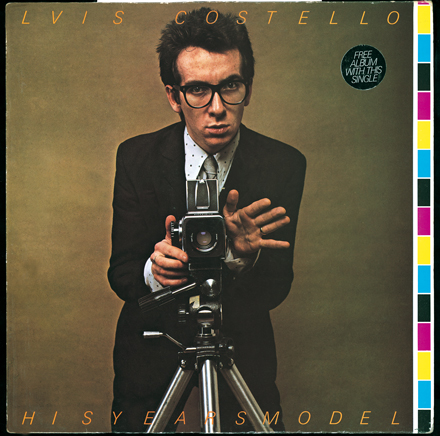
Elvis Costello & The Attractions - This Year's Model (1978)


The artwork to this album cover was designed by Barney Bubbles. The concept is simple, Elvis Costello standing in front of a camera with his right hand sticking out, the background is a golden brown colour. The US version of this album did not have the songs "(I Don't Want To Go To) Chelsea" and "Night Rally", instead of those tracks the song "Radio, Radio" was added. A slightly different album cover was also used for the US version.


Talking Heads - Take Me To The River (US Single 1978)


Talking Heads were another band that had interesting album covers. The US version for the song Take Me To The River is one of my favourites. The song was actually a cover of a song that was originally by Al Green. The cover of the US single was of a gospel tabernacle and lttle wavy lines at the bottom for the water. The UK version was a variation of the cover for the album More Songs About Buildings and Food, which is also interesting. Other great covers by Talking Heads include the Fear of Music album cover, and covers for the singles Crosseyed and Painless, Road To Nowhere, Life During Wartime and Psycho Killer.


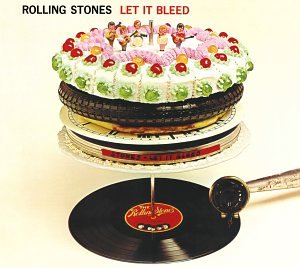
Rolling Stones - Let It Bleed (1969)


Let It Bleed was a follow up to 1968's Beggar's Banquet. There are so many things that can be picked out on the cover. The cover displays a picture of a record player and spindle, on top of the spindle there is a variety of things stacked up. There is a stack of records, a reel to reel tape, a tire, a pizza and a cake. On top of the cake there are little figures of each band member.


The Beatles - A Hard Day's Night (1964)


You cannot discuss artwork by rock bands without bringing up The Beatles. While they have many covers which are seen as innovative, There are two in particular that have always been interesting to me. First, The UK version of A Hard Day's Night which was the soundtrack to the film of the same name. The US version featured a different track listing. The UK cover features photos of every Beatle member in different poses. The US version featured four large photos of each Beatle, from the nose up. This was also the very first full length album by The Beatles that had all original compositions on it.


The Beatles - The White Album (1968)

My second choice for Beatles artwok is one of my favourite albums ever, The White Album. The artwork is also quite simple and inventive. Designed by Richard Hamilton the cover was white, with the bands named lightly showing on the cover. While the album was originally going to be called A Doll's House, the band decided on just calling it "The Beatles", but because of the artwork it is usually referred to as The White Album. Since it's release numerous bands have had self titled albums with a plain colour for its cover.


The Play List:

1. Dead 60s - Riot Radio
2. XTC - Meccanic Dancing (Oh We Go)
3. U2 - 11 O'Clock Tick Tock
4. Devo - Be Stiff
5. The Cure - 10:15 Saturday Night
6. Franz Ferdinand - You Could Have It So Much Better
7. The Diodes - Polaroid
8. The Nils - Freedom
9. The Professionals - Madhouse
10. The Damned - Don't Cry Wolf
11. The D4 - Come On!
12. Queens of The Stone Age - Make It Wit Chu
13. Sloan - Stand By Me, Yeah
14. Neil Young - Walk On
15. Joe Strummer & The Mescaleros - Coma Girl
16. The Strokes - I Can't Win
17. The Kinks - The World Keeps Going Round
18. The Hives - Genepool Convulsions
19. Sex Pistols - Pretty Vacant
20. Buzzcocks - Promises
21. Wire - Outdoor Miner (Single Version)
22. The Clash - Rudie Can't Fail

To download this week's show visit the CJAM archives and select the files 10:00 AM and 11:00 AM on July, 21st 2009.

Wednesday, January 31, 2007

A Question of Degree ... Show # 131

This week I played songs by The Stooges and Awesome Color. The song I played by The Stooges, "My Idea of Fun" is a newly recorded Stooges track that will appear on their forthcoming release The Weirdness in March; you can hear a streamed version of the song at their myspace page. Awesome Color is a band that is originally from Ann Arbor, Michigan, but relocated to Brooklyn. The band sounds like a combination of The Stooges, Black Sabbath, and Mudhoney. I played "It's Your Time" from their self titled 2006 release.

Finally I played two songs by a band called The Love Me Nots. The two songs, "Move in Tight" and "Voice in My Head" were from their album In Black & White. The band is a combination of various elements. They are influenced by garage rock bands such as the Sonics, and the Fuzztones, but also by surf music such as Dick Dale. They also have some punk in them, they use a lot of organ on their songs which reminds me of Elvis Costello & The Attractions. The Love Me Nots are a very cool band from Arizona.

This page used to contain a post about the band Wire.  A reworked more informative post on the band can be found in my Outdoor Miners Post

Here's the play list:

1. The Adverts – one chord wonders
2. The Only Ones – another girl, another planet
3. The Stooges – my idea of fun
4. The Furies – what do you want me to be
5. The Enigmas – teenage barnacle
6. Tell-Tale Hearts – I get up in the morning
7. The Damned – liar
8. Generation X – your generation
9. Sex Pistols – (I’m not your) stepping stone
10. Buzzcocks – noise annoys (BBC)
11. Ramones – it’s not my place (in the 9 to 5 world)
12. The Gruesomes –whirlpool
13. Pointed Sticks – waiting for the real thing
14. Gang of Four – armalite rifle
15. The Police – driven to tears
16. The Saints – looking for the sun
17. The Clash – clampdown
18. The Clash – rocker’s galore…UK tour
19. Marble Index – what we need
20. Sloan – work cut out
21. Wire – two people in a room
22. Awesome Color – it’s your time
23. The D4 – peepshow
24. The Rapture – crimson red
25. The Love Me Nots - move in tight
26. The Love Me Nots - voice in my head
27. The Hives - no pun intended