Showing posts with label Richard Hell and The Voidoids. Show all posts

Saturday, February 06, 2021

Destiny Street Complete: An Interview With Richard Hell & Show # 868

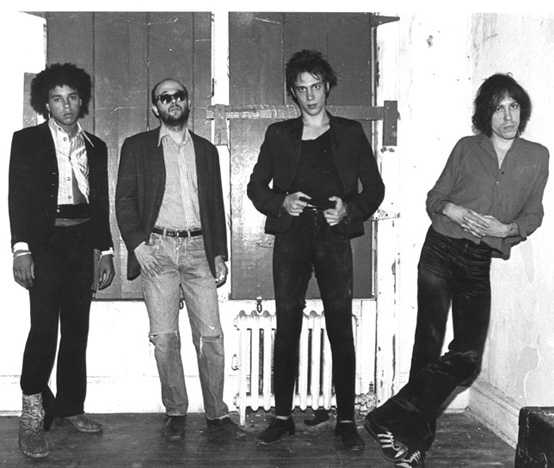
Originally released in 1982 on the Red Star label, Destiny Street is the second and final album by Richard Hell & The Voidoids. It followed their classic debut released on Sire Records in 1977, Blank Generation.  In between this time, Richard Hell & The Voidoids toured the UK for 19 dates with The Clash. A single also came out in 1979, recorded and produced by Nick Lowe (The Kid With The Replaceable Head/I’m Your Man) on Jake Riviera’s Radar Records. However, Hell didn’t really like to tour. The Voidoids would still tour, but infrequently and only when they had to. Due to this, the band lineup would change often.  When it came time to record the follow up to Blank Generation, The Voidoids featured original members Richard Hell on bass/vocals and Robert Quine on guitar, Naux (Juan Maciel) on second guitar and Fred Maher on Drums. Destiny Street was recorded and mixed in about a three-week span in 1981. Richard Hell was also in a different state at this time, finding it difficult to go into the studio on some days. As stated in his autobiography I Dreamed I Was A Very Clean Tramp he was “Strung so tightly … couldn’t tolerate the thought of stepping outside.”

The album opens with “The Kid With The Replaceable Head." Attacking at a wilder pace than the 1979 single version, the song also has an undeniable swing to it. As the solos trade off and Hell’s bass drives in between, Fred Maher’s drums deliver an undeniable groove. With lyrics such as “They say he's dead, he's my three best friends/He's so honest that the dishonest dread” this song, Hell’s attempt to write a pop song, starts off Destiny Street questioning identity and being honest with yourself. “I Gotta Move” is a reinterpreted and energetic version of a song originally by The Kinks. It is also the second track on Destiny Street and the first of three covers. “Going Going Gone” a song originally by Bob Dylan follows.  The song brings down the tempo contrasting with the earlier up-tempo tracks. Everything about this track excels. The guitar work by Quine, the bass and vocals by Hell deliver an honesty and desperation that penetrates not only this track, but also all of Destiny Street. “Lowest Common Dominator” drives with pseudo disco rock grooves, the guitar work by Naux is scathing as it accelerates in the verses (he trades off solos with Quine later on in this track) and with the propelling drums and bass that really digs in with the vocals. Lyrically, with words such as “Acknowledging at all that you have had an effect/Well, that alone will make you feel so tough/Oh, we'll just leave you knowin'/Your worm insides are showin'/And that's a revenge enough,” “Lowest Common Dominator” delivers seething lyrics about the dominating, two face type of person. “Downtown At Dawn” flirts with 80s styled New York funk. The lyrics operate like a riddle with a poignancy as the listener wanders in and out of the late 70s/early 80s New York nightlife and themes of alienation, anxiety and despair paint themselves throughout the lyrics.  

“Time” is one of Richard Hell’s best songs. Both lyrically and musically this song sucks the listener into its vortex, not in an aggressive way, but more in a jangly, trance-like way. While there is an influence of The Byrds found here, the song is completely its own. The guitar work and solos on this song and on “Going Going Gone” by Robert Quine are in a class of their own. Lyrically, the song with its strong melodies and poetically honest lyrics such as “Only time can write a song that's really really real/The most a man can do is say the way its playing feels/And know he only knows as much as time to him reveals” are enduring and thought provoking. “I Can Only Give You Everything” is the third cover found on Destiny Street and it captures the spirit of “real gone rock and roll,” which is the sound that Hell wanted to achieve with Destiny Street. This on edge version of a song originally by Them is described in the CD linear notes to Destiny Street Complete as compelling, being reduced "To a marching song, strung out as if the guitars were razor wire threaded through the knotted strand of drums in cartoony shapes against the void." It ends in complete chaos. “Ignore That Door” continues the themes present on the album. It hustles with conviction, an anti-drug message, duelling guitar solos and plenty of ooh’s. 

“Staring In Her Eyes” surrenders itself to the lyrics and music. It is a mid-tempo love song that at one point states “Stare like a corpse in each's eyes/Till you never want to come alive and rise.” The final track of Destiny Street is the title track. It pulsates with funkier bass and drum rhythms. It was a collaboration that came to be in the studio as Hell intertwines a tale throughout about meeting a younger version of yourself and being seduced by that younger self. The song itself ties in many themes found on Destiny Street, but also operates as a cautionary tale about the temptations of the past and future as stated in the lyrics “Playing for the past or future/Is playing with a fool's paradise.”  

The new Destiny Street Complete version of this album released by Omnivore Recordings presents every version of the album available. It is a remastered, remixed and repaired reissue. It features the original 1982 Destiny Street remastered, the repaired version from 2009, which featured Hell doing new vocals over the bed tracks (of drums, rhythm guitar, bass), guitar contributions from Marc Ribot, Bill Frisell and Ivan Julian and the 2021 remixed version of Destiny Street. When the three of the original master tapes were found in 2019, the album was remixed by Richard Hell, Nick inner of the Yeah Yeah Yeah’s and engineered by Erin Tonkin. In addition to this, there are also demos, singles and some outtakes. There is a studio outtake version of the song “Don’t Die” which is a moment captured in time that has an urgency and focus that utterly captivating.  

When it was originally released, Richard Hell was dissatisfied with Destiny Street. The master tapes were said to have been lost and the album mix “was a morass of trebly multi-guitar sludge." When Destiny Street was released in 1982, it did receive some good critical reviews, but it never quite had the impact that it should have. Now in 2021, we can look at the album and its evolution. The remixed version of the album is great. It revitalizes Destiny Street, enhancing the best moments that were lost in the original 1982 mix. It gives the album and these songs a new life. You can even get a remixed 11-track version of the album on on its own vinyl via Omnivore or you can listen to the Destiny Street Complete version. But, you decide. There are many paths you can take to rediscover this underappreciated classic by Richard Hell & The Voidoids, but whatever path you take all roads lead to Destiny Street.  

Listen to an interview that Revolution Rock did with Richard Hell:

Destiny Street Complete Playlist (Originally Aired On February 6th, 2021):  

1.  Richard Hell & The Voidoids - The Kid With The Replaceable Head (Destiny Street Remaster) (Destiny Street Complete - Omnivore Recordings - 2021)
2.  Richard Hell & The Voidoids - Staring In Her Eyes (Destiny Street Repaired) (Destiny Street Complete - Omnivore Recordings - 2021)
3.  Richard Hell & The Voidoids - Time (Destiny Street Remixed) (Destiny Street Complete - Omnivore Recordings - 2021)
4.  Richard Hell & The Voidoids - Don't Die (Single Version) (Destiny Street Complete - Omnivore Recordings - 2021)

RICHARD HELL INTERVIEW PART ONE

5.  Richard Hell & The Voidoids - Love Comes In Spurts (Blank Generation - Sire Records - 1977)
6.  Richard Hell & The Voidoids - I'm Your Man (1977 Demo) (Time - Matador Records - 2002)
7.  Richard Hell - The Hunter Was Drowned (Time - Matador Records - 2002/R.I.P. - ROIR - 1984)
8.  Dim Stars - Baby Huey (Let's Dance) (Dim Stars - Caroline Records/New Rose Records - 1992/Spurts: The Richard Hell Story - Rhino - 2005)

RICHARD HELL INTERVIEW PART TWO

9.  Richard Hell & The Voidoids - You Gotta Lose (Another World EP - Ork Records - 1976)
10.  Neon Boys - That's All I Know (Right Now) (Spurts: The Richard Hell Story - Rhino - 2005)
11.  The Heartbreakers - Hurt Me (Demo) (Time - Matador Records - 2002/R.I.P. - ROIR - 1984)
12.  Television - Blank Generation (Live) (Spurts: The Richard Hell Story - Rhino - 2005)
13.  Richard Hell & The Voidoids - Ignore That Door (Live) (Funhunt: Live at CBGB's & Max's 1978 and 1979 - ROIR - 1990)
14.  Richard Hell & The Voidoids - Lowest Common Dominator (Destiny Street Remaster) (Destiny Street Complete - Omnivore Recordings - 2021)
15.  Richard Hell & The Voidoids - Going Going Gone (Demo) (Destiny Street Complete - Omnivore Recordings - 2021)
16.  Richard Hell & The Voidoids - Funhunt (Demo) (Destiny Street Complete - Omnivore Recordings - 2021)
17.  Richard Hell & The Voidoids - Destiny Street (Destiny Street Remixed) (Destiny Street Complete - Omnivore Recordings - 2021)

Wednesday, February 03, 2021

Coming Up On Revolution Rock in February 2021!

It’s February, which means that throughout this month Revolution Rock will devote each episode that airs in February to theme based programming. Dave and co-host Adam have some cool programming lined up ranging from reggae, dub, blues, jazz, hip hop, punk, post-punk, garage and surf.  Revolution Rock airs every Saturday from 7-9 PM EST on CJAM 99.1 FM in Windsor/Detroit. It can be streamed and downloaded cjam.ca. This year is also a first for the show as we have now become syndicated with other campus stations across Canada. Revolution Rock and its programming can now also be heard on CFUV 101.9 FM in Victoria, BC (Wednesdays 7-9 AM PST), on CKUW 95.9 FM in Winnipeg (Mondays 2-4 AM CST), on Caper Radio/CJBU FM in Sydney, Nova Scotia (Tuesdays 12-2 PM AST) and on CFRC 101.9 FM in Kingston, ON (Thursdays 9-11 PM EST).  

Continue reading to find out about this year's Theme Month schedule:

Destiny Street: A Special on Richard Hell’s 2021 Release Destiny Street Complete and Other Selections (Featuring An Interview With Richard Hell)
Saturday February 6th, 2021
7-9 PM EST
CJAM 99.1 FM (www.cjam.ca)


Richard Hell is an author, poet, musician and actor. Known as one of the originators and pioneers during the early days of New York punk, Hell quit the music world in 1984 to focus on writing, only reappearing a few times on some music projects. Having co-founded Television, being one of the original members of The Heartbreakers (featuring Johnny Thunders and Jerry Nolan of The New York Dolls), Hell formed Richard Hell & The Voidoids in 1976 and released their debut album, Blank Generation in 1977. Hell’s look and aesthetic would go on as a template for punk music that would influence others, most notably The Sex Pistols, who in turn would influence their own music scene. The Voidoids first album is seen as a classic, with its title track still sounding as vital and thought provoking today. When it came time to put out a follow up to Blank Generation, Richard Hell and his band were in a different state. The album was recorded over a three-week period at Chelsea Sound Studios in New York City and produced by Alan Betrock. Never completely satisfied with the way it was originally released in 1982, Destiny Street has been an often misunderstood album in Richard Hell’s discography. Originally released on the Red Star label, Destiny Street’s master tapes were said to have been lost preventing any type of remix. In 2009, a cassette version of the bed tracks of drums, bass and rhythm guitars were discovered and Hell, along with a few other guest guitars (Marc Ribot, Ivan Julian and Bill Frisell) recorded new parts to this album. It was titled Destiny Street Repaired. However in 2021, after the master tape/multi-tracks of the original recording sessions were found and a remix was done, Destiny Street Complete was released by Omnivore Recordings. The set contains four versions of the album, along with a few outtakes. The original 1982 version remastered, the 2009 Destiny Street Repaired version, a newly remixed version of Destiny Street and a collection of demos that show early and different versions of the songs that would make up this album. Destiny Street Complete re-establishes the great moments of Destiny Street for everyone to hear. On this episode of Revolution Rock, we will play selections from Destiny Street Complete, other selections from Hell’s discography as well as featuring an exclusive interview with Richard Hell.

Punky Reggae Party: Reggae and its influence on the 70s UK punk scene

Saturday February 13th, 2021
7-9 PM EST
CJAM 99.1 FM (www.cjam.ca)


Many people have heard the song “Police & Thieves”, it was covered by The Clash on their debut album. This was many people’s introduction to this song and to reggae. It is however a reggae song originally by Jamaican reggae musician Junior Murvin. “Police & Thieves” has its roots in Jamaica where it was recorded in 1976. Following a second audition for legendary and innovative producer Lee “Scratch” Perry at his Black Ark Studio in 1976, the two decided to record his song “Police & Thieves.”  With Perry’s studio backing band The Upsetters and a small lyrical adjustment, the song was recorded by Perry and released shortly afterwards. Dub and remix versions done by Perry quickly followed. However, the song about police brutality, gang war and societal unrest, became a hit in Jamaica. A reflection of the times in Jamaica, the song would be released via Island Records and would receive an even bigger response in the UK. It became a club hit there. The song became an anthem with the disenfranchised black community in the UK when the Noting Hill Carnival broke out in a riot. The song was then covered by The Clash.  The band's Joe Strummer and Paul Simonon were involved in the riots and inspired to cover the song.  Murvin’s version was re-released as a single in 1980 climbing the Top 40 UK singles charts to number 23. This is just one of the examples of reggae being influential. Featured heavily in UK clubs in the late 70s thanks to DJs like Don Letts, other artists would also elicit an influence such as Toots & The Maytals, Mikey Dread, Desmond Dekker & The Aces and Bob Marley. In July 1977, Bob Marley released a single called Punky Reggae Party. This song with lyrics such as “New wave craze/New phrase/New Wave/New craze” and “I’m saying/The Wailers will be there/The Damned, The Jam, The Clash/Maytals will be there/Dr. Feelgood too,” Marley wrote this song about the positive response in the UK of The Clash’s cover of Junior Murvin’s “Police & Thieves”. The sounds of reggae and dub’s influence can be heard all over. It found its way into punk music and helped pave the way for the sounds that were to become post punk. On this episode of Revolution Rock, we will celebrate Black History Month by featuring sets of music devoted to reggae and its influence on punk music, as well as different genres from black artists such as blues, soul, jazz and more.

Public Strain: Women’s Public Strain and Other Music (Featuring An Interview With Patrick Flegel & Michael Wallace)
Saturday February 20th, 2021
7-9 PM EST
CJAM 99.1 FM (www.cjam.ca)

The second and final album released by the Calgary rock band Women was titled Public Strain. Recorded in the span of ten months in the dead of winter in Calgary by Chad VanGaalen, Public Strain explored more post punk sounds, often darker and more jarring, but at the same time there is something strangely beautiful that permeates this record. The album received widespread critical acclaim, eventually being long listed on the nominees for the Polaris Prize in 2011. Prior to this album’s release Women put out their debut album Women in 2008. Also recorded by Chad VanGaalen in a basement with boom boxes and tape machines, the album displayed a lo-fi sound. Women generated buzz in various media publications at the time. In a press release the album’s sound was described as "Sometimes light and spacious, at other times eerie and dense with an ominous weight, this self titled album touches upon Velvet Underground, Swell Maps or This Heat while not really having any obvious precursors - a lo-fi masterpiece cloaked in layers of vibrato and guitar wash."  Women toured heavily from 2008-2009. They also toured in support of Public Strain, but that tour was cut short in October 2010. Following a show that occurred in October 2010 in Victoria BC, Women stopped playing as a band. The band members went their separate ways. Bassist Matthew Flegel and drummer Michael Wallace went on to form the band Viet Cong (before changing their name to Preoccupations), guitarist/vocalist Patrick Flegel would continue creating music eventually creating music as Cindy Lee and Christopher Reimer joined the band The Dodos as their touring guitarist while collaborating and creating music until he passed away in his sleep unexpectedly in 2012. In 2020, Flemish Eye and Jagjaguwar announced a reissue of Public Strain along with an EP of outtakes and rare tracks called Rarities 2007-2010 in celebration of the album’s 10th anniversary. In celebration of this, Revolution Rock will have an entire episode devoted to the music of Women’s Public Strain and its lasting influence, as well as featuring selections from the band members of Women other bands. Expect to hear selections from the album Public Strain and from other material in Women’s catalogue, along with music from Cindy Lee, Preoccupations, Chris Reimer and more  This episode will also feature an interview with Patrick Flegel (of Women/Cindy Lee) and Michael Wallace (of Women/Preoccupations).  

Revolution Surf 2021: The Wild West
Saturday February 27th, 2021
7-9 PM EST
CJAM 99.1 FM (www.cjam.ca)

Surf rock is known for its reverb drenched guitar sounds and solos, drums and relation to surf culture. Starting in the 60s it has since infiltrated several genres of music. But, Western surf music or surf music with Wild West elements is kind of hard to pinpoint. You could go back to the early days of the Spaghetti Western movies and more specifically the films of Sergio Leone, which featured music from Italian film music composer Ennio Morricone. He often created epic, cinematic soundscapes in Western films incorporating elements of surf rock, along with other genres such as country and folk as well as unconventional sound effects at the time. The soundtrack to films such as For A Few Dollars More and The Good, The Bad & The Ugly have gone on to influence music in unexpected ways. Surf music, or surf guitar finds its way into all kinds of music nowadays it seems. But, Western themed surf music basically has elements of country and folk mixed in with it. Surf itself in its early days in the 60s often took influence from other cultures of music. In the case of guitarist Dick Dale, he added Middle Eastern and Mexican music influences into his songs that in turn helped create a style now common in the genre. Dick Dale’s “Misirlou” originates from a folk song that has been played in numerous different languages.  It has ties to many different musical origins such as Greek Rebetiko, Middle Eastern Belly Dancing and Jewish Klezmer.  The Ventures even had an album of instrumental/surf based country songs called The Ventures Play Country Classics in 1963. It’s not surprising since The Ventures explored and tackled many different genres in their music with their own sense of innovation. However, these are not the only examples of Western themes appearing in surf music or vice versa. Toronto’s The Sadies have blended garage, surf, country and folk in their music as well. They have several albums featuring surf music while mixing in other elements of music. On this edition of Revolution Surf, the program will be made up entirely of surf and instrumental music that contains Western themes. It will also feature guest hosts such as Derk Brigante of The Surfphony of Derstruction 2000, Carley of CJAM FM’s Everything’s No Good and Brady Holek of CJAM FM’s The Mighty Mezz.

Saturday, April 23, 2016

Ork Records New York, New York & Show # 610


Ork Records was originally started in 1975 to release Television’s first single “Little Johnny Jewel”. The song, said to be about Iggy Pop was a longer track and had to be split into two parts to fit onto a 45 single. This rough early version of Television before they would release their cleaner and wonderfully crafted Marquee Moon is an example of what you would find on Ork Records. Ork documented a scene with sounds that at the time were not defined and featured bands that you may not have even heard of. It documented the early New York new wave and punk scene.

Terry Ork, which the label would be named after, first arrived in New York in the 1960s and became, according to the Numero Group’s website “fugitive of Andy Warhol’s Factory”. He didn’t make a connection with the New York underground CBGB’s scene until he started working as a manager at Cinemabilla, a bookstore with a film literature slant. Here he met Richard Hell and Richard Lloyd and would eventually become the manager of Television. Charles Ball would also help guide the label and help to acquire the likes of Alex Chilton, who would release several singles for Ork. The label also captured music from other bands such as The Feelies, Cheetah Chrome, Lester Bangs and lesser-known bands such as Marbles, Chris Stamey and the dBs, The Idols and numerous others. Ork Records would stop in 1980, but not before they released a collection of bands that documented the New York CBGB’s scene, an alternative to the music released by Ramones, Television and Blondie.

Rob Sevier and Ken Shipley of The Numero Group set about collecting all the known releases by Ork Records and would eventually release Ork Records: New York, New York. This is the complete discography of all the singles/music released by Ork Records and features a 190-page book in addition to several songs that were intended to be released by Ork, but never were due to financial constraints. The set was released in a variety of formats in October 2015. In the lyrics to Television’s “Little Johnny Jewel” Tom Verlaine sings “He’s just trying to tell a vision/Some Thought this was sad/Others thought it mad”. This can be applied to the Ork Records philosophy. Said to be the first punk label, Ork never really made a lot of money, but was a very influential label. They set out showing a different side of music in 1975. Whether the music was rough sounding, or in the realm of punk, new wave or power pop, the label and the music had something different to say. The songs were energetic, sometimes on the more literate side and sometimes strange, but this is what drew people to the music of Ork and that time period. And for many people, it still does.

Numero Group Website: Ork Records: New York, New York


Playlist For Episode 600:

1. The Coathangers - Perfume
2. Art Bergmann - Mirage
3. Babeours - Shoelace
4. Sightlines - Idea Of The North
5. Ramones - I Don't Wanna Go Down To The Basement
6. Pow Wows - No Thirteen
7. The Gruesomes - Hey!
8. The Gories - Telepathic
9. The Painted Ship - And She Said Yes
10. This Machine Kills Robots - Sea Fairies
11. Cellos - Sea Legs
12. Mike & The Melvins - Annalisa
13. Prince - Partyman
14. Sharon Jones & The Dap-Kings - Take Me With U
15. Patti Smith - When Doves Cry
16. The Jesus And Mary Chain - Alphabet Street
17. Richard Hell - (I Belong To The) Blank Generation
18. The Feelies - Fa Ce La
19. Alex Chilton - Take Me Home
20. Minutemen - Bob Dylan Wrote Propaganda Songs
21. Minutemen - One Chapter In The Book
22. Teenanger - Dawn (Demo)
23. The Scenics - I Killed Marx
24. Magazine - Touch And Go
25. Buzzcocks - What Do I Get (Demo)
26. Siouxsie And The Banshees - Hong Kong Garden
27. Johnny Thunders - Endless Party
28. The Waldos - Golden Days

To download this weeks program, visit CJAM's schedule page for Revolution Rock and download the file for April 23. Or subscribe to Revolution Rock as a Podcast.

Tuesday, October 22, 2013

The Neon Boys & Show # 479

 
The Neon Boys were a short lived band featuring members of Television (Tom Verlaine on guitar, Billy Fica on drums) and Richard Hell on bass and vocals. The bands existence would be brief only lasting from 1972-1973, but this band was the initial beginnings in the lineage of what would become two highly influential bands in the New York CBGB’s scene of the late 70s. The bands sound featured early budding elements that would be later displayed in the bands Television and Richard Hell & The Voidoids respectively, but during their early existence as a band they would not release any material officially. A seven inch split EP would be eventually released in 1980. The first two tracks would be recordings by the aforementioned Neon Boys, while the B-side contained two Richard Hell & The Voidoids tracks “Don’t Die” and a different mix of the song “Time”. “That’s All I Know (Right Now)” featured echoes of The Velvet Underground and the 13th Floor Elevators, while the version of “Love Comes In Spurts” reflected a proto-Punk dynamic influenced by 60’s Garage Rock musically. These four songs comprised the EP initially when released in 1980, but the song “High Heeled Wheels” was added to the EP when it was issued by Overground Records in 1991. This song leans more towards the sounds of Richard Hell and The Voidoids early material with Jazz sounding basslines.

In addition to these three Neon Boys tracks a few others have also been recorded, but were never released according to the book From The Velvets To The Voidoids by Clinton Heylin. “Poor Circulation, “Tramp” and “Hot Dog” are said to be the three remaining, unreleased tracks. Richard Hell would go on to play in Television with Verlaine and Fica, but leave to join The Heartbreakers with Johnny Thunders. He left after playing with The Heartbreakers for a short period to form Richard Hell & The Voidoids. Verlaine would go on with Television releasing two full length albums, before venturing into a solo career. This EP and the songs by The Neon Boys in particular are a document of Verlaine and Hell’s 1972-73 period and showcase a first draft of what would become Television and then eventually Richard Hell & The Voidoids.


This Week's Play List:

1. Monomyth – Trash Day
2. Astral Gunk – Herky Jerky
3. The Crescendos – Now She’s Mine
5. Screaming Lord Sutch & The Savages – Dracula’s Daughter
6. Luke Thompson & The Howl – Stack O’Lee
7. Breeze – Serve The Servants
8. Hooded Fang – Tourette’s
9. Luck of Eden Hall – Sassafras Overcoat
10. Teenage Fanclub – Slow Fade
11. Sebadoh – Oxygen
12. Frantic Elevators - Hunchbank Of Notre Dame
13. Toy Dolls - She Goes To Finos
14. The Teardops – Colors
15. Tanz Der Youth – Delay
16. Unknown Mortal Orchestra – Faded In the Morning (Acoustic Version)
17. Lost Patrol – And I Walked Out
18. Television – Careful (Brian Eno Demo)
19. The Neon Boys – High Heeled Wheels
20. Thee Rum Coves – GCSB
21. The Spy’s – Underground
22. XTC – Statue of Liberty
23. Public Image Limited – Fodderstompf

To download this weeks program, visit CJAM's schedule page for Revolution Rock and download the file for October 22. Or subscribe to Revolution Rock as a Podcast.

Tuesday, December 01, 2009

Destiny Street Repaired... Show # 276


In 1982 Richard Hell & The Voidoids released their second and final album Destiny Street. The album featured recordings of well known Richard Hell songs such as "The Kid with the Replaceable Head", "Time", "Lowest Common Dominator", and more. There were also a few cover songs on the album such as "Going Going Gone" a cover of a Bob Dylan song from his album Planet Waves, and "I Gotta Move" by The Kinks. In 2004, Richard Hell acquired the rights to the album and let it go out of print.

The original version of Destiny Street was always plagued with problems according to Richard Hell. When the original rhythm tracks were discovered in 2006, the opportunity arose for Richard to re-record parts of the album and that's what Richard did.  Using the original rhythm tracks which feature Robert Quine and Naux on guitar, Richard Hell on bass and Fred Maher on drums, several guitarists were brought in to add additional guitar parts (Bill Frisell, Ivan Julian, and Marc Ribot) and Richard re-recorded the vocals. The result is Destiny Street Repaired, an album that is more representative of the original vision Richard had for Destiny Street.

In addition to the overhaul of the album, the CD version of the album contains two bonus tracks that were recorded in 1979. "Smitten" is a previously unreleased song and "Funhunt" is also included here for the first time in studio form. Previously "Funhunt" was only available in live form. The artwork has also been modified by Scottish artist Jim Lambie. Destiny Street Repaired can be found at Richard Hell's Official Website and insound.com

Play List:

1. Richard Hell & The Voidoids - I Gotta Move (2009 Version)
2. Richard Hell & The Voidoids - Going Going Gone (1982 Version)
3. The New Strychnines - You've Got Head On Backwards
4. Dee Dee Ramone & The Chinese Dragons - Chatterbox
5. The Demics - The Least You Can Do
6. Little Red - Coca Cola
7. The Parkas - Isolation Pay
8. The Doors - You Make Me Real
9. Perpetual Motion - Infiltrate Your Mind
10. Last Knight - Shadow of Fear
11. Canadian VIP's - I Know
12. The Mynah Birds - It's My Time
13. Richard Hell & The Voidoids - The Kid With the Replaceable Head (1982 Version)
14. Richard Hell & The Voidoids - The Kid With the Replaceable Head (2009 Version)
15. White Denim - I Start To Run
16. The Sonic Avenues - Out of My Head
17. Black Sabbath - National Acrobat
18. Them Crooked Vultures - Reptiles
19. Queens of the Stone Age - Another Love Song
20. The Sweet Action - Tell Me
21. White Stripes - I Fought Piranhas
22. Gruesomes - What Wave
23. Richard Hell & The Voidoids - Lowest Common Dominator (2009 Version)
24. Richard Hell & The Voidoids - Funhunt (1979 Studio Demo)

To download this weeks program, visit CJAM's schedule page for Revolution Rock and download the file for December 1st. Or subscribe to Revolution Rock as a Podcast.

Wednesday, August 06, 2008

Blank Numbers...Show # 208

For a change of pace this week I thought I'd talk about individual songs as opposed to my usual band history posts. 

 Richard Hell & The voidoids - Blank Generation

The song "Blank Generation" was Richard Hell's response to generation songs such as The Who's "My Generation". It is meant to be seen as a "Blank Generation" in terms of filling in the blank according to your choice. Essentially it's a song about the freedom of choice and about not being labelled by other people. The song is featured on the Voidoids first album, Blank Generation. The song was also featured on the Voidoids very first EP titled the Another World EP. The EP (released in 1976) contains three songs all of which differ from the versions found on the 1977 Blank Generation album. For example the song "Blank Generation" is titled "(I Belong To The) Blank Generation" and it is a slower version compared to the album version (but still great). The EP which is long out of print also contains the blues inspired track "You Gotta Lose" and "(I Could Live With You) In Another World". 

 Undertones - (You've Got My Number) Why Don't You Use It

One of my favourite all time Undertones songs. This track was recorded in 1979 and issued as a single in October of the same year. It went to # 32 on the UK Charts and was written by Undertones guitarist John O'Neil. The song can now be found on the remastered/re-issued version of the Undertones second album, Hypnotised

This weeks song selection: 

1. Elvis Costello & the Attractions – (I don’t want to go to) Chelsea 
2. The Diodes – Noise 
3. White Stripes – Girl, You Have No Faith in Medicine 
4. The Saints – No Time 
5. Modernettes – Surf City Strangler (Live) 
6. Buzzcocks – Boredom 
7. Teenage Head – Picture My Face 
8. Ugly Ducklings – Nothin' 
9. Undertones – (You’ve Got My Number) Why Don’t You Use It 
10. Dirty Pretty Things – Doctors and Dealers 
11. Ramones – I’m Against It 
12. Richard Hell & The Voidoids – Blank Generation 
13. Dead 60’s – Soul Survivor 
14. The Piranhas – Green Don’t Suit Me 
15. The Shades – New Clientele 
16. Enigmas – Teenage Barnacle 
17. The Scavengers – True Love 
18. The Features – City Scenes 
19. The D4 – Exit to the City 
20. The Clash – Car Jamming 
21. Iggy Pop – Tell Me a Story 
22. The Hives – No Pun Intended  
23. Ride Theory – Great White Sharks 
24. Television – Guiding Light 
25. The Rapture – Crimson Red 
26. Pointed Sticks – What Do You Want Me to Do 
27. Gang of Four – Damaged Goods 

Next week I will be doing a show devoted to the music of Bob Dylan. It will be a two part special (next week being the first part). Leave requests in the comment section of this post if you would like to.

Saturday, April 07, 2007

Blank Generation comes in spurts... Show # 140


Richard Hell was one of the originators of punk in the CBGB's scene. Richard Hell (real name Richard Myers) is known for his fashion, poetry and music. He would move to New York (originally he was from Lexington, Kentucky) to join his friend Tom Miller (later he would change his name to Tom Verlaine) and the two formed the Neon Boys in 1972. They would be a three piece with Hell on bass, Verlaine on guitar and Billy Ficca on drums. The group would not last long and would eventually the Neon Boys would Morph into the band known as Television. Richard Hell would not last long in Television due to the positions of creative control within the band. It has been said that Verlaine eventually refused to play Richard Hell written songs and would tell Hell to stop jumping around on stage during the songs. Despite this Richard played with Television for a short while, Hell would leave in 1975 along with his compositions. It was around this time that The New York Dolls split up and guitarist Johnny Thunders and drummer Jerry Nolan were looking for a new group. Lasting for approximately eight months, Richard Hell briefly played Bass with Johnny Thunders & the Heartbreakers. He would quit due to various reasons, one being that he felt cramped and was not very happy with the musical situation amongst the band.


A few months after this, Hell formed his own band. They would be known as Richard Hell & the Voidoids. Consisting of Hell on bass, Ivan Julian on guitar, Robert Quine on guitar and Marc Bell on drums (later he would be known as Marky Ramone), the bands first release was Another World EP in 1976. It only featured three songs, "Blank Generation", "You Gotta Lose", and "(I Could Live With You In) Another World". In 1977 Blank Generation was released on Sire Records. Being the bands first full length album, It is a punk classic from the era which was fresh and both artistic. The album would feature songs such as "Blank Generation", "Love Comes in Spurts", "Liars Beware" and "Betrayal Takes Two". It should be noted that the versions of "Blank Generation" and "(I Could Live With You In) Another World" on the Blank Generation LP are different than the versions found on the Another World EP.

The group would play among the CBGB's crowd alongside Blondie, Ramones and Talking Heads. Hell would wear a fashion style of ripped clothing that would become known as the punk fashion in the UK when punk broke there in 1977. The band would open for the Clash, but they would never gain the popularity of a band such as The Clash or Sex Pistols. They did not tour enough to support their albums. The group seemingly broke up, but in 1982 they returned minus guitar player Ivan Julian. In 82, Destiny Street was released. The album would feature covers and few new compositions. The band gained new members Naux as the second guitarist and Fred Maher on drums (Marc Bell left to become a member of the Ramones during the Voidoids hiatus). The album would feature six new compositions (one B-side), and three covers (the Kinks, Them, and Bob Dylan). After this the group once again failed to tour behind the album and would break up.

In the 80's Hell would continue to do poetry and was in a few movies. In 1980 he was in the film Blank Generation, and in 1985 he was in Desperately Seeking Susan with Madonna. In 1984 a collection of outtakes was released titled R.I.P., and later Funhunt (a live album). Hell would be involved with various smaller musical projects, in 1992 he joined Dim Stars (a group that had Quine from the Voidiods and Thurston Moore from Sonic Youth) and would release an album. He would release various novels of his poetry, and in the late 90's he was featured in a book called Please Kill Me : The Uncensored Oral History of Punk. In 2000, the Voidoids reformed with the original line-up and recorded a new song "Oh". In 2005, Spurts: The Richard Hell Story would be released, an anthology cataloging Hell's career with various groups.

I also played two new Arctic Monkeys tracks "The Bad Thing", and "Old Yellow Bricks" which is on their new upcoming album Your Favorite Worst Nightmare. The album isn't released until April 24th, but if you look hard enough on the net you can find it. I also suggest if you do download it and you like it, go and buy it when it comes out on April 24th, as I will be doing.

Here's the play list:

1. Sex Pistols – problems
2. Chuck Berry – too much monkey business
3. The Kinks – harry rag
4. Scavengers – money in the bank
5. Buzzcocks – paradise
6. The Demics – new york city
7. Teenage Head – picture my face
8. Gruesomes – what’s your problem?
9. Los Strait Jackets - all day and all of the night
10. Richard Hell & The Voidoids – kid with the replaceable head
11. Richard Hell & The Voidoids – time
12. Generation X – flash as hell
13. Public Image Limited – analisa
14. Wire – outdoor miner
15. The Police – does everyone stare
16. Neil Young – cowgirl in the sand
17. Modernettes – I can only give you everything
18. Marble Index – I don’t wan to try and change your life
19. The Stooges – greedy awful people
20. The Stooges - she took my money
21. The Briefs – stuck on you
22. The D4 – exit to the city
23. Sloan - nothing lasts forever anymore
24. Sloan – back stabbin’
25. Arctic Monkeys – the bad thing
26. Arctic Monkeys - old yellow bricks