Showing posts with label The Diodes. Show all posts

Saturday, July 01, 2017

The Diodes John Catto Interview, Canada Day Special & Show # 674

The Diodes formed in Toronto in 1976 and were part of the burgeoning Toronto punk music scene. Before this there wasn’t really a scene there. Inspired by UK bands such as The Clash and US bands such as Ramones, The Diodes blended these influences with a touch of 60s British Invasion sounds and power pop for a sound that was completely their own. The Diodes featured Paul Robinson (vocals), John Catto (guitar), Ian Mackay (bass) and John Hamilton (drums/keyboards). Along with manager Ralph Alfonso, The Diodes opened Canada’s first punk club called the Crash ‘n’ Burn. Many bands within the scene and outside the scene played and hung out there. The Nerves (from LA) along with The Diodes were the first to play the Crash ‘n’ Burn when it opened its doors. Despite now being seen as an iconic venue within Toronto’s music history, it closed in the summer of 1977. Following the demise of the short lived punk club Crash n’ Burn, The Diodes were signed to CBS Records Canada, being the first Canadian punk band to be on a major label.

The Diodes first single “Red Rubber Ball” was a punked up version of the 1966 hit single by The Cyrkle, a song that was co-written by Paul Simon. According to vocalist Paul Robinson, they decided to cover this song after hearing Simon slag punk/new wave music. The Diodes took this love song about looking into the bright future full of a new potential after a break up and gave it a twist musically. In the context of 1977 when it was released, The Diodes first single symbolized something new while not forgetting the past. This was also the first track on their 1977 self-titled release.

Released in October of 1977, The Diodes was recorded in about a week and produced by Bob Gallo, who had previously worked with ? And The Mysterians, The Rascals, Solomon Burke and Ben E. King in the 60s. The sound of the record is immediate and to the point. The band’s power pop sounds seep through their US/UK punk and 60s influences. “Child Star” is a song with rolling drum fills, synthesizers and Ramones influenced power chords. The song is based on the true story of Anissa Jones, who was a character named Buffy on the TV show, Family Affair. She died of a fatal drug overdose at the age of 18. “Tennis (Again)” with its back and forth guitar riffs and melodic basslines features lyrics wrapped around a metaphor telling of a doomed/fleeting relationship. “Blonde Fever” plays on the stereotype of blondes having more fun in between stop and start guitar riffs, “Plastic Girls” with lyrics such as ”Plastic girls are so pathetic/Plastic girls with that new aesthetic” is a satirical look at the plastic or “fake” person who tries to be something they’re not. The song can also be seen as a reflection of the mainstream vs. the underground punk/new wave music scenes happening at the time.

“Death In The Suburbs” attacks with a cinematic paranoia lyrically, “Behind Those Eyes” features an almost mod-punk aesthetic musically and lyrics such as “While smiling like a crocodile/Avalanching style/But behind those eyes/Who is watching/What is waiting” which seems to emphasize an eerie determination. The song tells the story of a character that is different than what people think on a surface level. This is something that could be reflecting the outside view that others had of the people involved in the punk music scene at the time, but is also still relevant today in many different contexts. “Midnight Movie Star” addresses late night TV cult movie stars contrasted against more “studio music and lots of tricks”. With ringing guitar leads, creeping synthesizers, sliding guitar and basslines, the song addresses an underground lifestyle and aesthetic. “Shapes of Things To Come” is another cover song found on this album, but like “Red Rubber Ball” it is rearranged in The Diodes own style. The song itself comes from the 1966 counter culture exploitation film, Wild In The Streets. In the movie a fictional band was created called Max Frost & The Troopers, a full-length album was even released featuring members of the 60s surf instrumental band Davie Allan & The Arrows. The song like “Red Rubber Ball”, takes on a different meaning when executed by The Diodes here. The song deals with the future and how it is going to happen regardless of the other factors surrounding it.

“Time Damage” is a more heavy hitting song with strong harmonies and aggressive guitar sounds. I imagine that this song if it were being played live would end in waves of feedback. This is the feeling you get at the end of this album. It was recorded live off the floor and really has the effect of a live show. There is a certain energy in the early recordings found on this album. The Diodes were popular in the Toronto punk music scene at the time, but aimed for something bigger, which also caused some conflict within the music scene. But, The Diodes emitted a large influence. The lyrics that would make up the band’s songs dealt with elements of suburban turmoil and the suburban psyche. They took a look at a different side of the culture at the time, that of the life in the suburbs. These themes permeated their lyrics, amongst other themes/topics in a way that set them apart from the rest.

Continue reading for an interview that I did with Diodes guitarist John Catto.  He talks of the first Diodes album, guitars, recording and the Diodes vinyl box set:

RR:  The music scene in Toronto in 1977 when the first Diodes album came out was a very different time. How would you compare playing in the early Toronto punk music scene as opposed to the way it is now?

JC: Well, very very different. For one thing there was no independent scene as we understand it now, or even as someone living in London or New York then would understand it. While there had been one in the 60's, live music in Ontario had come under the iron grip of the musicians union and the cover band agencies. So you had an entire generation of musicians AND audience who'd never even seen (local) bands playing original material and had even less interest in it happening.

So all this came about outside of the existing music scene. So when we started the ONLY place we could even conceive of playing was OCA (Ontario College of Arts) which led to the rather convoluted solution of booking the Talking Heads so we could open for them. I suppose, that if that opportunity hadn't presented itself to us and another month had gone by we would have looked into playing the Beverley Tavern down the street (where the Dishes and Zoom were getting going) or something similar. Then we would have had a quieter less auspicious debut but it never worked out that way.

RR:  What inspired you to play guitar and who are some of your favourite guitarists? What is your guitar of choice and why?

JC: When I was in High School off the top of my head at least 6 of my best friends played guitar so it was all around me, it was you know, the early 70's. Unlike them I didn't take lessons, I just got Mel Bay book 1 and took on teaching myself and got my friends to show me stuff. I think the first couple of rock things I learned were "Sunshine of Your Love" and Rhinoceros's "Apricot Brandy”.

If quizzed I'd probably always say my favourite guitarists are Townshend, Hendrix and Leslie West, especially Leslie when it comes to actual sound/tone. Over the years I've also been interested in Santana, James Williamson, Brian May and as far as soloing is concerned Robert Fripp's solo on Eno's "Baby's on Fire" has a pretty disproportionate influence that probably no one could ever discern ! Everyone get’s a look in for a moment!

But, right at the very beginning I think it was Jorma Kaukonen. Early on I had this huge fascination with the Jefferson Airplane yet I don't think I've ever tried to play like him, I DO try to play like Jack Casady every time I pick up a bass though!!

Overwhelmingly though it’s the Who. They’re the band I’ve seen more than anyone else and you know circa “I can see for Miles” into “Live at Leeds” is my template for the way I like things to sound.

Guitar of Choice:

I’m a Les Paul guy pretty much all the way, at least that’s where I started and where I ended up! First of all I had the homemade one (basically a body I made with the neck from a Japanese 335 copy and Gibson pickups and hardware) then a number of Les Paul Customs and Juniors. After the second album I started to want a change so I went out and got a Strat which was for me a huge frustration since I never could get it to sound right, stock anyway! Eventually like a lot of people in the late 70’s I settled on this Strat with a humbucker concept, the first one I made was late ‘78, then I had a great Walnut Tele that I built which is the foundation of the 3rd album wherever there wasn’t a tremolo bar or the solos which I cut with a late 50’s junior (Leslie West again!), that album btw I did all of with a 50’s Ampeg "Reverb-o-Rocket” with a greenback Celestion speaker stuffed in in it, great amp! I carried on playing those Strats right through to the early 90’s then had a rethink and put them away forever.

When I got back into playing I went right back to the Les Paul thing where I started. These day’s you may or may not know I build guitars a lot and they are exotica predominantly influenced by Les Paul’s and also similar things like Zemaitis and the Arts & Crafts aesthetic. Many are very fancy with etched metal parts, fancy inlay and so on but at core … it’s a Les Paul.

RR:  Where/when was the first Diodes album recorded and how did you get connected with Bob Gallo to produce it?

JC: The first album was all recorded at Manta Sound (as were the demos for the second). It was Bob's favourite studio and he had a favourite engineer there Hayward Parrott who he worked quite closely with.

Bob came from CBS, he was I suppose our assigned A&R man, in those days the A&R would more often than not produce unless there was some conflict of time. Bob of course had this long and pretty glorious history in both R&B and garage. Which really he'd never talk about, he'd mention 16 candles and 96 tears but to me that was whatever, now if he'd talked about James Brown that's a whole other thing! :)

RR:  What do you remember of recording/working on any of the songs for this album?

JC: Well, especially on the first album Bob gave us a whole lot of guidance and a very long leash. To me it was this incredibly exciting thing and I took to doing stuff in the studio pretty much straight off. I found out for one thing that many of my instincts as to what to do or add were correct and Bob encouraged that the whole way. He was also a guitar player so he'd show me stuff, everything for the fastest route to an end. We hired in a bunch of different Marshall's and I had my Ampeg V4 there and a little Epiphone, sort of like Fender Deluxe size. I had my homemade Les Paul copy and I think Bob didn't trust it so we also hired in a Wine Red custom, but they're about 50/50 on the bed tracks same with the Marshall/Ampeg mix. What they did establish and I think a lot of this was Hayward was a really definitive guitar sound. There are lots of outtakes from the first album, "Noise", "I've Got a Headache" and so on and the thing that is amazing is that guitar sound is right there on the tape in everything. There's a thing there that sounds like it's running through a short decay plate reverb right on the verge of feedback and it's always there. Whatever they did it nailed it, everything has this huge sound and its even there on stuff that wasn't really finished. I really should ask Hayward, he's on my Facebook friends!

There's quite a bit of "unfinished" work that went on and lyric changing. We had a pretty quirky range of song subjects, it wasn't all about getting drunk or dungeons and dragons! China Doll was delivered as a song about Jerry Hall the model and Bob really couldn't work out "why" anyone would even write about that! If only it had stayed and of course for a often accused "poppy" band we had one hell of a lot of songs about murder and suicide! So that was a constant source of discussion and a filter when it came it choosing what would be there.

The second album was a different thing. We'd recorded Tired at Manta in a one off one day session but then Manta wasn't available. So I think rather reticently Bob booked us into Eastern Sound. Probably a mistake for him but we really enjoyed working there. What did happen was that we walked in with all this very disparate material ranging from a sort of John Entwistle type number to these sort of "teen anthems" and lots of science project stuff!! It all sounded amazing while we were working on it but towards the end I think Bob started to get uncomfortable finishing it. So he brought Hayward in to mix it even though he hadn't been there for the recording. Common practice now but perhaps not then. I actually think it would have been better if Hayward had taken the tapes back to Manta and mixed them there in a known space. Still a lot of things still shone, especially the quirky ones which are in the majority anyway. The rockier stuff suffered a bit which we attended to a bit with the choice of versions at the time of the 1999 CD release.

RR:  A lot of the songs on the first album deal with subjects relating to the “suburban psyche” lyrically as stated in the linear notes to your 1998 release Tired of Waking Up Tired: The Best of The Diodes. Was this something consciously that the band wanted to address in their lyrics or was it more of a reflection of what you were going through at the time?

JC: Umm, you write about what you know and sometimes what you don't. Punk was in many ways the tail end of the glam thing and most people involved had emerged out of that whole thing of being attacked on the street or at school or whatever. So when we were writing those songs a lot of the focus really was our past high school days, that feeling of being outsiders constantly under threat. Maybe amusingly, in the earlier punk days up though the summer of '77 it wasn't "that" public a thing so the divisive threat was low since we weren't running around in lurex and platforms. But, by the time we were recording the first album it was now a identified, labeled thing so the trouble with the denim hordes returned with a vengeance. I can remember being attacked on the bus going out to Etobicoke at the end of the day during the recording of the album. It was all this nonsense about "punkers", all coming from people who hadn't even the faintest idea what it was all about.

RR:  The song “Tired of Waking Up Tired” from your 1979 album Released is perhaps The Diodes best-known song. It charted on US alternative radio as an import only release. How did you come up with the idea for this song and what do you think it is about this song that people respond to so much?

JC: Well, the feeling seems to be universal, I can't actually remember much about how I wrote it other than the fact I had almost everything at once, there wasn't this long developing curve where it changed dramatically over a period of time. The song was there, pretty much fully imagined from the beginning, then as soon as we started playing it everyone jumped on it.

In the end it lost a verse and got a bit shorter, and it lost some of the very "Power-pop" inflections it had in the demo. It's about a certain world weariness which is obvious but is also this sort of strutting "I'll take on anything you throw at me" sort of boasting thing like one of those talking blues records, that's more evident in the demo with all its verses.

RR:  The Diodes have a new vinyl box set coming out in September. What can you tell us about this box set and some of the unreleased tracks featured in this set?

JC: Over the years we'd recorded a pretty enormous amount of material, much more than anyone would expect with the number of albums we released. And over time what we "did" changed a fair bit as we went along as well, we always had a prominent experimental edge.

With the box set we've aimed to do two things. One was to present idealized vinyl examples of the 3 albums presented how they should have been, minus any of the compromises that went on.

Then there's the rarities disk. There was so much to pick from here. Part of that is unreleased and even unfinished material especially from the first album period, plenty of which will be familiar to people who saw us at the end of the Crash 'n' Burn period and the first shows after. That's about 2/3 of side one. So you've got stuff like Parasite and Lawnboy Lover and there's also things like the first demo of Tired of Waking up Tired. Then there's demos for all sorts of things. I've often heard comment, especially about the first album, that it's very worked on, that perhaps we didn't sound like that. Well here you get the first demos that we recorded at the Crash 'n Burn (one week after dropping to a 4 piece) and you can hear it's all there, I think a lot of people will get a kick from that. Plus there's some live stuff from the second era of the band, and demos from the very end of all that, I revisited a couple of things that were previously released and remixed them since I didn't think they put their best foot forward. And so on, there's lots of stuff no one has heard before, especially on the CD/download version and then the vinyl version of the rarities is a complete album in its own right that I think gives any of the official ones a run for it's money!

Get a copy of The Diodes vinyl box set by clicking on this image:


Show 674 - The Diodes Canada Day Special

1. Bloodshot Bill - Love Me Twice
2. James OL & The Villains - Foolsome Tourist
3. The Locusts Have No King - Is it or Ain't It
4. Shotgun Jimmie - Used Parts
5. Daniel Romano - Modern Pressure
6. The Diodes - Red Rubber Ball
7. The Diodes - Child Star
8. The Diodes - Tennis (Again)
9. The Diodes - Blonde Fever
10. The Diodes - Plastic Girls
11. The Diodes - Death In The Suburbs
12. The Diodes - Behind Those Eyes
13. The Diodes - Midnight Movie Star
14. The Diodes - We're Ripped
15. The Diodes - China Doll
16. The Diodes - Shapes of Things To Come
17. The Diodes - Time Damage
18. Zoom - Schoolgirl Hitchhiker
19. Johnny & The G-Rays - Put the Blame On Me
20. The Grapes of Wrath - The Weight (Brave New Waves Session)
21. The Band - Jawbone
22. The Sadies - Reward Of Gold
23. The Gruesomes - Whirlpool
24. Deja Voodoo - New Kind of Mambo
25. Deja Voodoo - Pig Fat Papa
26. The Inbreds - Any Sense of Time
27. Trout - High Score
28. Cellos - White Lines
29. Pointed Sticks - New ways (Demo)
30. Shadowy Men On A Shadowy Planet - I Know A Guy Named Larry
31. Shadowy Men On A Shadowy Planet - Exit From Vince Lombardi High School

To download this weeks program, visit CJAM's schedule page for Revolution Rock and download the file for July 1.

Saturday, August 16, 2014

The Rebel Kind ... Canadian Punk From The Late 70s/Early 80s & Show # 522


On August 16, 1974, the Ramones played their first show as a four piece band at CBGB’s and using that as a starting off point CJAM FM celebrates the 40th anniversary of punk rock with a variety of programming from August 16-22nd 2014. For Revolution Rock, I decided to take a closer look at some of the bands that were involved in the first waves of the punk/new wave scenes of the late 70s and early 80s. Here is a short summary of some of the places (not all of them) in Canada that had various music scenes influenced by the punk rock attitude and ethos put forth by the loud, fast Ramones.

Toronto, Ontario

The Diodes were notable in the Toronto scene for two things, one for being the first Canadian punk act signed to a Canadian major label and secondly for running the Crash ‘n’ Burn, Toronto’s first punk club. This short lived club, also served as the band’s rehearsal space and was the subject of a 1977 film entitled Crash ‘n’ Burn, which can now be seen on Youtube. The Diodes released three albums, 1977’s The Diodes, Released in 1979, and Action-Reaction in 1980. There was also an outtakes compilation released in 1982 entitled Survivors. Several other releases have been put together and released through Bongo Beat Records. The Diodes along with many other bands in Toronto at the time such as The Viletones, The Ugly and The Scenics helped to define the early scene.

In 1978, a documentary film titled The Last Pogo was made by filmmaker Colin Brunton centering on what was billed as the last punk rock show at The Horseshoe Tavern in Toronto. It featured many bands from the Toronto scene, but also other bands such as Hamilton’s Teenage Head. Recently, this film has been expanded on this premise to chronicle the Canadian punk scene from 1976-1978. Titled The Last Pogo Jumps Again, the film is “a documentary about the punk/new-wave/alternative music scene in Toronto, from when The Ramones hit the stage of The New Yorker in 1976 to when the cops gave Teenage Head the boot at infamous The Last Pogo concert in 1978. Filmmakers Colin Brunton and Kire Paputts started the project in June 2006 and logged hundreds of hours of interviews, photos and film clips. Using the 1978 film The Last Pogo as a jumping-off point, the three hour and twenty movie explores the dynamics of what was arguably the most exciting cultural explosion in Toronto’s history,” according to the film’s official website. More information can be found at http://www.thelastpogo.net


The Last Pogo Jumps Again trailer from Colin Brunton on Vimeo.

Vancouver, BC

While most people identify the popular and influential D.O.A. as coming from the late 70s punk scene in Vancouver, there were also several other influential bands from that time. Active Dog was a band that featured future members of other bands, most notably John “Buck Cherry” Armstrong of The Modernettes/Los Popularos/Lost Durangos, Gord Nicholl and Robert Bruce of The Pointed Sticks, Ross Carpenter of The Melody Pimps, Antheads, and several others. They only released one single in 1979 the Rat Race/Good Filthy Fun single before splitting up and were featured on the Vancouver Complication album compiling bands from the Vancouver scene. The power pop/punk band The Pointed Sticks, one of the band’s that featured members from Active Dog reformed in 2009, releasing a Three Lefts Make a Right in the same year. They are currently finishing up a third full-length album that has an anticipated release date of 2014. The Young Canadians were another influential band in the scene at the time. The band is notable for featuring Art Bergmann, who was involved with many bands in the scene. He would go on to become a solo artist in the 1980s and 90s. The Young Canadians released two EP’s and a single before splitting up and were originally called the K-Tels, but were forced to change their name due to legal related actions. Art Bergmann recently announced a new upcoming EP to be titled Songs For The Underclass that is to be released in 2014.

In 2011, there was also a documentary created by filmmaker Susanne Tabata entitled Bloodied But Unbowed. The documentary digs deep into the late 70s/early punk scenes in Vancouver and features many of the key members that were involved in the scene at the time. The documentary “tells a tale of rebellion and music — a fiercely independent scene created from nothing and played out in a microcosm of urban squalor,” as stated on their official website. More information can be found at http://thepunkmovie.com


London, Ontario

London, Ontario featured many bands that were influential during the late 70s and early 80s, some of which included 63 Monroe and The Demics. Taking members from one of the first punk bands in London, NFG and members of another London band The Verge, 63 Monroe was born releasing their first EP entitled N.F.G in 1980. The band often called a glam punk band still continues to perform to this day. The Demics, while they only released an EP and album during their existence (1979’s Talk’s Cheap EP and the 1980 album The Demics) were formed in 1977 in London, Ontario and relocated to Toronto in 1978. They are perhaps known for their song and breakthrough 1979 enigmatic single “New York City”. This is a song sung with attitude and aggressive guitars, despite it’s catchy and memorable chorus.

It is also worth noting that throughout the mid 80s and early 90s London had a zine called What Wave, which was a fanzine celebrating Canadian and sometimes non-Canadian garage/garage punk acts. Several of these issues also came with compilation albums on cassette and sometimes vinyl records. Currently CHRW, a campus radio station in London, Ontario has a program hosted by What Wave Dave (who ran the What Wave zine with his wife Rena from 1984 to 1996) called Radio What Wave, which airs Thursday nights from 6:00 - 7:30 PM, featuring music from the What Wave archives and several other garage and punk related acts. In November 2012, What Wave # 24 was published with a cassette compilation featuring London, Ontario bands from 1978-1992.


Saturday Night Play List:

1. The Spy's - Underground
2. The Dry Heaves - South Windsor Punk (No Funk)
3. 63 Monroe - After
4. The Viletones - Rebel
5. The Dishes - Monopolies Are Made At Night
6. The Diodes - Time Damage
7. The Hot Nasties - I Am A Confused Teenager
8. Young Canadians -Automan
9. D.O.A. - Kill, Kill This is Pop
10. The Melody Pimps - Shell Out
11. Corsage - Rome
12. Tim Ray & A.V. - Quarter To Eight
13. Exxotone - Big Shot
14. Active Dog - Rat Race
15. Active Dog - Good Filthy Fun
16. The Verdix - Media
17. The Sturgeons - Punk Rock Virgins
18. Crash 80’s - Thrills
19. Tyranna - Back off Baby
20. The Scenics - Do The Wait
21. The Secrets - Teenage Rampage
22. B-Girls - High School Dance
23. The Mods - Step Out Tonight
24. The Government - Hemingway (Hated Disco Music)
25. Drastic Measures - Mr. America
26. The Pointed Sticks - I’m Numb/What Do You Want Me To Do (Live June 1980)
27. The Nils - Freedom
28. The Unusuals - Hit And Run
29. The Curse - Shoeshine Boy
30. The Bureaucrats - She’s An American
31. The Dishrags - Past Is Past
32. Teenage Head - Picture My Face
33. The Modernettes - Barbra
34. The Forgotten Rebels - This Ain’t Hollywood
35. The Demics - New York City

To download this weeks program, visit CJAM's schedule page for Revolution Rock and download the file for August 16. Or subscribe to Revolution Rock as a Podcast.


Tuesday, March 06, 2012

Video Reactions ... Show # 394

This week let's take a look at some videos from some of the artists featured on Revolution Rock.

The first is from the Canadian Punk based band The Diodes. They have just reissued their long out of print third album from 1980 album Action/Reaction with bonus tracks. The following is a video for "Catwalker" on Action/Reaction, you can pick up this album via Bongo Beat Records.


SPORTS is a band that is hard to find online if you're just looking for the band via a simple internet search. They have recently released an album SPORTS. Based out of Rochester, New York SPORTS is made up of former members of The Sister Lovers, Baby Shivers Boutique, Power Douglas & Loud Magic make love. This indie band features elements of Soulful Power Pop with infectious harmonious grooves. If you're having trouble finding them online you can visit their facebook page or bandcamp page to stream their album.


A Place To Bury Strangers commonly referred to by the acronym APTBS have recently released an EP entitled Onwards To The Wall. This New York based Noise Rock band currently features Oliver Ackermann (guitar/vocals), Dion Lunadon (bass), and Jay Space on drums. The band has released two full lengths A Place To Bury Strangers (2007) and Exploding Head (2009)) as well as several EPs. Dion has recently joined up as the bass player having previously played in the bands The D4 and The True Lovers following original bassist Jono Mofo's departure in the Spring of 2010. APTBS is currently working on a full length release.


Finally the last video/band I will mention is from a relatively obscure band from Australia called The Riptides. Coming from Brisbane, Australia to be precise the band lasted from 1977 to 1983 and featured songwriter Mark "Cal" Callaghan who would later go onto play in GANGgajang. The Riptides became a cult band in their homeland with their Punk/Power Pop sounds, they have released several seven inches and some full length albums. Other members of this group went on to form the bands The Go-Betweens, Leftovers, and Divinyls. The Riptides have reformed several times.


This Week's Play List:

1. The Diodes – City of The Dead
2. The Diodes – Ghost Story
3. Bad Weather California – Skate Or Try
4. Bad Weather California – Freaks and Geeks
5. The Evaporators – Hate Being Late When I'm Early
6. Sports – Lawyers Singing Sweetly
7. The Submarines – Shoelaces (Folked Up 4 Track Version)
8. The Fires Of – I Can’t Sleep
9. Andre Williams and The Goldstars – Hot Coffee
10. The Hoop – You're Breaking My Spirits Down
11. Spooky But Nice – The Sun Goes
12. Indian Wars – Took A Trip
13. The Intelligents – Superdrain
14. Tigers – (Walk Tall) Do The Crawl
15. Rotten Tropics – Spectre Tectonics
16. A Place To Bury Strangers – So Far Away
17. The Growlers – Kick The Habit of Dredd
18. The Scientists – Last Night
19. The Riptides - 77 Sunset Strip
20. Davilla 666 – Obsessionao
21. The Stomachmouths – Teenage Caveman
22. Dr.Dog - Lonesome
23. Jay Reatard – Blood Visions
24. The Black Lips – Make It (Day Trotter Session)
25. The Hentchmen - Yesterday's Trash
26. The Mark Inside – The Bottom Line

To download this weeks program, visit CJAM's schedule page for Revolution Rock and download the file for March 6. Or subscribe to Revolution Rock as a Podcast.

Tuesday, July 21, 2009

Album Art Clash!....Show # 258

This week my program featured a selection of some of my favourite album artwork. This included single artwork and album artwork. There was also a co-host this week, Adam from Fear of Music (on Tuesdays from 1-2:30 PM). I was also featured as a co-host on his radio program where he also did a show on artwork. You can check out his list on his Fear of Music blog. Below is a description of the choices made as well as some that did not make it onto my show this week due to time restraints.

Album Artwork Selections:

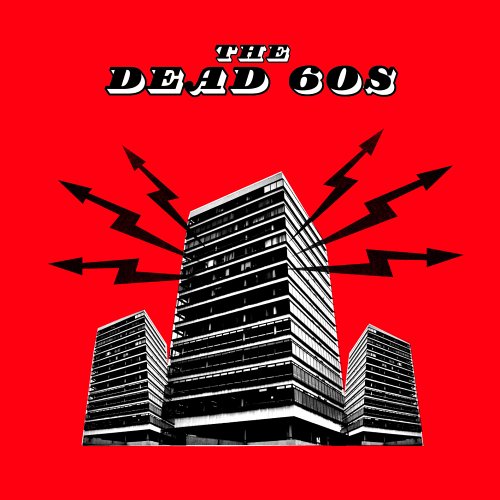
The Dead 60s - The Dead 60s (2005)


This album was released in the UK in 2005 and several months later in the US. The track listing differs from the UK and US versions and so did the artwork. The actual artwork is a pop art styled version of an actual building in Liverpool, where the band comes from. The Concord House is the office building on the cover and it is located near the Liverpool Lime Street railway station. The UK version of the album features a red background while the US version has a yellow one.


XTC - Go 2 (1978)


Designed by a group of British album artwork designers known as Hipgnosis, Go 2 features a different kind of artwork. In fact there is an essay on the front of the albums cover instead of any picture or artwork. Originally released in 1978, this album featured a different track listing in the UK than in the US. The albums title (Go 2) was named in part due to a Japanese strategy game called Go. The two was put after the word go because it was the bands second album.


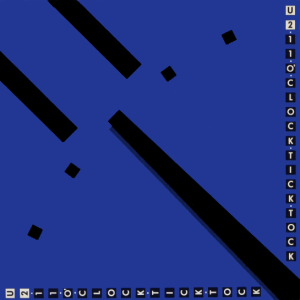
U2 - 11 O’clock Tick Tock (Single 1980)

11 O’clock Tick Tock was U2's third single. It was released just before the release of their first full length album Boy. Produced Martin Hannett (known for his work with Joy Division), this single featured the bands early post punk influenced sound. The actual artwork features a close up picture of a clock (pointing to 11) with a blue/purple coloured background. Along the side of the single cover the words "U2 11 O’clock Tick Tock" are featured in blocks. Three versions of the song exist, all of which are different takes of the song. There is the original single mix, a slightly longer mix for a Martin Hannett tribute album and a version of the Pride single.


Devo - Be Stiff EP (1977)


The artwork for this six track EP was created by Barney Bubbles (a graphic designer) and Brian Griffin (a photographer). The cover featured a man holding up a letter "E" with his hands over the top of his head. The EP was produced by Devo themselves and features some different versions of songs that would be found on the bands first album. "Jocko Homo", "Mongoloid", "(I Can't Get Me No) Satisfaction", and "(I Saw My Baby Gettin') Sloppy". There are also two songs "Be Stiff" and "Social Fools" not featured on any of the bands original albums. All of these tracks can now be found on various compilations, anthologies and reissues of the bands albums.


The Cure - Boys Don't Cry (1980)


This album was actually a US version of the bands first album Three Imaginary Boys. It also features a different track listing than the original UK album. The albums cover features palm trees, a sun and burned/frayed looking bottom. The cover always reminds me of Egypt, maybe it's because of the song "Fire in Cairo", but either way it is an interesting album cover. This album is also an early representation of the band, who would later be known as Gothic. At this point in the bands career they were making Punk/New Wave sounding tracks.


Franz Ferdinand - You Could Have It So Much Better (2005)


The album artwork for Franz Ferdinand's second album is similar to artwork by Russian avant-garde photographer Alexander Rodchenko. It was inspired by his portrait of Lilya Birk. The album itself reflected a more punk inspired Franz Ferdinand than their first album.


The Diodes - Action-Reaction (1980)


The third album by Canadian punk band The Diodes showed off a more Power Pop and Hard Rock style. The albums cover is a variety of space looking ray guns, one is missing. It is another interesting cover from a Canadian band that is underrated. The album will be re-issued on CD in September. Currently it is available on itunes.


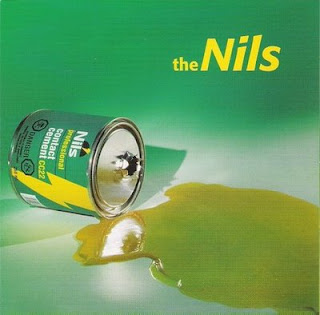
The Nils - Green Fields in Daylight (1997)


This album is in fact a compilation album from the Canadian punk and pop band The Nils. The Montreal band lasted from 1978 until 1994. The band started at a young age by Alex Soria and his brother Carlos. The compilation features more than 20 tracks collecting early demos, recordings, songs from the bands EP's and full length album. The artwork on the albums cover is a spilled over can of contact cement. Shades of green dress the albums cover.


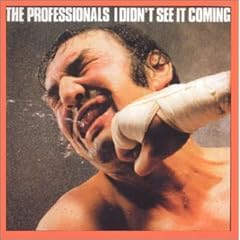
The Professionals - I Didn't See It Coming (1981)


Formed by Steve Jones and Paul Cook (of Sex Pistols), The Professionals released I Didn't See It Coming in 1981. The album was actually a re-recorded version of the bands first album which was never released (it was eventually released in 1990 and in 1997). The cover is pretty simple, a guy getting punched in the face. An effective and eye catching album cover.


The Damned - Don't Cry Wolf (Single 1977)


Don't Cry Wolf was a single taken from the bands second album Music For Pleasure. This album would be The Damned's last with guitarist Brian James, it was also produced by Nick Mason (of Pink Floyd). The B-side to Don't Cry Wolf is the song "One Way Love". The B-side (which is also on Music For Pleasure) has some almost country like guitar licks on it. The song is an excellent example of the guitar work of Brian James. The single artwork features what looks like scalpels in a star shaped pattern surrounding the bands name and the songs title.


The D4 - 6Twenty (2001)


The 2001 album from New Zealand Garage Rockers, The D4 was named after a guitar amplifier. The cover features the band members silhouetted in black and red, while guitarist Dion Palmer aims his guitar in a gun-like fashion. The album itself is great representation of high energy Rock and Roll. The album had six singles released, none of which charted in the US. Some singles from the album did make it on to the UK singles charts.


Queens of the Stone Age - Era Vulgaris (2007)


The artwork for Era Vulgaris features two light bulb characters, one which is a green light bulb that has an eye patch (known as "Patchy") and Bulby a yellow bulb smoking a cigarette. The light bulb cartoons were created by Liam Lynch and the overall art direction was done by Jason Nato & Doug Cunnigham of Morning Breath Inc. Josh Homme has stated in an interview that light bulb represents an idea that you think is really great, but in reality it is not. Era Vulgaris was the fifth album by Queens of the Stone Age.


Sloan - Navy Blues (1998)


Sloan's follow up to 1996's One Chord To Another was Navy Blues. The album featured songs such as "She Says What She Means" and "Money City Maniacs". Navy Blues combined elements of the bands 60s Pop/Beatles style with 70s Hard Rock. The albums artwork features a picture of each band member separated by lines that are similar to work done by Saul Bass (American graphic designer and film maker). For an animated, filmic extension of the album cover check out the video for "Money City Maniacs".


Neil Young - On The Beach (1974)


This was an album that has interesting things to pick out on the cover. There is part of what looks like a Cadillac buried in the sand, a patio table and chairs, a person out in the distance and a hanger hanging under the umbrella (there are more things too if you look closely). This album was originally released in 1974 and for a long time it was out of print on vinyl and it not available on CD. In 2003 it was finally released on CD.


Joe Strummer & The Mescaleros - Streetcore (2003)


The artwork to the third album by Joe Strummer & The Mescaleros is credited to Art Dog and Joe Strummer. The album which was released posthumously showed the Mescaleros returning to a more Rock/Clash like form. Streetcore featured songs such as "Coma Girl", "Get Down Moses", "Long Shadow" and "All In A Day", all of which display differing musical styles while still staying true to the edge of Rock and Roll. The cover displays a coil that looks like it is dripping, five black stars placed in two different locations on a bright orange background.


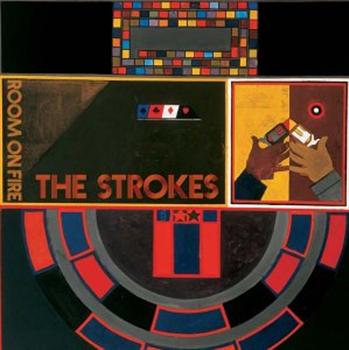
The Strokes - Room On Fire (2003)


The Strokes second album was panned by critics when it was originally released. The albums cover features what looks like a black jack card table (or some sort of card table that would be used in a casino), two hands of opposing colours firing at each other and the bands album title. The album musically was influenced by New Wave music such as Talking Heads, The Cars and the bands previous Garage Rock influences.


The Kinks - Kink Kontroversy (1965)


Originally released in 1965, Kink Kontroversy mixed early Kinks Garage Rock style with Blues. The albums cover features five squares. The main square features a close up Dave Davies playing guitar. Atop of it there are four squares each of which has a different Kinks band member inside. The albums title is a play on the bands onstage antics, and fighting which led to them being banned in the US.


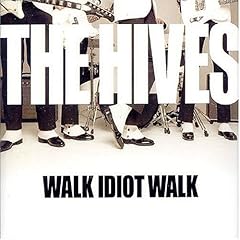
The Hives - Walk Idiot Walk (Single 2004)


The single to the Hives song "Walk Idiot Walk" featured two B-sides "Genepool Convulsions" and "Keel Hauling Class of '89". The single is a song that comes from The Hives 2004 album Tyrannosaurus Hives. The single also contains the music video made for the song. The video features the band in a white room with a scrabble board that changes letters in the background. The cover is a shot of the band members holding their instruments on a white background, which is a similar style to the music video for the single.


Sex Pistols - Nevermind The Bollocks (1977)


The one and only album by Sex Pistols featured cut out ransom styled lettering. In the UK the letters were outlined in pink, while the background is yellow. For the US release the colours differ. The letters are outlined in green with a light pink background. The cover was designed by Jamie Reed and has since been copied by numerous punk bands. Without an album like this, who knows what rock music would sound like today?


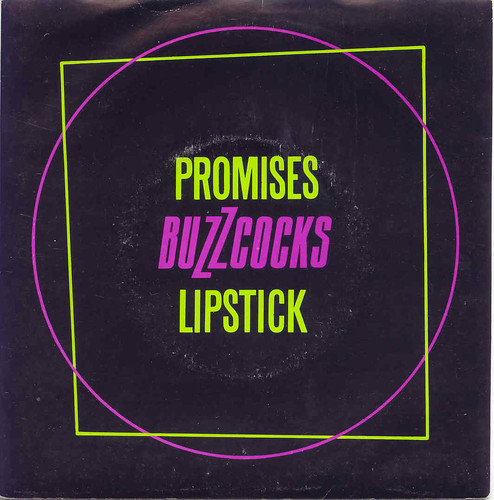
Buzzcocks - Promises (Single 1978)


All of Buzzcocks early singles have interesting artwork designs. Promises is one of my favourites, it is designed in a pop art style and features a green square outlined by a purple circle on a black background. The song was recorded just after the release of the bands second album Love Bites and was originally titled Children. The song was also added to the Singles Going Steady compilation in 1979.


Wire - Chairs Missing (1978)


This album cover is simple, there are no chairs on the front cover and there is a table with purple flowers on top of it. There are also brownish grey curtains in the background. The covers concept was created by Graham Lewis and Colin Newman (of Wire), while the cover photo was taken by Annette Green and the overall art direction was created by Brian Palmer. The albums title is derived from a British slang for a person that is a little bit disturbed. For example, that man has some chairs missing from his front room. The album featured more pop oriented compositions than the bands previous effort Pink Flag.


The Clash - London Calling (1979)


The artwork is to 1979's London Calling is now seen as an iconic image. The cover is reminiscent of Elvis Presley's first album and they both employ a similar font style. Elvis's album features Elvis raising his guitar up while London Calling features Clash bassist Paul Simonon smashing his bass down to the floor. The photograph on the cover was taken during a Clash concert in New York by Pennie Smith. The graphic design was done by Ray Lowry. I enjoy almost all of The Clash's album covers and single artwork, some other interesting ones to check out are Radio Clash, Bank Robber, Magnificent Seven and of course their other album covers.


Other interesting artwork:

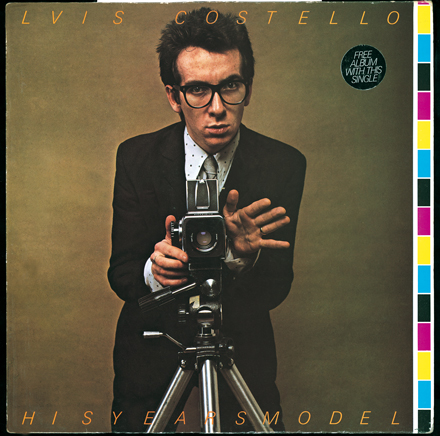
Elvis Costello & The Attractions - This Year's Model (1978)


The artwork to this album cover was designed by Barney Bubbles. The concept is simple, Elvis Costello standing in front of a camera with his right hand sticking out, the background is a golden brown colour. The US version of this album did not have the songs "(I Don't Want To Go To) Chelsea" and "Night Rally", instead of those tracks the song "Radio, Radio" was added. A slightly different album cover was also used for the US version.


Talking Heads - Take Me To The River (US Single 1978)


Talking Heads were another band that had interesting album covers. The US version for the song Take Me To The River is one of my favourites. The song was actually a cover of a song that was originally by Al Green. The cover of the US single was of a gospel tabernacle and lttle wavy lines at the bottom for the water. The UK version was a variation of the cover for the album More Songs About Buildings and Food, which is also interesting. Other great covers by Talking Heads include the Fear of Music album cover, and covers for the singles Crosseyed and Painless, Road To Nowhere, Life During Wartime and Psycho Killer.


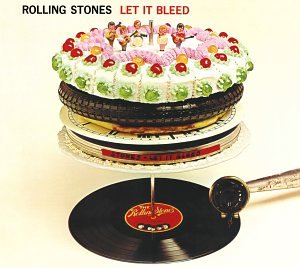
Rolling Stones - Let It Bleed (1969)


Let It Bleed was a follow up to 1968's Beggar's Banquet. There are so many things that can be picked out on the cover. The cover displays a picture of a record player and spindle, on top of the spindle there is a variety of things stacked up. There is a stack of records, a reel to reel tape, a tire, a pizza and a cake. On top of the cake there are little figures of each band member.


The Beatles - A Hard Day's Night (1964)


You cannot discuss artwork by rock bands without bringing up The Beatles. While they have many covers which are seen as innovative, There are two in particular that have always been interesting to me. First, The UK version of A Hard Day's Night which was the soundtrack to the film of the same name. The US version featured a different track listing. The UK cover features photos of every Beatle member in different poses. The US version featured four large photos of each Beatle, from the nose up. This was also the very first full length album by The Beatles that had all original compositions on it.


The Beatles - The White Album (1968)

My second choice for Beatles artwok is one of my favourite albums ever, The White Album. The artwork is also quite simple and inventive. Designed by Richard Hamilton the cover was white, with the bands named lightly showing on the cover. While the album was originally going to be called A Doll's House, the band decided on just calling it "The Beatles", but because of the artwork it is usually referred to as The White Album. Since it's release numerous bands have had self titled albums with a plain colour for its cover.


The Play List:

1. Dead 60s - Riot Radio
2. XTC - Meccanic Dancing (Oh We Go)
3. U2 - 11 O'Clock Tick Tock
4. Devo - Be Stiff
5. The Cure - 10:15 Saturday Night
6. Franz Ferdinand - You Could Have It So Much Better
7. The Diodes - Polaroid
8. The Nils - Freedom
9. The Professionals - Madhouse
10. The Damned - Don't Cry Wolf
11. The D4 - Come On!
12. Queens of The Stone Age - Make It Wit Chu
13. Sloan - Stand By Me, Yeah
14. Neil Young - Walk On
15. Joe Strummer & The Mescaleros - Coma Girl
16. The Strokes - I Can't Win
17. The Kinks - The World Keeps Going Round
18. The Hives - Genepool Convulsions
19. Sex Pistols - Pretty Vacant
20. Buzzcocks - Promises
21. Wire - Outdoor Miner (Single Version)
22. The Clash - Rudie Can't Fail

To download this week's show visit the CJAM archives and select the files 10:00 AM and 11:00 AM on July, 21st 2009.

Tuesday, April 03, 2007

Terminal Rock...Show # 139


The Diodes are a Canadian band from Toronto, Ontario. They were signed to Columbia Records in 1977 making them the first Canadian punk band to be signed to a major label. In 1978 their first self-titled debut was released. It featured a cover of the Paul Simon song "Red Rubber Ball". The band was influenced by punk bands such as The Clash and Ramones, but they also had a different melodic almost new wave style to their songs. It was obvious that the band was punk influenced and the album was available in the US and UK. The band would tour with other acts such as Ramones, the Nerves, Talking Heads, Ultravox! and U2. They had credibility. The band consisted of Paul Robinson (vocals), John Catto (guitar), Ian Mackay (bass), Mike Lengyell (Drums).

In 1979, their second album Released came out. The song "Burn Down Your Daddies House" was cut from the final album due to the fact that it was seen as controversial. Due to poor album sales, the band was dropped from their label after this album. The band would move to England and release Action/Reaction in 1980. The band would break up after this and release an album featuring outtakes and demos in 1982 titled Survivors. In 1983 members of The Diodes and The Barracudas formed a band called High Noon. They recorded material in London, but it has never been released. In 1998 Tired of Waking Up Tired a combination of the bands first two albums, served as a greatest hits of their material released for Columbia (from 1977-1979). The band also reformed in January 1999 to play on The Mike Bullard Show in Canada, for one time only to promote Tired of Waking Up Tired.

One more thing I have to mention please visit the CJAM Jammie web page and vote for the Jammies. The voting ends on April 6th.

Here's the Play List:

1. Pretty Things – midnight to six man
2. Small Faces – sha-la-la-la-lee
3. MC5 – shakin’ street
4. Diodes – midnight movie star
5. Neon Boys – that's all I know
6. Real Kids – reggae reggae
7. Piranhas – green don’t suit me
8. Pointed Sticks – the witch
9. Tricky Woo – get around
10. The Stems – can’t resist
11. Lime Spiders – out of control
12. The Saints – one way street
13. Ramones – Havana affair
14. The Clash – (whiteman) in Hammersmith Palais
15. Undertones – more songs about chocolate and girls
16. Fastbacks – won’t have to worry
17. Vindicators – thinking of birds
18. Joy Division - leaders of men
19. Mudhoney – poisoned water
20. The Stooges – free & freaky
21. The Doors – take it as it comes
22. Neil Young – the needle and the damage done (live at Massey Hall 1971)
23. Neil Young - tell me why (live at Massey Hall 1971)
24. Ride Theory – hey sugar
25. White Stripes – walking with a ghost
26. The Scientists - atom bomb baby