Showing posts with label The Kinks. Show all posts
Saturday, December 08, 2018
The Beatles White Album & The Kinks Are The Village Green Preservation Society (50th Anniversary) & Shows # 749, 750, 751
Originally released on November 22nd, 1968, The Beatles White Album was the highly anticipated follow up to 1967’s Sgt. Pepper’s and the Lonely Hearts Club Band. While Sgt. Pepper’s showed the band taking a more psychedelic, experimental approach to songs and the recording of the album, The White Album was the opposite. The recording sessions had their origins in Rishikesh, India. From February to April 1968, The Beatles were there to take part in a Transcendental Meditation course with Maharishi Mahesh Yogi. During this time they came up with about forty new songs, several of which were demoed at George Harrison’s house in May of 1968 known as the Esher Demos. During the recording of this album, there were many aspects that caused turmoil and tensions within the group. Producer George Martin took a leave of absence during the sessions, engineer Geoff Emerick quit and drummer Ringo Starr left the group for about two weeks during the sessions before returning.
There are thirty songs on The Beatles. It should also be noted that the album is referred to as The White Album, but it is a self-titled album. Several of the songs have a fractured feel, but overall the album for all its styles and immediacy has an undeniable energy. From the opening moments of Paul McCartney’s “Back In the U.S.S.R”, which he wrote as a parody and pastiche at the time of a Beach Boys song, starts off with a heavy rock song that was seen as controversial by some due to the lyrical content. The song sets the tone as being both subversive and mischievous. “Glass Onion” is another hard-hitting rock track, written and sung by John Lennon that clouded up and addressed people who were looking too much into their songs for hidden meanings. “Happiness Is A Warm Gun” is a song that is comprised of three different sections comprising different song styles within the less than three-minute track length. It contains surrealist lyrics and different time signature changes. “Don’t Pass Me By” written by Ringo Starr strangely reflects tensions within the band at the time (Ringo quit the band, but returned during the sessions), allusions to people looking too much into Beatles rumours and has a violin added over top in a manic fashion. It eerily reflects the violin featured on The Clash’s “Lose Your Skin” on their 1980 album Sandinista, written by Tymon Dogg. George Harrison’s “While My Guitar Gently Weeps” features lead guitar by guitarist Eric Clapton, who was brought in when Harrison felt that John and Paul were not giving his composition the needed attention that it deserved. “Long, Long, Long” is a song with spiritually inspired lyrics that are open to interpretation. With its acoustic guitar, organ, and Starr’s dynamic drum fills, it also provides a moment of calmness between the raucous and chaotic “Helter Skelter” and the politically charged “Revolution 1”.
With double albums, there is more content than a regular full-length album. Many people have issues with certain aspects of double albums, saying that they would operate better if they were a single album instead. Producer George Martin argued this point when The Beatles were finishing up with The White Album, but they still decided to go ahead with a double album of thirty tracks. The overall sound of the album can be looked at just by taking a glance at the album cover. There is nothing on the album’s cover, it is a blank cover with just the band name in the corner. This can be juxtaposed to 1967’s Sgt. Pepper’s, which has a brightly coloured, psychedelic cover. The White Album is raw, straight to the point, but also branches out into different musical styles and sometimes experimentation. There are many layers that are only revealed upon repeated listens. The album subverts conventions, musically and socially and challenges listeners.
Also released on November 22nd, 1968 was The Kinks Are The Village Green Preservation Society. It was an album that was recorded between November 1966 and October 1968. Village Green was also a concept album, the first of many that Ray Davies and The Kinks would explore. But, many feel this is one of the strongest and best. The concept of Village Green lies in theme of English life and the innocence of past times. At a time when being psychedelic was the new thing to do, Davies and the Kinks took a look back with a preservative attitude. Also, it was influenced by concepts from Dylan Thomas’s Under The Milkwood, many of the songs featured strong characters throughout. At the time of the album’s creation, The Kinks had been banned from performing in the USA (which occurred in 1965), they were surrounded by record company pressures and legal battles and of course turmoil within the band. Village Green was the last album to feature the original Kinks lineup of Ray Davies, Dave Davies, Peter Quaife and Micky Avory. Bassist Peter Quaife would leave the band in early 1969. If that wasn’t enough, at this time the band was also working on a solo Dave Davies album with The Kinks as his backing band and Ray was also working on material for a British TV show, all of which were recorded with The Kinks.
A version of The Kinks Are The Village Green Preservation Society was released in parts of Europe in October of 1968 (France, Sweden and Norway). This version featured twelve tracks and featured variations in mixes and track listing to the version that would eventually be released in the UK and the US in November 1968. After the original twelve track version of the album was delivered to Pye, Ray Davies asked them to postpone the release of the album so that he could expand and make some changes. Initially interested in making Village Green a double album, Pye denied this request and it was decided that a fifteen-track version would be produced and released. The notable changes to the album were the addition of “Last of the Steam Powered Trains”, “Big Sky”, “Sitting By The Riverside”, and “All of My Friends Were There”. The songs “Days” and “Mr. Songbird” were removed from the track list order. “Days” was later released as a single in June of 1968.
The album starts off with the song “The Village Green Preservation Society” in which Ray states “Preserving the old ways from being abused/Protecting the new ways for me and for you”. Ray and The Kinks flat out state the ethos of this album in the opening moments. This all happens amongst acoustic guitars, electric guitar stabs leads provided by guitarist Dave Davies with organ flooding the background as drummer Mick Avory and bassist Peter Quaife propel the song forward with their driving rhythm section. Musically the album draws on the lyrical prominence that was emphasized on 1967’s Something Else. The album has been said to be very subdued compared to early Kinks songs, but it has layers. The songs are well constructed, featuring plenty of acoustic arrangements combined with electric guitars. In addition to this legendary session musician Nicky Hopkins is featured all over Village Green playing piano and a variety of other instruments, adding to its atmosphere. However, nothing sounds out of place. That’s not to say it’s an album that is not unlike The Kinks, there are moments such as the refreshing blast of blues smoke in “Last of the Steam Powered Trains” and the wicked fuzzed out electric guitar riffs in “Wicked Annabella”. “Do You Remember Walter?” paints the picture of one of the many character sketches that populate this album. Inspired by a run in with an old friend and how they were in very different places and worlds, Davies reflects in a humorous way before “Picture Book” attacks with its scaling guitar and bass riffs in a striking fashion. There are other more eccentric moments too, like the song “Phenomenal Cat” that has a Mellotron flute and there is the stunning orchestral arrangement in the song “Village Green”. The album ends with “People Take Pictures of Each Other” a song that is upbeat and nostalgic.
Referred to as “The most successful flop of all time”, The Kinks Are The Village Green Preservation Society sold approximately 100,000 copies worldwide during its initial release. Compared to The Beatles White Album, which sold 3.3 million copies in the US alone within the first four days of its release, Village Green operated on a different axis at the time. Despite receiving good critical reviews, many felt that the music on Village Green Preservation Society was out of step with the times. It would later be embraced by an underground audience and gain a cult-like status. In 2018, it went gold in the UK. Both The Kinks Are The Village Green Preservation Society and The Beatles White Album are often uttered in the same breath when discussing the time period that they were released. They both shed themselves of the psychedelic image popular during that time period and searched for something new. Whether that was through subversion of musical norms or through preserving a past innocence and looking forward.
Show 751 (Originally Aired On December 1st, 2018)(The White Album Vs. Village Green):
1. The Beatles - Long, Long, Long
2. The Beatles - Sour Milk Sea (Esher Demo)
3. The Beatles - (You're So Square) I Don't Care Studio Jam
4. The Beatles - Helter Skelter (Second Version - Take 17)
5. The Kinks - Last of the Steam Powered Trains
6. The Kinks - Creeping Jean
7. The Kinks - Misty Water (Mono Version)
8. Papa Ghostface - Rook
9. Papa Ghostface - Crawlspace Waltz
10. Elvis Costello & The Imposters - Mr. & Mrs. Hush
11. Charles Bradley - Stay Away
12. Ty Segall & White Fence - Body Behaviour
13. Faux Co. - Prozac Spaceman
14. Jeff Tweedy - Some Birds
15. Volunteers - Mother Nature's Blues
16. Fever Feel - Lose your Mind
17. Urban Surf Kings - Run From The Bear
18. Shoobies - All My Profs Are On Strike
19. King Khan & The Shrines - Land of the Freak
20. Screamin' Deal - One Small Death
21. Daughters - The Flammable Man
22. Jon Spencer - Do the Trash Can
23. Snake River - Then She Wrote A Letter
24. The Sadies (w Jon Spencer) Justine Alright (Live)
25. King Tuff - Lazerbeam
26. Low - Rome (Always In The Dark)
27. Joy Division - Colony (BBC Session)
To download this weeks program, visit CJAM's schedule page for Revolution Rock and download the file for December 1.
Show 750 (Originally Aired On November 24th, 2018)(Daughters, The Jesus Lizard & Mudhoney):
1. Pyramids - Pressure
2. Shoobies - Monkey Eat Sandwich
3. The Byrds - Stranger In A Strange Land
4. The Thin Cherries - Follow The Sun
5. Ty Segall - Isolation
6. Undertones - Luxury (Demo)
7. Autogramm - Jessica Don't Like Rock 'n Roll Anymore
8. Women - Heat Distraction
9. Daughters - Ocean Song
10. Josef K - Pictures of Cindy
11. FRIGS - Chest
12. Chandra - Get It Out Of Your System
13. The Jesus Lizard - Seasick
14. The Jesus Lizard - Naked Dancing Ladies
15. Flesh Rag - Ballad of Nova
16. The Soft Pack - Pull Out
17. The Routes - Vendetta
18. Brazilian Money - Jive With The Killer Instinct
19. Gary's House - Punch Party
20. Prefab Sprout - Faron Young
21. Yardlets - UnModern Man
22. The Burnin' Sands - Revenge of the Putrid Slime
23. The Pursuit of Happiness - Food
24. Destroyer - Plaza Trinidad
25. Outrageous Cherrry - Creeps Retreat
26. The Aints - The Church of Simultaneous Existence
27. Mudhoney - Nerve Attack
28. Mudhoney - Oh Yeah
To download this weeks program, visit CJAM's schedule page for Revolution Rock and download the file for November 24.
Show 749 (Repeat of episode 748. An episode focusing on Bob Dylan's Blood On The Tracks). Download this episode here and view the play list here.
Tuesday, April 12, 2011
The Kinks ... Kinda Kontroversy & Show # 347
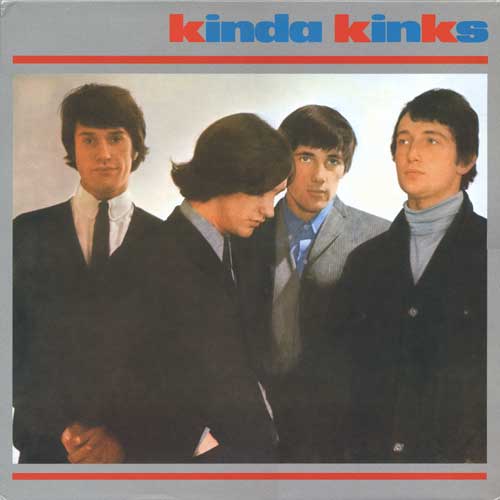
The Kinks second album titled, Kinda Kinks was recorded at a combination of studio sessions. It was recorded during February 16-18 in 1965 at Pye Studios No.2 in London, England, “Tired of Waiting For You” was recorded in August of 1964, prior to any of the albums main sessions and held back as an early single for the album, with guitar overdubs occurring in December of 1964. The songs “Come On Now” and “Something Better Beginning” were recorded between December 22-23 1963 at Pye Studios. The album was recorded quickly in a rush between the band's 1964-1965 world tour. In a matter of approximately two weeks, The Kinks completed their second album with Shel Talmy producing and it was released in March 1965 in the UK and August 1965 in the US.
Kinda Kinks is an often underlooked album in regards to the band's catalgoue. The album mixes the band's early R&B sound, with elements of Folk, and Motown. Kinda Kinks is notable for having numerous songs sung by lead guitarist Dave Davies “Got My Feet On The Ground” is an R&B rave up sung by Dave Davies featuring that early raw Kinks sound, “Naggin’ Woman” finds the Kinks delving deeper into a Blues groove, and “Come On Now” is a early Kinks Garage track, written by Ray Davies, sung by Dave and also included as the B-Side to "Tired of Waiting For You". The rest of the album mixes in a variety of the developing song writing style of Ray Davies. Songs such as “Nothin’ In The World Can Stop Me Worryin’ About That Girl” reflects an atmospheric Folk nature with its flirtatious Jazz beats, “Tired of Waiting For You” was the lead off single for this album, the song reflects the band's early R&B influences while at the same time featuring a slower groove. When released as a single it went to number one on the UK singles charts, and number six in the US. “So Long” is akin to “Nothin’ In The World Can Stop Me Worryin’ About That Girl”, with its Folk coffee house style, the song has prominent acoustic guitar and with lyrics such as “Got No Time For Tears/There’s Music In My Ears” it reflects the band's situation at the time, there are also songs such as “You Shouldn’t Be Said” which is a Motown influenced R&B track. The album ends with the rather poignant “Something Better Beginning” lyrically and musically it reflects the future direction in which Ray Davies and the Kinks would take their sound.
Kinda Kinks also produced numerous singles and songs that would be released on a variety of US only releases (Kinks-Size and Kinkdom) and Kywet Kinks which was an EP released in the UK. Among these, some of the non-Kinda Kinks album tracks include “Everybody’s Gonna Be Happy”, “Who’ll Be The Next In Line”, “Set Me Free”, “I Need You”, “See My Friends”, and “A Well Respected Man”. “Set Me Free” was released in May of 1965 as a single, it is a song done in a style similar to “Tired of Waiting For You”. The single is perhaps loved for its exciting B-Side “I Need You”, which is a raw uncompromising Kinks power chord filled Rock song right from the start of its initial bursting feedback and infectious harmonies. “See My Friends” is a pinnacle single indicating the maturing song writing style of Ray Davies. The song itself features Indian guitar raga styles, dipping into elements of Psychedelic Rock and notable for being released prior to The Beatles “Norwegian Wood”, which featured Sitar. Lyrically the song was placed under some scrutiny regarding the subject matter which have often been misconstrued, lyrically the song has been said to be influenced by a stop the band made in Bombay during their 1965 Asian tour where Davies witnessed a group of fisherman chanting on way to their morning work. The next set of singles released during this period were the piano driven “Who’ll Be The Next In Line” and “A Well Respected Man”, which lyrically addressed British class economics and musically drew from British Music Hall influences.
Kink Kontroversy was recorded in late October/early November of 1965 at Pye Studios no.2 in London, England. The album was once again produced by Shel Talmy and was released on November 26th, 1965 in the UK and in March 30th 1966 in the US. The albums title originates from the band's onstage reputation, which at times earned them the nick name Kontroversial Kinks. Prior to the album being recorded, one such incident occurred onstage between guitarist Dave Davies and drummer Mick Avory. After apparently being spat at by Dave Davies, Avory hit him over the head with the pedal end of his drum hi-hat, resulting in stitches for Dave. The media focused on the issue, but the band wanted to get away from it. As a result, Clem Cattini filled in as a session drummer for the majority of the Kink Kontroversy album sessions, Avory appears on approximately two to three tracks. Despite the drummer situation, Avory would re-join as the drummer quickly after the sessions.
Musically and lyrically Kink Kontroversy showed The Kinks developing into their own style and with a new sense of sophistication. The album displays elements of The Kinks previous R&B sound, but also transitional elements of what would become the band's future Kinks sound. A perfect example of this dynamic can be explained when looking at the first single released for the album “Till The End of the Day”, backed with “Where Have All The Good Times Gone”(also found on Kink Kontroversy). This strong single exemplified the end of The Kinks “You Really Got Me” style, with “Till The End of the Day”, but also contrasted it with the song “Where Have All The Good Times Gone” which demonstrates Ray Davies ability and development as a song writer. Not only do the two songs contrast each other musically, but they do so lyrically as well. While “Till The End of the Day” is somewhat upbeat and in a style most fans identified with (being one of the last songs in that style to do so), “Where Have All The Good Times Gone” is a lament, it can also be seen as a farewell to the Kinks previous musical direction and a step forward into the next, thus indicating the end of one of the band's first eras. Chart wise the single reached the top ten on the UK singles charts, and went to number 50 initially on the UK singles charts. Kontroversy starts off with the tense and raunchy R&B “Milk Cow Blues”, sung by Dave Davies, it is also complimented with the piano playing of session man Nicky Hopkins, who is featured on this whole album. Songs such as the ballad “Ring The Bells”, the laidback “The World Keeps Going Round”, and Calypso stylings of “I’m On An Island” all indicate the band's new sense of direction, which would be further developed on the band's next release Face To Face in 1966. “I Am Free” is a Dave Davies composition, in which he declares independence, “Too Late” an acoustic Blues number, and the final offering “You Can’t Win” that has dual vocals between Ray and Dave all add to the albums pivotal atmosphere.
The next single to follow was the song “Dedicated Follower of Fashion”, which is an angry, satirical song furthering the Music Hall influenced style first demonstrated with “A Well Respected Man”. The single charted high in the top ten on the UK singles charts and in the top 40 in the US. Following the albums release and Mick Avory coming back into the fold The Kinks continued to make albums and also got involved in more controversy in 1965, resulting in a five year ban from the touring in the US.
This Weeks Play List:
1. Jook - Aggravation Place
2. The Gorillas - She's My Gal
3. The Kinks - Time Will Tell
4. The Kinks - A Little Bit of Sunlight (Demo)
5. Boats - Drinking The Lake
6. Obits - You Gotta Lose
7. Cake - Long Time
8. This City Defects - Recycle Thief
9. Timber Timbre - Black Water
10. Jack-O & The Tennessee Tearjerkers - Make Your Mind Up
11. Les Jupes - Mathematics
12. 49th Parallel - Laborer
13. Martha & The Muffins - Saigon
14. The Space Plan - Tread Lightly
15. Link Wray - Fat Back
16. The Fleshtones - Comin' Home Baby
17. Mach Kung-Fu - Bamboo Twist
18. 999 - My Street Stinks
19. Supergrass - Caught By The Fuzz
20. The Howlies - Howlies Sound
21. Young Rival - Untitled (CBC Radio 3 Session 2009)
22. Alex Chilton - Can't Seem To Make You Mine
23. ASK - Have A Gun
24. The Kinks - I Need You
25. The Kinks - Till The End of The Day (BBC Session)
To download this weeks program, visit CJAM's schedule page for Revolution Rock and download the file for April 12. Or subscribe to Revolution Rock as a Podcast.
Tuesday, June 29, 2010
A Well Respected Man...Show # 306
Following his time with The Kinks, Peter joined another band called Maple Oak who recorded a single titled "Son of a Gun" in April of 1970. Quaife left the band and the music business in 1970, he moved to Denmark and pursued other artistic interests. In 1981, he relocated to Belleville, Ontario where he worked as a graphic artist. He reunited with his fellow Kinks band members two times following his leave from the group, once for an encore at a show in Toronto in 1981 and in 1990 when The Kinks were inducted into the Rock and Roll Hall of Fame. In 1998, he was diagnosed with Renal Failure. He would publish a book of cartoons called The Lighter Side of Dialysis in 2004 and a book about a fictional 1960s Rock group titled Veritas. In 2005, Peter Quaife moved back to Denmark. He was married twice and has one daughter.
The Play List:
1. The Black Lips - Before You Judge Me
2. The Phantom - Love Me
3. Little Joy - The Next Time Around
4. Creepies Invade - Nightmare (of Love)
5. Young Veins - Change
6. Gramercy Riffs - The Freezedown
7. Collapsing Opposites - You Can't Escape From Time
8. A Million Years - Holy Ghost Town
9. Wavves - Post-Acid
10. Public Image Limited - Chant (Peel Session)
11. Boxer The Horse - Sketch Me A Glove
12. Elbow Beach Surf Club - Surf Theme
13. The Treblemakers - Exploding Bikers From Hochelaga
14. Man Your Horse - Aptitude Sickness
15. Bored Games - Joe 90
16. The Alternators - The Kid Don't Know
17. Deadboys - Sonic Reducer
18. Generation X - No No No (Alternate Version)
19. X - Painting the Town Blue
20. Joe Strummer - Dum Dum Club
21. The Locusts Have No King - Nightmare Away
21. The Kinks - Days
22. The Kinks - Waterloo Sunset (BBC Session)
23. The Kinks - Everybody's Gonna Be Happy
To download this weeks program, visit CJAM's schedule page for Revolution Rock and download the file for June 29th. Or subscribe to Revolution Rock as a Podcast.
Tuesday, October 20, 2009
Yes Sir, No Sir... The Kinks Arthur Turns 40... & Show # 270

Its hard to believe that forty years ago in 1969, The Kinks first released their album Arthur (Or The Decline of The British Empire). It was released following their album The Kinks Are The Village Green Preservation Society, that upon it's initial release sold poorly. Since then Village Green has gone on to become a cult classic and many Kinks fans favourite Kinks album, but people often overlook Arthur. It is based upon a concept revolving around Arthur and his son, who moves to Australia from England with his wife after World War II. The album originally had its first inception by Ray Davies as the soundtrack for a television play. When the play was cancelled, Ray used the themes and ideas he created and transferred them into album form via The Kinks.
The album was recorded from May to July at Pye Studios in the UK in 1969. Another interesting fact about this album is that it was produced by Ray Davies (as was Village Green). The albums concept was based loosely on Rose (Ray's Sister) and her husband Arthur Anning, who moved from England to Australia. This was also the very same Rosie that the song "Rosie Won't You Please Come Home" from Face To Face was based on. Themes on the album are addressed such as war, British oriented nostalgia, and the boringness of suburban life. The album opens with "Victoria", a Hard Rock based song that lyrically addressed the British Empire in a satirical way. The ballad "Some Mother's Son", addresses the horrors of war, while the song "Shangri-La" is in a world of its own. It addresses what seems to be a paradise, but as the song carries along the listener finds out that what Arthur thinks is his paradise is actually his own prison as well. Musically, the song mixes elements of Folk, Hard Rock and has been said to be one of Dave Davies favourite Kinks songs that his brother, Ray Davies has written.
"Mr. Churchill Says" references the effects of World War II on the British people. Musically the song picks up from a slow Blues influenced Rock song to being Hard Rock once again. The song actually features paraphrased parts from the speeches of Prime Minister Winston Churchill and a siren in the middle of the song that is supposed to represent the air-raid siren heard during World War II. The album also features many other songs playing into this over aching concept. There are other interesting songs such as "Brainwashed", "Arthur", "Nothing To Say", and the six minute "Australia" which features excellent guitar work from Dave Davies. Overall, the album musically is an exciting Rock album.
The album sold poorly in the UK, but in the US it received greater acclaim and reached #105 on the US album charts. Singles released for the album were "Drivin'", "Shangri-La", and "Victoria". Only "Victoria" would do well on the singles market (with the exception of "Shangri-La" in the Netherlands). It went to #62 on the US Billboard Hot charts and #33 on the UK singles charts. Arthur would also mark the beginnings of The Kinks return to mainstream success and a return to the bands Hard Rock style. Arthur was reissued in 1998 with several bonus tracks.
Other Kinks Links:
Waterloo Sunset: The Story of The Kinks Part One
Drivin': The Story of The Kinks Part Two
Some Kinda Kinks (Village Green/Dave Davies Post)
Dave Emulen's Kinks Website
The Play List:
1. The Kinks - Nothing To Say
2. Supergrass - Never Done Nothing Like That Before
3. The Black Hollies - Gloomy Monday Morning
4. The Flaming Groovies - Teenage Head
5. One Way Street - I See The Light
6. J.B & The Playboys - Leave My Woman Alone
7. The Count Five - Double Decker Bus
8. Dr. Feelgood - Riot in Cellblock No.9
9. The Dishrags - Sold Out
10. Ex-Boyfriends - Special Occasions
11. Lost Patrol - Outta My Mind
12. Dream Dates - Search and Destroy
13. Ramona - A Way Over
14. The Goodamn Goodamn's- Steel City Livin'
15. No Age - You're A Target
16. Islands - Vapours
17. The Raveonettes - Bang!
18. Carbon/Silicon - What's Up Doc?
19. Young Executives - Ice Age
20. Mando Diao - Go Out Tonight
21. Van Morrison - Everyone
22. The Clash - Every Little Bit Hurts
23. The Kinks - Shangri-La
To download this weeks program, visit CJAM's schedule page for Revolution Rock and download the file for October 13th. Or subscribe to Revolution Rock as a Podcast.
In addition to my feature on The Kinks album Arthur, I also played a new song by Carbon/Silicon. Here is the music video for "What's Up Doc?"
Tuesday, July 21, 2009
Album Art Clash!....Show # 258
This week my program featured a selection of some of my favourite album artwork. This included single artwork and album artwork. There was also a co-host this week, Adam from Fear of Music (on Tuesdays from 1-2:30 PM). I was also featured as a co-host on his radio program where he also did a show on artwork. You can check out his list on his Fear of Music blog. Below is a description of the choices made as well as some that did not make it onto my show this week due to time restraints.
Album Artwork Selections:
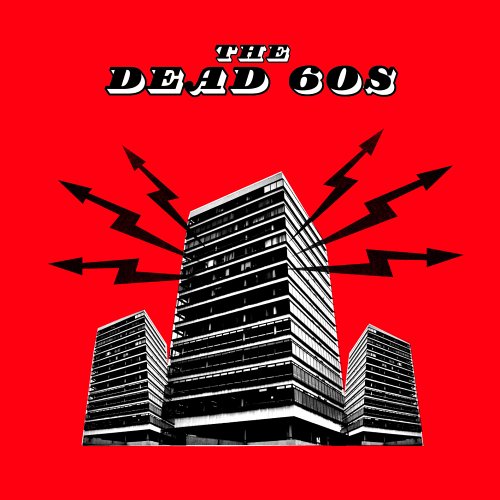
The Dead 60s - The Dead 60s (2005)
This album was released in the UK in 2005 and several months later in the US. The track listing differs from the UK and US versions and so did the artwork. The actual artwork is a pop art styled version of an actual building in Liverpool, where the band comes from. The Concord House is the office building on the cover and it is located near the Liverpool Lime Street railway station. The UK version of the album features a red background while the US version has a yellow one.
XTC - Go 2 (1978)
Designed by a group of British album artwork designers known as Hipgnosis, Go 2 features a different kind of artwork. In fact there is an essay on the front of the albums cover instead of any picture or artwork. Originally released in 1978, this album featured a different track listing in the UK than in the US. The albums title (Go 2) was named in part due to a Japanese strategy game called Go. The two was put after the word go because it was the bands second album.
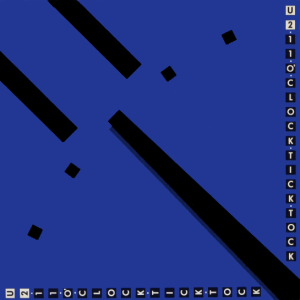
U2 - 11 O’clock Tick Tock (Single 1980)
Devo - Be Stiff EP (1977)
The artwork for this six track EP was created by Barney Bubbles (a graphic designer) and Brian Griffin (a photographer). The cover featured a man holding up a letter "E" with his hands over the top of his head. The EP was produced by Devo themselves and features some different versions of songs that would be found on the bands first album. "Jocko Homo", "Mongoloid", "(I Can't Get Me No) Satisfaction", and "(I Saw My Baby Gettin') Sloppy". There are also two songs "Be Stiff" and "Social Fools" not featured on any of the bands original albums. All of these tracks can now be found on various compilations, anthologies and reissues of the bands albums.
The Cure - Boys Don't Cry (1980)

This album was actually a US version of the bands first album Three Imaginary Boys. It also features a different track listing than the original UK album. The albums cover features palm trees, a sun and burned/frayed looking bottom. The cover always reminds me of Egypt, maybe it's because of the song "Fire in Cairo", but either way it is an interesting album cover. This album is also an early representation of the band, who would later be known as Gothic. At this point in the bands career they were making Punk/New Wave sounding tracks.
Franz Ferdinand - You Could Have It So Much Better (2005)
The album artwork for Franz Ferdinand's second album is similar to artwork by Russian avant-garde photographer Alexander Rodchenko. It was inspired by his portrait of Lilya Birk. The album itself reflected a more punk inspired Franz Ferdinand than their first album.
The Diodes - Action-Reaction (1980)

The third album by Canadian punk band The Diodes showed off a more Power Pop and Hard Rock style. The albums cover is a variety of space looking ray guns, one is missing. It is another interesting cover from a Canadian band that is underrated. The album will be re-issued on CD in September. Currently it is available on itunes.
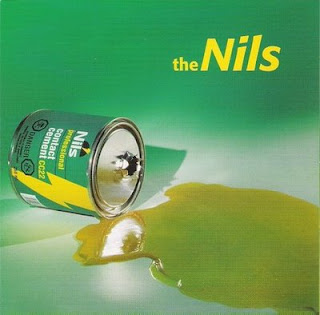
The Nils - Green Fields in Daylight (1997)

This album is in fact a compilation album from the Canadian punk and pop band The Nils. The Montreal band lasted from 1978 until 1994. The band started at a young age by Alex Soria and his brother Carlos. The compilation features more than 20 tracks collecting early demos, recordings, songs from the bands EP's and full length album. The artwork on the albums cover is a spilled over can of contact cement. Shades of green dress the albums cover.
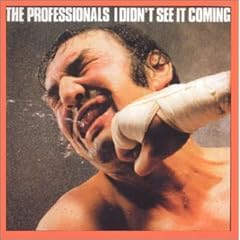
The Professionals - I Didn't See It Coming (1981)
Formed by Steve Jones and Paul Cook (of Sex Pistols), The Professionals released I Didn't See It Coming in 1981. The album was actually a re-recorded version of the bands first album which was never released (it was eventually released in 1990 and in 1997). The cover is pretty simple, a guy getting punched in the face. An effective and eye catching album cover.
The Damned - Don't Cry Wolf (Single 1977)
Don't Cry Wolf was a single taken from the bands second album Music For Pleasure. This album would be The Damned's last with guitarist Brian James, it was also produced by Nick Mason (of Pink Floyd). The B-side to Don't Cry Wolf is the song "One Way Love". The B-side (which is also on Music For Pleasure) has some almost country like guitar licks on it. The song is an excellent example of the guitar work of Brian James. The single artwork features what looks like scalpels in a star shaped pattern surrounding the bands name and the songs title.
The D4 - 6Twenty (2001)
The 2001 album from New Zealand Garage Rockers, The D4 was named after a guitar amplifier. The cover features the band members silhouetted in black and red, while guitarist Dion Palmer aims his guitar in a gun-like fashion. The album itself is great representation of high energy Rock and Roll. The album had six singles released, none of which charted in the US. Some singles from the album did make it on to the UK singles charts.
Queens of the Stone Age - Era Vulgaris (2007)
The artwork for Era Vulgaris features two light bulb characters, one which is a green light bulb that has an eye patch (known as "Patchy") and Bulby a yellow bulb smoking a cigarette. The light bulb cartoons were created by Liam Lynch and the overall art direction was done by Jason Nato & Doug Cunnigham of Morning Breath Inc. Josh Homme has stated in an interview that light bulb represents an idea that you think is really great, but in reality it is not. Era Vulgaris was the fifth album by Queens of the Stone Age.
Sloan - Navy Blues (1998)
Sloan's follow up to 1996's One Chord To Another was Navy Blues. The album featured songs such as "She Says What She Means" and "Money City Maniacs". Navy Blues combined elements of the bands 60s Pop/Beatles style with 70s Hard Rock. The albums artwork features a picture of each band member separated by lines that are similar to work done by Saul Bass (American graphic designer and film maker). For an animated, filmic extension of the album cover check out the video for "Money City Maniacs".
Neil Young - On The Beach (1974)
This was an album that has interesting things to pick out on the cover. There is part of what looks like a Cadillac buried in the sand, a patio table and chairs, a person out in the distance and a hanger hanging under the umbrella (there are more things too if you look closely). This album was originally released in 1974 and for a long time it was out of print on vinyl and it not available on CD. In 2003 it was finally released on CD.
Joe Strummer & The Mescaleros - Streetcore (2003)
The artwork to the third album by Joe Strummer & The Mescaleros is credited to Art Dog and Joe Strummer. The album which was released posthumously showed the Mescaleros returning to a more Rock/Clash like form. Streetcore featured songs such as "Coma Girl", "Get Down Moses", "Long Shadow" and "All In A Day", all of which display differing musical styles while still staying true to the edge of Rock and Roll. The cover displays a coil that looks like it is dripping, five black stars placed in two different locations on a bright orange background.
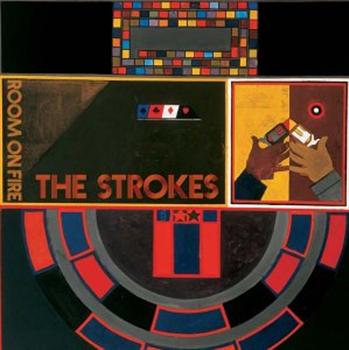
The Strokes - Room On Fire (2003)
The Strokes second album was panned by critics when it was originally released. The albums cover features what looks like a black jack card table (or some sort of card table that would be used in a casino), two hands of opposing colours firing at each other and the bands album title. The album musically was influenced by New Wave music such as Talking Heads, The Cars and the bands previous Garage Rock influences.
The Kinks - Kink Kontroversy (1965)

Originally released in 1965, Kink Kontroversy mixed early Kinks Garage Rock style with Blues. The albums cover features five squares. The main square features a close up Dave Davies playing guitar. Atop of it there are four squares each of which has a different Kinks band member inside. The albums title is a play on the bands onstage antics, and fighting which led to them being banned in the US.
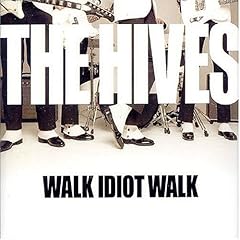
The Hives - Walk Idiot Walk (Single 2004)
The single to the Hives song "Walk Idiot Walk" featured two B-sides "Genepool Convulsions" and "Keel Hauling Class of '89". The single is a song that comes from The Hives 2004 album Tyrannosaurus Hives. The single also contains the music video made for the song. The video features the band in a white room with a scrabble board that changes letters in the background. The cover is a shot of the band members holding their instruments on a white background, which is a similar style to the music video for the single.
Sex Pistols - Nevermind The Bollocks (1977)
The one and only album by Sex Pistols featured cut out ransom styled lettering. In the UK the letters were outlined in pink, while the background is yellow. For the US release the colours differ. The letters are outlined in green with a light pink background. The cover was designed by Jamie Reed and has since been copied by numerous punk bands. Without an album like this, who knows what rock music would sound like today?
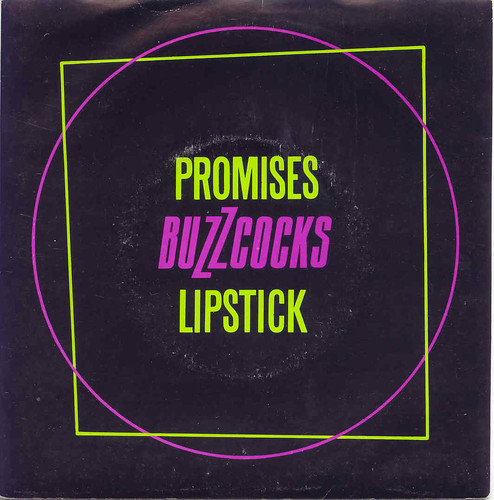
Buzzcocks - Promises (Single 1978)
All of Buzzcocks early singles have interesting artwork designs. Promises is one of my favourites, it is designed in a pop art style and features a green square outlined by a purple circle on a black background. The song was recorded just after the release of the bands second album Love Bites and was originally titled Children. The song was also added to the Singles Going Steady compilation in 1979.
Wire - Chairs Missing (1978)

This album cover is simple, there are no chairs on the front cover and there is a table with purple flowers on top of it. There are also brownish grey curtains in the background. The covers concept was created by Graham Lewis and Colin Newman (of Wire), while the cover photo was taken by Annette Green and the overall art direction was created by Brian Palmer. The albums title is derived from a British slang for a person that is a little bit disturbed. For example, that man has some chairs missing from his front room. The album featured more pop oriented compositions than the bands previous effort Pink Flag.
The Clash - London Calling (1979)
The artwork is to 1979's London Calling is now seen as an iconic image. The cover is reminiscent of Elvis Presley's first album and they both employ a similar font style. Elvis's album features Elvis raising his guitar up while London Calling features Clash bassist Paul Simonon smashing his bass down to the floor. The photograph on the cover was taken during a Clash concert in New York by Pennie Smith. The graphic design was done by Ray Lowry. I enjoy almost all of The Clash's album covers and single artwork, some other interesting ones to check out are Radio Clash, Bank Robber, Magnificent Seven and of course their other album covers.
Other interesting artwork:
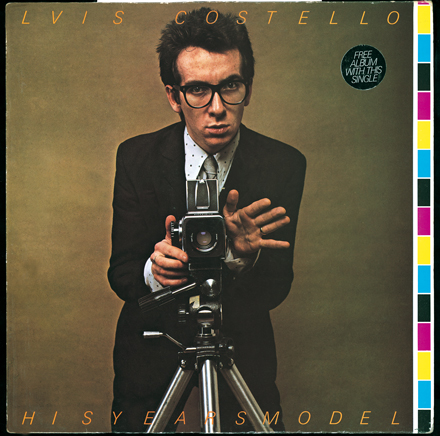
Elvis Costello & The Attractions - This Year's Model (1978)
The artwork to this album cover was designed by Barney Bubbles. The concept is simple, Elvis Costello standing in front of a camera with his right hand sticking out, the background is a golden brown colour. The US version of this album did not have the songs "(I Don't Want To Go To) Chelsea" and "Night Rally", instead of those tracks the song "Radio, Radio" was added. A slightly different album cover was also used for the US version.
Talking Heads - Take Me To The River (US Single 1978)

Talking Heads were another band that had interesting album covers. The US version for the song Take Me To The River is one of my favourites. The song was actually a cover of a song that was originally by Al Green. The cover of the US single was of a gospel tabernacle and lttle wavy lines at the bottom for the water. The UK version was a variation of the cover for the album More Songs About Buildings and Food, which is also interesting. Other great covers by Talking Heads include the Fear of Music album cover, and covers for the singles Crosseyed and Painless, Road To Nowhere, Life During Wartime and Psycho Killer.
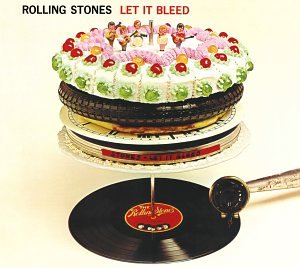
Rolling Stones - Let It Bleed (1969)
Let It Bleed was a follow up to 1968's Beggar's Banquet. There are so many things that can be picked out on the cover. The cover displays a picture of a record player and spindle, on top of the spindle there is a variety of things stacked up. There is a stack of records, a reel to reel tape, a tire, a pizza and a cake. On top of the cake there are little figures of each band member.
The Beatles - A Hard Day's Night (1964)

You cannot discuss artwork by rock bands without bringing up The Beatles. While they have many covers which are seen as innovative, There are two in particular that have always been interesting to me. First, The UK version of A Hard Day's Night which was the soundtrack to the film of the same name. The US version featured a different track listing. The UK cover features photos of every Beatle member in different poses. The US version featured four large photos of each Beatle, from the nose up. This was also the very first full length album by The Beatles that had all original compositions on it.
The Beatles - The White Album (1968)
The Play List:
1. Dead 60s - Riot Radio
2. XTC - Meccanic Dancing (Oh We Go)
3. U2 - 11 O'Clock Tick Tock
4. Devo - Be Stiff
5. The Cure - 10:15 Saturday Night
6. Franz Ferdinand - You Could Have It So Much Better
7. The Diodes - Polaroid
8. The Nils - Freedom
9. The Professionals - Madhouse
10. The Damned - Don't Cry Wolf
11. The D4 - Come On!
12. Queens of The Stone Age - Make It Wit Chu
13. Sloan - Stand By Me, Yeah
14. Neil Young - Walk On
15. Joe Strummer & The Mescaleros - Coma Girl
16. The Strokes - I Can't Win
17. The Kinks - The World Keeps Going Round
18. The Hives - Genepool Convulsions
19. Sex Pistols - Pretty Vacant
20. Buzzcocks - Promises
21. Wire - Outdoor Miner (Single Version)
22. The Clash - Rudie Can't Fail
To download this week's show visit the CJAM archives and select the files 10:00 AM and 11:00 AM on July, 21st 2009.
Tuesday, May 26, 2009
Some Kinda Kinks....Show # 250

The year of 1968, was a busy one for The Kinks. Still banned from the USA (since 1965), the band was involved in a number of projects at this time. It was around this time that The Kinks would be working on material for The Kinks Are The Village Green Preservation Society. Originally Ray Davies intended the songs for his first solo album. He was also working on a stage play around this time that had a similar concept to Village Green. Since the material was so different, Ray did not know if it was appropriate for The Kinks. Despite his original thoughts, Ray and the group worked on the songs and it became the album known as The Kinks Are The Village Green Preservation Society. The album employed a concept (it would be the first of many concept albums done by The Kinks). The concept was about English life and the innocence of past times. It was also said to have been influenced by Dylan Thomas's Under The Milk Wood. Ray Davies also intended Village Green to be the last Kinks album. The last single was supposed to be the song "Days". Fortunately this did not happen. The album did not sell well upon its initial release, but has since then gone on to be a cult classic. It is often referred to as "The Most Successful Flop of All Time".
It was also around this time that Dave Davies recorded material for his first solo album. Davies had previously released successful singles such as "Death of A Clown", and "Susannah's Still Alive" in 1967. The backing band on these recordings were The Kinks. Dave had been recording songs off an on for a possible solo album since 1967. After touring and the recording of Village Green, Dave recorded a set of songs for yet another proposed solo album that was to be released in 1969. "Hold My Hand" was released as a single that would launch the album in 1969, but it failed to chart. The album was never released. Songs existed on bootleg from the sessions, but were never released officially. When the band re-issued their catalog, most of the tracks appeared as bonus material on the remastered editions of the albums.
Dave Davies first solo album would be in 1980 (although he talked of releasing a solo album in 1970 and again in 1974), Ray's first solo album would be in 1990. In 2004, Sanctuary Records released a 3 CD, deluxe edition of Village Green. It featured several outtakes and songs recorded around the same time, but not used for the album. In 1998, Dave Davies released Unfinished Business, which is a 2 CD set collecting material done with The Kinks and from his solo career. For more information on The Kinks and their releases, visit Dave Emulen's Unofficial Kinks website Kinda Kinks.
This week on my show I featured seven Kinks songs from this time period. Four songs from The Kinks Are The Village Green Preservation Society ("Wicked Annabella", "Do You Remember Walter?", "Village Green", and "The Last Of The Steam Powered Trains"). "Creeping Jean" (found on the deluxe edition of Village Green) and "Mindless Child of Motherhood" (found on the remastered edition of Arthur) were both tracks that were considered for Dave Davies 1969 solo album. The final Kinks track featured on today's program was "Misty Water". This song was recorded in 1968 for a proposed US release that was cancelled (It was going to be titled Four More Respected Gentlemen).
Play List:
1. The Kinks - The Last Of The Steam Powered Trains
2. The Kinks - Wicked Annabella
3. Dark Knight Of The Soul - Little Girl (Featuring Julian Casablancas)
4. The Sonics - Have Love Will Travel
5. The Amboy Dukes - Baby Please Don't Go
6. Great Scotts - Ball and Chain
7. The Jury - Who Dat?
8. The Secrets - Cryin' Over Her
9. Painted Ship - And She Said Yes
10. The Brogues - I Ain't No Miracle Worker
11. Captain Beefheart & His Magic Band - Diddy Wah Diddy
12. The Kinks - Creeping Jean
13. The Kinks - Mindless Child of Motherhood (Stereo Version)
14. The Gruesomes - The Deal
15. Terminal Sunglasses - Antenna Dilemma
16. Thrush Hermit - Hated It
17. Mood - Who Do You Love?
18. Velvet Underground - Venus In Furs
19. The Standells - Sometimes Good Guys Don't Wear White
20. The Kinks - Do You Remember Walter?
21. The Kinks - Village Green
22. The Kinks - Misty Water
To download this week's show visit the CJAM archives and select the files 10:00 AM and 11:00 AM on May, 26th 2009.
Kinks Videos:
The Last of the Steam Powered Trains & Picture Book (Julie Felix TV Show 1969)
Tuesday, December 23, 2008
Revolution Rock Christmas Special Show # 228
Since my show was so close to Christmas, I did a show comprised entirely of Christmas themed songs. Some information about these songs can be found below:
The Mysteriods - Santa Claus Is Coming To Town (1982)
In 1982 The Revillos (who formed after the band The Rezillos broke up), went into the studio and recorded two Christmas songs for a 7 inch single. When the band were recording these tracks, they used the name The Mysteriods. The reason for this is because they thought some people might think that they were uncool for doing these songs. Both the songs are great and can be found on the compilations Attack of the Giant Revillos and From The Freezer.
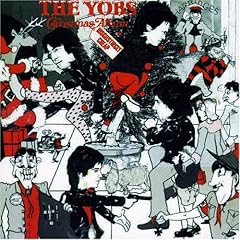
The Yobs - Silver Bells (1980)
Keith Richards - Run Rudolph Run (1978)

In 1978 Rolling Stones guitarist Keith Richards released his first single as a solo Artist. Both songs that would be featured on the single were cover songs. The A-Side was a cover of a Chuck Berry song titled "Run Rudolph Run", the B-Side was a cover of Jimmy Cliff song "They Harder They Come". Keith redoes Chuck Berry's song with greasy rock n' roll style. "Run Rudolph Run" has been reissued on itunes, with a cover of a Toots and Maytals song "Pressure Drop" from 2003. While Keith's first single may have been covers they are both excellent and well worth hearing.
The Kinks - Father Christmas (1977)

In 1977, The Kinks released the single "Father Christmas". The song, which is not like your average Christmas song, is about a gang of poor kids who beat up a department store Santa Claus, asking him for money instead of toys. The song was originally released prior to their 1978 album Misfits, and after their 1977 release Sleepwalker. The song can be found on the remastered edition of The Kinks album Misfits.
Several of the other songs played on my show come from Christmas compilation albums. Songs by the bands Atomic 7, Ramblin' Assassins, The Smugglers, and The Evaporators can all be found on It's A Team Mint X-mas Volume 2, which was released through the Canadian based label Mint Records. The punk songs played by The Damned, The Ravers, and Stiff Little Fingers can be found on the compilation Punk Rock X-mas, which was released in 1995. Next week I will have a show consisting of releases from 2008.
Information about my 2009 Christmas special can be found here.
Christmas Song Play List:
1. The Ravers - (It's Gonna Be A) Punk Rock Christmas
2. The Mysteriods - Santa Claus is Coming to Town
3. The Yobs - Silver Bells
4. Hot Hot Heat - Christmas Day in the Sun
5. Pointed Sticks - Powerpop Santa
6. Pointed Sticks - Xmas Time Again
7. Atomic 7 - Senor Santa El Es El Monstruo
8. Ramblin' Assassins - Don't Fear The Reindeer
9. Beach Boys - Christmas Day
10. Elvis Presley - Blue Christmas
11. Leadbelly - Christmas is-a Coming
12. Johnny Cash - I Heard the Bells On Christmas Day
13. The Smugglers - Lonely Christmas
14. The Evaporators - Who Are You
15. The Gruesomes - Santa Claus
16. The Sonics - Santa Claus
17. The D4 - Don't Believe in Christmas
18. Ramones - Merry Christmas (I Don't Want to Fight Tonight)
19. The Damned - There Ain't No Sanity Claus
20. The Kinks - Father Christmas
21. Keith Richards - Run Rudolph Run
22. The Hives & Cyndi Lauper - A Christmas Duel
23. Yeah Yeah Yeahs - All I Want For Christmas
24. White Stripes - Candy Cane Children
25. Stiff Little Fingers - White Christmas
26. Pearl Jam - Someday At Christmas
To download this week's show visit the CJAM archives and select the files 10:00 AM and 11:00 AM on December 23rd, 2008. (Note: My show starts thirty minutes into the first download)
Wednesday, May 28, 2008
Drivin'...The Kinks Story Part Two...Show # 198

In 1969, The Kinks released King Arthur (Or the Decline and Fall of the British Empire). Originally Ray Davies conceived this concept to be a soundtrack to a TV play. The play was cancelled and the Kinks recorded the album. The story of the album was based on the life of Ray Davies real life brother-in-law who moved to Australia named, Arthur. The album was also the album in which Peter Quaife left the band (he was one of the original founding members), he was replaced by John Dalton. The album was moderately successful in the US, the band who was on a four year US ban starting visiting the states and getting more notice (the ban was over in 1969).
The album King Arthur (Or the Decline and Fall of the British Empire) contained alot of great songs. The starting track, "Victoria" is an upbeat excellent track. The drum work is simply amazing. The song itself did not chart in the US, but it did in Sweden and Canada. Other great tracks include "Brainwashed", "Australia", and "Shangri-La". When the album was re-issued on CD it contained bonus tracks. One of them being the song "King Kong" which is a rocking almost White Stripes sounding song. The album is also constantly being compared to The Who's Tommy. Tommy also is a concept album, the band was influenced by The Kinks. The truth is Dave Davies was friends with Pete Townshed, and the two bands both made a concept album; It doesn't really matter who did it first because both albums are great.
After adding John Gosling on keyboards, The Kinks recorded Lola Versus Powerman and the Moneyground Part One in 1970. The album was taking a look at the music industry, poking fun at it. The album also contained the hit "Lola", which was a huge hit all over the world for the band. "Apeman" also cracked the top ten in the UK. In 1971, Percy was released. The album was a collection of instrumental and non instrumental Kinks songs that was written for the British comedy film Percy. The album is seen as not as great as the bands other albums by critics. It was not released in America.
In 1971, the bands previous contracts expired and they signed to RCA. Muswell Hillbillies came next in 1971. The album was the first album recorded in the bands own studio titled Konk studios. The album was named after Muswell Hill in London where the Davies brothers grew up. The album is more acoustic than the bands previous albums. It contained elements of country, blues, and music hall. Despite the fact that the album wasn't successful commercially many regard the album as an example of Ray Davies best work.
Everybody's In Show-Biz came out in 1972 and it was a double album. The first disc is studio recordings, while the other is a live compilation of the bands two night stay at Carnegie Hall. The album also showed a shift in the musical stylings of Ray Davies. He was progressing towards a more theatrical, operatic style. These would be expressed in the bands next four albums Preservation Act 1, Preservation Act 2, Soap Opera, and Schoolboys in Disgrace.
The band would continue their career into the 90's; In the 80's the band achieved more success in the US. In 1995, X-Ray was released it was an autobiography written by Ray Davies, and in 1996 Dave Davies released Kink his own autobiography. Ray and Dave have since had solo careers. In 1990, The Kinks were inducted into the Rock and Roll Hall of Fame, and in 2005, inducted into UK Music Hall of Fame.
The Kinks were a band that were lumped into the British invasion of the 60s, that included the likes of The Rolling Stones, The Beatles, and The Who. Despite the fact that they didn't do as well in the US as the UK, the band is an influential group that has influenced the likes of The Who, The Clash, The Jam, Richard Hell, Buzzcocks, The Knack, The Pretenders, Oasis, Blur, Libertines, and Franz Ferdinand. The Kinks created a different kind of platform for creating music that is still relevant today as it was back in the 60's. Recently rumours have been flying on whether or not The Kinks will do a reunion tour, but it is not known whether this will happen or not. In December of 2008, The Kinks released a 6 CD box set. It contains a 60 page booklet, demos, outtakes, and previously unheard material. The box set is titled Picture Book.
To see part one of my kinks history click Here. Also if you are looking for further Kinks information, the best site to go to is Dave Emlen's Unofficial Kinks Web Site. Next week I will be doing a show on the UK punk band Buzzcocks.
Kinky Play List:
1. Party Line (Face to Face 1966)
2. Got My Feet on the Ground (Kinda Kinks 1965)
3. Dancing in the Street (Kinda Kinks 1965)
4. Rosie won't You Please Come Home (Face to Face 1966)
5. Sunny Afternoon (Face to Face 1966)
6. I Need You (B-Side of Set Me Free 1965)
7. Come on Now (Kinda Kinks 1965)
8. You Shouldn't Be Sad (Kinda Kinks 1965)
9. Never Met a Girl Like You Before (Kinda Kinks 1965)
10. Situation Vacant (Something Else 1967)
11. Till the End of the Day (Kink Kontroversy 1965)
12. She's Got Everything (B-Side of Days 1968)
13. Harry Rag (Something Else 1967)
14. Dedicated Follower of Fashion (Single 1966)
15. Susannah's Still Alive (Single 1968)
16. This Strange Effect (BBC Session 1965)
17. Days (Single 1968)
18. Shangri-La (Arthur 1969)
19. Waterloo Sunset (Something Else 1967)
20. Love Me Till the Sun Shines (B-Side of Death of A Clown 1967)
21. Where Have All the Good Times Gone (Kink Kontroversy 1965)
22. Dead End street (Single 1966)
23. Everybody's Gonna Be Happy (Single 1965)
24. Victoria (Arthur 1969)
25. Brainwashed (Arthur 1969)
26. King Kong (Arthur 1969)
27. Starstruck (Village Green 1968)
28. I'm Not Like Everybody Else (Sunny Afternoon B-Side 1966)
Kinks Videos:
Victoria (Live 1979)
Days
A Well Respected Man
The VIllage Green Preservation Society
Commerical featuring I'm Not LIke Everybody Else
Wednesday, April 02, 2008
Attack of the Killer B-sides...Show #190
A B-Side refers to the second side or track on a single. In the days of singles and when there was no such thing as Compact Discs or digital downloads, bands would release singles on records. The single would be comprised of an A-side and a B-Side. The A side was the song that was meant to be played on the radio and the B-side was the second song on the other side of the single that was not usually on the bands full length album, or LP.
When CD's dominated the music market, the B-Side became less important. Now while records are still available a B-Side refers to any song that is on an an album, or a song that is unreleased or even rare. That being said, this weeks show was comprised entirely of B-Sides. I have even listed for your convenience which single or where the particular B-side came from.
The Following are some interesting B-sides:

The I'm Stranded single was first released in September of 1976. It was first released on the independent label Fatal Records, but it would also be named single of the week by Sounds magazine in the UK. The single was responsible for getting the band a three album deal with EMI. The B-side "No Time" can also be found on the bands first full length album titled, I'm Stranded.
The Kinks - You Really Got Me/It's Alright (1964)
You Really Got Me was the third single by the UK band The Kinks, it was also their first number one hit. The song itself was one of the first songs to feature distorted guitar, which would change rock music forever. The B-side of the single was a song called "It's Alright", a bluesy rock song. It can be found on the re-issue of the bands first album, The Kinks.
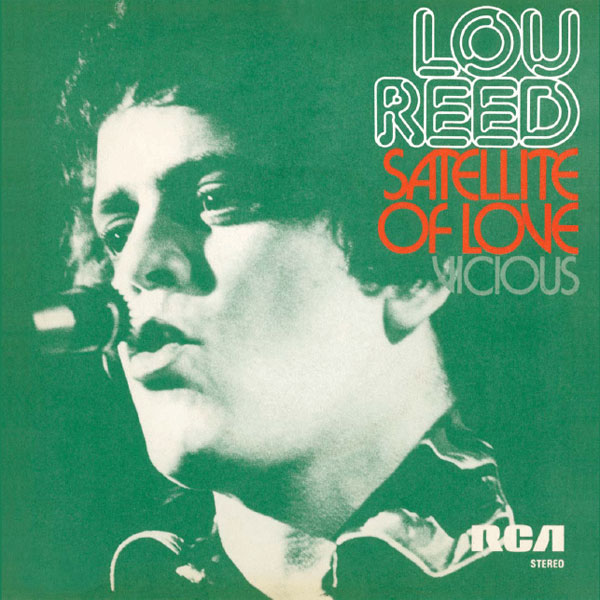
Lou Reed - Satellite of Love/Vicious (1972)
Satellite of Love is one of Lou Reed's most known songs. It was actually written and recorded while Reed was in Velvet Underground. A version of the song by Velvet Underground appears on the Peel Slowly box set. The B-side was the song "Vicious" is a song that has clean guitar chords with heavily distorted garagey guitar riffs through out it; It also opens Lou Reed's 1972 album Transformer.
B-Side Playlist:
1. Magazine - My Mind Ain't So Open (B-Side of Shot by Both Sides 1978)
2. Saints - No Time (B-Side of I'm Stranded 1976)
3. The Damned - Sick of Being Sick (B-Side of Stretcher Case Baby 1977)
4. Ugly Ducklings - I Can tell (B-Side of Nothin' 1966)
5. Gruesomes - Things She Does to Me (B-Side of Jack the Ripper EP 1986)
6. The Kinks - It's alright (B-Side of You Really Got Me 1964)
7. Rolling Stones - Off the Hook (B-Side of Little Red Rooster 1964)
8. Lou Reed - Vicious (B-Side of Satellite of Love 1972)
9. Iggy Pop - The Passenger (B-Side of Success 1977)
10. The Clash - Stop the World (B-Side of The Call Up 1980)
11. Elvis Costello & the Attractions - Clean Money (B-Side from Armed Forces 1979)
12. The Strokes - Hawaii (B-Side of Juicebox 2005)
13. Hot, Hot, Heat - Apt.101 (B-Side of Bandages 2003)
14. The Diodes - We're Ripped (B-Side of Red Rubber Ball 1977)
15. The Demics - Blueboy (B-Side of New York City 1980)
16. Forgotten Rebels - Rhona Barrett (B-Side of Tell Me You Love Me 1982)
17. Teenage Head- Teenage Beer Drinking Party (B-Side of Some Kinda Fun 1982)
18. Buzzcocks - Lipstick (B-Side of Promises 1978)
19. Generation X - shakin' All Over (B-Side of Valley of the Dolls 1979)
20. Young Canadians - No Escape (B-Side from Hawaii EP 1979)
21. Queens of the Stone Age - Who'll Be the Next in Line (B-side from Songs For the Deaf 2004)
22. Rage Against The Machine - Darkness of Greed (B-Side of Killing in the Name 1992)
23. Nirvana - Oh, the Guilt (B-Side of Jesus Lizard Split Single Puss 1993)
24. The D4 - North Shore Bitch (B-Side of Ladies Man 2000)
25. The Hives - Hell No! (B-Side of Tick Tick Boom 2007)
When CD's dominated the music market, the B-Side became less important. Now while records are still available a B-Side refers to any song that is on an an album, or a song that is unreleased or even rare. That being said, this weeks show was comprised entirely of B-Sides. I have even listed for your convenience which single or where the particular B-side came from.
The Following are some interesting B-sides:

The I'm Stranded single was first released in September of 1976. It was first released on the independent label Fatal Records, but it would also be named single of the week by Sounds magazine in the UK. The single was responsible for getting the band a three album deal with EMI. The B-side "No Time" can also be found on the bands first full length album titled, I'm Stranded.
The Kinks - You Really Got Me/It's Alright (1964)
You Really Got Me was the third single by the UK band The Kinks, it was also their first number one hit. The song itself was one of the first songs to feature distorted guitar, which would change rock music forever. The B-side of the single was a song called "It's Alright", a bluesy rock song. It can be found on the re-issue of the bands first album, The Kinks.
Lou Reed - Satellite of Love/Vicious (1972)
Satellite of Love is one of Lou Reed's most known songs. It was actually written and recorded while Reed was in Velvet Underground. A version of the song by Velvet Underground appears on the Peel Slowly box set. The B-side was the song "Vicious" is a song that has clean guitar chords with heavily distorted garagey guitar riffs through out it; It also opens Lou Reed's 1972 album Transformer.
B-Side Playlist:
1. Magazine - My Mind Ain't So Open (B-Side of Shot by Both Sides 1978)
2. Saints - No Time (B-Side of I'm Stranded 1976)
3. The Damned - Sick of Being Sick (B-Side of Stretcher Case Baby 1977)
4. Ugly Ducklings - I Can tell (B-Side of Nothin' 1966)
5. Gruesomes - Things She Does to Me (B-Side of Jack the Ripper EP 1986)
6. The Kinks - It's alright (B-Side of You Really Got Me 1964)
7. Rolling Stones - Off the Hook (B-Side of Little Red Rooster 1964)
8. Lou Reed - Vicious (B-Side of Satellite of Love 1972)
9. Iggy Pop - The Passenger (B-Side of Success 1977)
10. The Clash - Stop the World (B-Side of The Call Up 1980)
11. Elvis Costello & the Attractions - Clean Money (B-Side from Armed Forces 1979)
12. The Strokes - Hawaii (B-Side of Juicebox 2005)
13. Hot, Hot, Heat - Apt.101 (B-Side of Bandages 2003)
14. The Diodes - We're Ripped (B-Side of Red Rubber Ball 1977)
15. The Demics - Blueboy (B-Side of New York City 1980)
16. Forgotten Rebels - Rhona Barrett (B-Side of Tell Me You Love Me 1982)
17. Teenage Head- Teenage Beer Drinking Party (B-Side of Some Kinda Fun 1982)
18. Buzzcocks - Lipstick (B-Side of Promises 1978)
19. Generation X - shakin' All Over (B-Side of Valley of the Dolls 1979)
20. Young Canadians - No Escape (B-Side from Hawaii EP 1979)
21. Queens of the Stone Age - Who'll Be the Next in Line (B-side from Songs For the Deaf 2004)
22. Rage Against The Machine - Darkness of Greed (B-Side of Killing in the Name 1992)
23. Nirvana - Oh, the Guilt (B-Side of Jesus Lizard Split Single Puss 1993)
24. The D4 - North Shore Bitch (B-Side of Ladies Man 2000)
25. The Hives - Hell No! (B-Side of Tick Tick Boom 2007)
Wednesday, March 05, 2008
Waterloo Sunset...The Story of the Kinks Part One...Show # 186
The Kinks formed in 1963 in the UK. The band is known for being one of the most influential bands that came out during the British invasion along with the likes of The Beatles, The Who, and The Rolling Stones. The band was comprised of the the brothers Ray (vocals/guitar/main songwriter) and Dave Davies (guitar), Mick Avory (drums), and Peter Quaife on bass. The Kinks were originally called The Ravens, but changed their name as they recorded their first single for Pye Records in 1964; They were named the Kinks due to their style of dress onstage which was called "kinky". The single was a cover of Little Richards "Long Tall Sally", it did not chart. The bands second single was "You Still Want Me", which also failed to chart. It wasn't until the bands third single "You Really Got Me" that others started to take notice. The song debuted at number one on the UK charts and helped define the bands early garage rock style. The song also features distortion and a power chord structure at a time when bands were using clean guitar amplifiers and playing songs differently. What happened was Dave Davies sliced the speaker of his amplifier with a razor blade giving his amplified guitar a distorted sound. The song also went to number one in the US. What followed next was a series of awesome hit UK singles and a ban in the USA.
When on tour in the USA in 1965, following an incident the Kinks were banned for four years in the US of A. The band focused on songwriting, touring, and releasing songs at an incredibly fast pace. The songs mostly came from the brain of Ray Davies, but there were some songs written and sung by Dave Davies. The bands singles after "You Really got Me" were "All Day and All of the Night", "Set Me Free", "Tired of Waiting for You", "Everybody's Gonna Be Happy", "See My Friends", "Till the End of the Day", "Dedicated Follower of Fashion", "Dead End Street" and "Waterloo Sunset", to name a few. It's simply amazing at the quality of the singles that the band released in such a short time. While being banned in the US did have a negative impact on the band, they would not get the proper recognition and fame they deserved until later on, they thrived in the UK, influencing thousands of bands. The Who's Pete Townshend cites "I Can't Explain" as his attempt at writing a Kinks song. During this time The Kinks also released several albums and EP's.
The Kinks weren't just a loud rock band they had varying styles, which included pop, and acoustic numbers as well. Some of their most interesting albums include Kink Kontroversy (1965), which drew on heavy blues influences while still building on their early sound. Face to Face (1966) which came next, is an album that contains compositions written entirely by Ray Davies. Prior to the recording of this album Ray Davies had a nervous breakdown and seemed to escape within his song writing and story telling abilities within the lyrics of the songs. The album advanced the bands style with songs such as "Party Line", "Dandy" and most notably the excellently crafted song "Sunny Afternoon". The singles released to promote the album were "I'm Not Like Everybody Else", and "Mister Pleasant" (they were later included on CD re-issues of the album).
In 1967 Something Else by the Kinks was released. The album is considered the best album by some Kinks fanatics and critics, despite the fact that when it came out it did poorly. This album contained more Dave Davies compositions than the bands previous albums. "Death of a Clown" was a song sung by Dave Davies, but one that was written with the help of Ray Davies. "Love Me Till the Sun Shines", and "Funny Face" were the other Dave Davies Credited and sung songs. The album also contained the excellent Ray Davies compositions "David Watts", "Harry Rag", "Situation Vacant" and "Waterloo Sunset". The album was produced by American producer Shel Talmy, but the subject matter of the album is heavily English laced. The singles released during this album were "Autumn Almanac", and "Susannah's Still Alive" (an excellent Dave Davies composition). After the release of Something Else, the band explored different types of song writing and lyrical structures with The Kinks Are The Village Green Preservation Society (1968).
The Kinks Are The Village Green Preservation Society, was a concept album. It contained songs such as "Picture Book" (eerily similar to Green Day's "Warning" song), and "Johnny Thunder" which showed off their new style. There was also a single "Days" which did quite well on the charts. In 1969, King Arthur (Or the Decline and Fall of the British Empire) was released. It was a rock opera, one of the first. The album is often compared the the rock opera Tommy by The Who, which was composed by The Who's Pete Townshend.
The ban from the USA was also lifted and in 1969, the band would release the song "Lola" which would be a huge hit in the US. The song itself was about an encounter with a transvestite written into a cleverly worded song. The song would be included on the album Lola Versus Powerman and the Moneyground Part One, which was released in 1970.
To read part two of my Kinks history and to see a show I did of all Kinks songs click Here.
Song Played:
1. Johnny Thunders & The Heartbreakers - One Track Mind
2. Johnny Thunders & The Heartbreakers - Let Go
3. Count Five - Double-Decker Bus
4. Count Five - Psychotic Reaction
5. The Sonics - The Witch
6. The Sonics - He's Waitin'
7. Gruesomes - No More Lies
8. Gruesomes - Why Me?
9. Ugly Ducklings - Just in Case You Wonder
10. Ugly Ducklings - I Wish You Would
11. Stooges - Loose
12. Stooges - Dirt
13. The Damned - 1 of the 2
14. The Damned - So Messed Up
15. Kinks - Situation Vacant
16. Kinks - I Need You
17. 101ers - Silent Telephone
18. 101ers - Keys to Your Heart (Version 1)
19. Ramones - Beat on the Brat
20. Ramones - I Can't Be (Demo)
21. Teenage Head - Disgusteen (Alternate Version)
22. Teenage Head - Top Down (New Alternate Version)
23. Undertones - There Goes Norman
24. Undertones - Hypnotised
25. The D4 - Running on Empty
26. The D4 - John Rock
Kinks Videos:
You Really Got Me
All Day and All of the Night
Tired of Waiting For You
It's Alright
Everybody's Gonna Be Happy
Set Me Free
A Well Respected Man
Waterloo Sunset
Dead End Street (Video)
Sunny Afternoon
Death of a Clown
The Village Green Preservation Society
Days
Lola
Subscribe to:
Posts (Atom)