Wednesday, June 27, 2007

All The Young Punks: The Story of The Clash Part One...Show #151


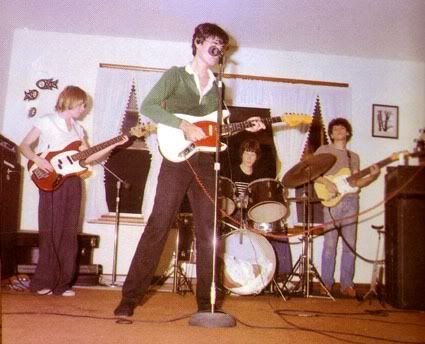
The Clash started out in 1976 with members Joe Strummer (vocals/guitar), Mick Jones (guitar/vocals) and Paul Simonon (bass). The band emerged out of a group of musicians that were involved in a new emerging music scene in the UK, punk rock. The intial startings of punk can be traced as far back as the late 60's with bands such as The Stooges and MC5. Joe Strummer (real name John Mellor) came from a pub rock group called the 101'ers (named after a place he and some friends were squatting in - it was a different time back then in the UK). Mick Jones and Paul Simonon would go to see 101'ers shows and after seeing Sex Pistols, Joe Strummer wanted to become a punk rocker. The Clash came together due to a series of events. One being the assembling of Sex Pistols by Malcolm McClaren. The Clash were in part put together by Malcolm's friend Bernie Rhodes, (who would serve as their manager, giving them direction in the early days of the band), and also by Mick and Paul who were always looking for people to play with, but never really finding the right front man. Mick and Joe would become song writing partners similar to the style of Lennon and McCartney and Jagger and Richards.

After quitting 101'ers Joe would go on to play with Mick, Paul, and Keith Levene (he would go on to play guitar in the post-punk/new wave group Public Image Limited) who was another guitarist in the early days of The Clash. The Clash always had problems finding a drummer in the early days, but eventually they got Terry Chimes to play for them. After playing for a few months and writing some songs, the band got better. The band would focus on the current happenings of Britain, and things of a political nature, as well as various other non-political topics. Labels started to get interested in the group as they did with other punk groups such as Sex Pistols and The Damned. The Clash signed to CBS Records in September of 1977.

The first Clash album would come out in 1977. The Self titled album was loud and energy fueled. The band also experimented with reggae on this album (Reggae was all over Britian during the time of punk). The song in particular was known as "Police & Thieves" (originally by Lee Scratch Perry), the song was reworked by Mick Jones and the band to have a Clash feel. The album also featured the song "Protex Blue" a song about a condom wrapper. Other songs included "White Riot", a song written after Joe Strummer and Paul Simonon were involved in the Noting Hill Carnival riot of 1976. The song is not racist, but a song about class economics. Other great tracks include "Career Opportunities", "I'm So Bored With The USA", "London's Burning", and "What's My Name", the only song in which Keith Levene is credited for (he left the group shortly before the album was recorded). Another fact about the first clash album is that drummer Terry Chimes is credited as Tory Crimes. The album also inspired Bob Marley to write the song "Punky Reggae Party". The album would not see US release until 1979, and featured a different track listing.

After the release of the bands first album, Terry Chimes would leave the group due to differences in the band. This move would turn out to be better then The Clash expected because they would get Nicky "Topper" Headon to take over on drums. Topper would become the bands more permanent drummer until he would be kicked out (in the late 1980's). Topper brought a different drumming style to the band. Having background in jazz and soul, he was also able to play reggae quite well. The bands next album which would be titled Give'em Enough Rope would come out in 1978. It would be produced by Sandy Pearlman, who is known for his work with Blue Oyster Cult. The album would contain ten tracks and would have a different sound than the bands previous effort, also it was their first official album to be released in the USA. The album contained tracks such as "Tommy Gun", a political song about how Strummer thought terrorists liked to read about their deaths as movie stars liked to read about their movie reviews. The song itself is a cleverly paced track featuring not only Strummers political yet sarcastic lyrics, but also drumming sounding similar to gun shots. "Safe European Home" was a song written by Jones and Strummer after going to Jamaica and wanting to be back in England. "Stay Free" stands out on the album as well. The track penned by Mick Jones is a song containing lyrics pertaining to his childhood friend; The music is similar to David Bowie with reggae/ska rhtythms. Regardless of how the album did chart wise (#2 in the UK, #128 in the USA), it is often overlooked by Clash fans as not their best work but, it does contain some great tracks and a different feel than the first album. Other good tracks included "Last Gang in Town" , "Julie's Been Working for the Drug Squad", and "All the Young Punks". The album also featured "English Civil War", a re-working of the classic war tune "When Johnny Comes Marching Home" with new lyrics concerning Britain. Nevertheless the band would keep evolving and keep getting better. The Clash who would record singles as well as albums, had quite a collection of material going by 1978.
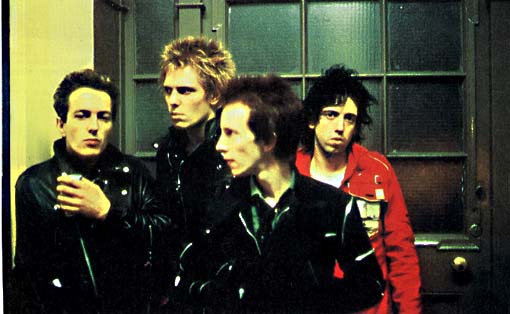

Shortly after this album was recorded and in the middle of touring, the band would record The Cost of Living EP, which would come out in 1979. It would feature a cover song titled "I Fought the Law" (originally by The Bobby Fuller Four), "Groovy Times" an acoustic, melodic track, "Gates of the West" a reworking of a Mick Jones song originally called "Ooh Baby, Ohh", and "Capital Radio Two". "Capital Radio Two" was a reworking of a previous song that was recorded for a single about the radio station in London, that only played safe music. This version was faster and more energy fueled than the previous one. It also featured not only a new intro written by Topper Headon, but also different lyrics and fantastic drumming which outweighs the original. After this release the Clash would begin working on what is arguably their best album ever, London Calling. I will discuss the London Calling Years as well as the remainder of the bands history in next weeks post on The Clash..

here what was played:

1. The Jam – all around the world
2. Hollywood Brats – sick on you
3. Eddie & The Hotrods – 96 tears (live)
4. Sonic’s Rendezvous Band – city slang (original 1978 mix)
5. Zero’s – beat your heart out
6. The Gruesomes – get outta my hair
7. Ugly Ducklings – nothin’
8. Collectors – we can make it
9. Northwest Company – hard to cry
10. The V.I.P.'s - Jeanie
11. New York Dolls – trash
12. Sex Pistols – satellite
13. The Damned – fish
14. David Bowie – queen bitch
15. The Stooges – no fun (full version)
16. Black Sabbath – fairies wear boots
17. Ramones – have you ever seen the rain
18. The Saints – (I’m) stranded
19. Teenage Head – take it
20. The Sturgeons – punk rock virgins
21. Wire – a field day for the Sundays
22. Wire - EX lion tamer
23. Gore Gore Girls - sweet potato
24. The Beat – rankin’ full stop
25. The Clash – i'm so bored with the USA(1977 beaconsfield demo)
26. The Clash – complete control
27. Young Canadians - i hate music
28. The Vibrators - jumping jack flash (live)

Here's some cool early Clash vids:

Complete Control
Live In Munich 1977 (The Prisoner, Janie Jones, Garageland)
Tommy Gun (Live 1978)
(Whiteman) In Hammersmith Palais from Rude Boy
English civil War from Rude Boy

A series of two radio specials I did on The Clash can be found here:

The Clash (1976-1979)
The Clash (1980-1985)

Wednesday, June 20, 2007

Do the Pop! The Radio Birdman Story and Show # 150


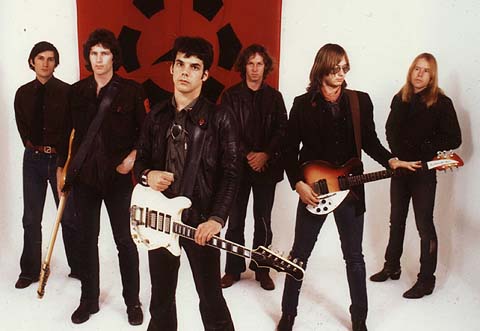
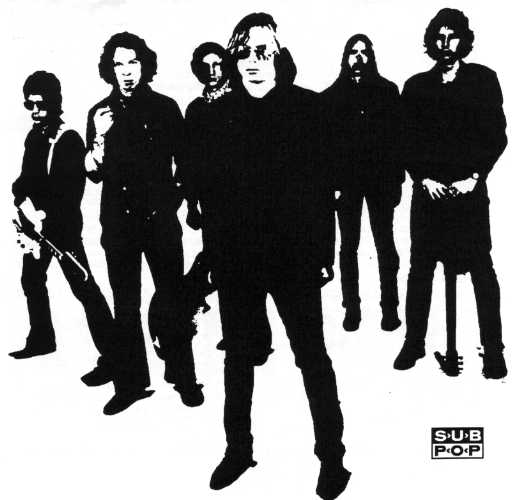
Radio Birdman were a punk band that came out of Sydney, Australia. The band who were classified as punk, took its influence from Detroit bands such as The Stooges, and The MC5; The band also had a surf rock influence. The name of the band came from a lyric in a Stooges song, "1970". The lyric is actually "radio burnin' up above", not "radio birdman up above", but nevertheless that's where the band got their name from. Deniz Tek who was one of the founders of the band was originally from Ann Arbor, Michigan. He would move to Australia in 1972. The band would be formed by Deniz Tek (guitars) and surfer Rob Younger who would do the vocals. After recruiting three more members Pip Hoyle (keyboards),Carl Rorke (Bass)(then Gilbert Warwick), and Ron Keeley (drums), the band would record the EP titled Burn My Eye in 1976. The EP was a rough sounding recording containing four tracks. The EP was quite different from the styles of Aussie rock at the time.

The band would record and release Radio's Appear in 1977. The album title came from a Blue Oyster Cult song titled "Dominance and Submission"; Blue Oyster Cult was another one of the bands influences. When Sire Records came to Australia to sign fellow Australian punks The Saints, Radio Birdman were also signed to the label. After getting signed, the band would record Radio's Appear again and release it under Sire in 1978 (known as the overseas version of the album). The album would feature tracks such as "Murder City Nights", "Do the Pop!", "Descent into the Maelstrom" and "Aloha Steve & Danno", which was a song about the cop-drama TV series Hawaii Five-O. The song showed the bands surf influence as well as punk ethics as did the majority of Radio's Appear. The original 1977 Australian release of the album started off with a cover of The Stooges song "TV Eye", the song is played twice as fast as the original, and is angry loud and vicious. In 2005 a CD re-issue of the album featured "TV Eye" as well as a few other bonus tracks.


Before Radio's Appear was even released Radio Birdman would play at a pub that would be named The Oxford Funhouse (taking the name from a place where The Stooges would play and live, called The Funhouse). The club would be a home for the Sydney punk scene, but as Radio's Appear took off commercially, the place would begin to attract crowds of gangs who would commit violent acts. Radio Birdman were blamed for the violence so around this time, the band took a little break. After a short European tour the band was dropped from it's label and were essentially over. In 1978, the band recorded Living Eyes, which would be their last album until recently. The album itself never saw release in the USA, and wasn't released until 1981. Following one more live show, the band split up in 1978.

Living Eyes the album, was originally released on and mastered from a cassette tape due to the fact that the master tapes were lost. In the 90's the tapes were found, the album was remixed properly and released. The album was re-issued in 2005 with bonus tracks as well. The album itself featured another band member Chris Masuak on guitar. Masuak who joined the band shortly after their first EP, is credited on Radio's Appear, but he is more prominent on Living Eyes. The album itself drew more from the Detroit sound of The Stooges and and less from the MC5, but the the band also had different attitude here. Examples of the new but still similar sound of the band are on tracks such as "Breaks My Heart" (a more melodic track), and "More Fun". "More Fun" is a surf influenced track with heavy drowning organs. The album ends with the track "Alone in the Endzone". A song featuring chugging guitar riffs and keyboards and a climbing bassline in the chorus. The album itself is just as good as its predecessor, too bad it didn't get the proper released when it should have.


After the band split members of the band would form other bands and projects. Rob Younger would form New Christs, Deniz Tek would from the short lived band, The Visitors with previous Birdmen, Ron Keeley and Pip Hoyle. Tek would also form another short lived live band New Race. The band consisted of Ron Asheton of The Stooges, and Denis Thompson of MC5. Warwick and Chris Masuak formed The Hitmen. After his New Race days Deniz Tek would become a surgeon, and serve in the Navy. In 1996 Radio Birdman would reform for some live shows, in 2006 the band recorded another album titled Zeno Beach. A tour followed, the band toured for the first time in the US supporting Zeno Beach, as well as some of their classics. In 2001, a greatest hits compilation titled, The Essential Radio Birdman: 1974-1978 was releeased on Sub Pop. Radio Birdman were one of the punk originators in the Australian music scene. While they may not have been a huge commercial success, the band are known as Australian punk legends.

More Information:
1. Richard Hell & The Voidoids – liars beware
2. Rage Against The Machine – down rodeo
3. Sublime – same in the end
4. Buzzcocks – why can’t I touch it?
5. Iggy Pop – dog food
6. Modernettes – celebrity crack up
7. Marble Index – all that I know
8. Neil Young – shock and awe
9. Radio Birdman – hand of law
10. Love Me Nots – heart on a chain
11. Soundgarden – bleed together
12. The D4 – north shore bitch
13. Pearl Jam – hail, hail
14. Nirvana – frances farmer will have her revenge on seattle
15. Ride Theory – on fire
16. Hot, Hot, Heat – eyes ears mouth (demo)
17. Fiction Plane – two sisters
18. Dead 60’s – you’re not the law
19. Exploding Hearts – shattered (you left me)
20. The Subways – city pavement
21. Sloan – Iggy & Angus
22. White Stripes – bone broke
23. White Stripes – rag and bone
24. White Stripes – effect and cause

Wednesday, June 13, 2007

Touch and Go The Magazine Story...Show # 149


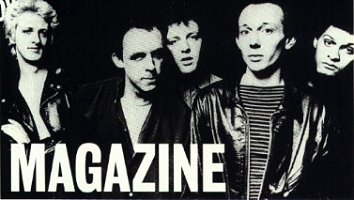
Howard Devoto left his first band Buzzcocks after twelve live gigs and the release of Spiral Scratch EP in 1976. After getting a band together John McGoech (guitar), Bob Dickinson (keyboards), Barry Adamson (bass), and Martin Jackson (drums) the band Magazine was formed in 1977. The band would get a record contract with Virgin Records and Dickinson would leave the group. The single "Shot By Both Sides" was then recorded. The song was previously written by Devoto and Pete Shelley of the band Buzzcocks. The punkish single would crack the top 50, the band would have four early singles including "Shot By Both Sides". The others were "Touch and Go", "Goldfinger", and "My Mind Ain't So Open". The band would get a new keyboardist Dave Formula and then the band would record an album. In 1978, Real Life was released. The album was one of the first post-punk albums alongside with Public Image Limited. The album itself would feature nine tracks one of them being a re-recording of "Shot By Both Sides". The version on Real Life was less raw and more polished. The album also featured keyboards, odd lyrics courtesy of Mr. Devoto and music that could be at times gloomy, but also sharp, pointy, and arty. "The Light Pours out of Me" is an example of this. Other tracks that showed off the bands new post-punk, yet different style were "Motorcade", "The Great Beautician in the Sky" a winding circus-like song, and the strange pop song with piano, synthesizers, and a steady drum beat "Parade". In 2007, and expanded version of this album was released with bonus tracks (the four tracks being the early singles mention earlier).

Secondhand Daylight came next in 1979, the band also got a new drummer John Doyle (Jackson left the band shortly following the bands first tour). The album was not like their debut, it was a darker album featuring more keyboards, snyths, and darker lyrics. The album is an album that sounds very icy, songs such as "Feed the Enemy" and "Permafrost" illustrate this point perfectly. The album does have its moments, "Rhythm of Cruelty" is an upbeat song on this album. The song is closer to the sound of the bands first album Real Life. Overall, Secondhand Daylight was an overlooked album by most because of how different it was. 

The Correct Use of Soap was released in early 1980. This album showed the band returning to the earlier sound they once had with Real Life, but also combining elements of Secondhand Daylight. The album opens with the new wave-ish track "Because Your Frightened". The song is a features crunchy guitar riffs with melodic pull-offs. The song lyrically is more like original Devoto sarcastic and humorous, when the lines "Look What Fears Done To My Body" are repeated in the chorus. "Model Worker" is a more upbeat song musically featuring light piano in the background, synthesizer keyboards similar to Real Life in the choruses, solid drumming, chunky bass and clever Devoto lyrics, this time being about factory life. The album also featured a cover of the Sly & The Family Stone song "Thank You (Fallentinme Be Mice Elf Again)", the fast paced "Philadelphia", and "A Song From Under The Floorboards" (a song compared to "The Light Pours Out of Me"). 

In 1980 Play (a live album) was also released. McGeoch who had been involved with Siouxsee & The Banshees became a full member of that band, so Robin Simon was brought in as a replacement. After touring Simon would leave to be replaced by Bob Mandelson. Magazine would have just one more album before splitting up for good, it would be titled Magic, Murder, and the Weather. Released in 1981, the album did not do well, and most people do not even know it exists. Just after it's release Devoto left the group to pursue a solo career. In the 90's Devoto focused more on being a photo archivist. In 2001, Howard Devoto and Pete Shelley recorded an album together titled Buzzkuntz, under the band name ShelleyDevoto. The album is an experimental electronic album. In 2002, Devoto appeared in the film 24 Hour Party People, a film about a record label in Manchester (where Devoto is from).

In 2000, Magazine released a three CD box set titled Maybe It's Right To Be Nervous Now. This box set catalogued a large majority of material from the bands catalogue including B-sides, alternate mixes, and outtakes. On the third disc there is a collection of the bands BBC sessions done for John Peel. Included on the disc is also a re-working of a Buzzcocks song "Boredom" with organ. It is remade into a more Magazine sounding song. Also in 2000 a compilation/greatest hits type CD was released titled Where The Power Is. The album contains songs found on the box set. It is a great CD for people who are just getting into the band or for hardcore fans and completists. Finally in 2007, all of Magazine's studio albums were expanded and re-released with bonus tracks. In February of 2009, Magazine plans to reunite for some live shows in the UK.


Here's the Play List:

1. Pointed Sticks – its o.k.
2. Rich Kids – only arsenic
3. Public Image Limited – memories
4. The Stranglers – (get a) grip (on yourself)
5. Devo – through being cool
6. XTC – this is pop
7. Elvis Costello & The Attractions – moods for moderns
8. Gang of Four – damaged goods
9. The Police – on any other day
10. Teenage Head – ain’t got no sense
11. Young Canadians – don’t tell me
12. Arson – coho coho
13. Hot Nasties – secret of immortality
14. Wire – French film blurred
15. Talking Heads – new feeling (live)
16. Magazine – touch and go
17. Magazine – rhythm of cruelty
18. The Diodes – midnight movie star
19. Arctic Monkeys – the bad thing
20. The Strokes – whatever happened
21. Radio 4 – too much to ask for
22. Queens of the Stone Age – 3’s & 7’s
23. Mando Diao – tv & me
24. The Hives – uptight
25. The Hives – the hives meet the norm
26. The Gruesomes – I wish you were her
27. The Heatseekers – you been runnin

Here are some Magazine videos:

Shot By Both Sides (Top Of The Pops 1978)
The Light Pours Out of Me
Model Worker (Live 1980)
A Song From Under The Floorboards (Live 1980)
Permafrost (live 1980)
Definitive Gaze (OGWT)
I Can't Control Myself (Devoto reuniting with the original Buzzcocks members)

Wednesday, June 06, 2007

Television Addicts...Show # 148


The Victims stemmed out of another punk band called the Geeks forming in 1977; They came from Perth, Australia. The band who was a three piece consisted of Dave Flick (real name Dave Faulkner) on guitar/vocals, Rudolph V (Dave Cardwell) on bass, and James Baker on drums. The band would not last last long, from 1977 until 1979. Television Addict was the bands first single and debut, it featured the songs "Television Addict" and "I'm Flipped Out Over You". The song "Television Addict" was a menacing song with piercing chunky guitar parts and a bulky bassline, driven by a hard hitting drum beat. Lyrically the song is about a kid who shot someone, his lawyer blamed TV for all the violence and the reason for his actions. The song is a satirical and sarcastic one evident in cleverly worded lines such as "He claimed he was confused between fact and fantasy, It seems he's spent all his time in front of the TV screen", and "Just because I watch Dinah Shore doesn't mean I need a face lift, doesn't mean my brain has slipped".

Next in 1978, the band released their EP known as the No Thanks to the Human Turd EP. The EP would feature the songs previously mentioned plus others like, "TV Freak", "Disco Junkies", and "High School Girls". In 1979, the group split up. James Baker would go on to The Scientists and The Hoodoo Gurus, and band that Faulkner would also be a member of. The band has been featured on numerous Australian punk compilation albums such as All Loud on the Western Front, Tales from the Australian Underground and Do The Pop!.

Another Australian band featured on tonight's show was the Lime Spiders. Lime Spiders formed in 1979 and were influenced by 60's garage rock and psychedelic rock, but were labeled as a post-punk band. The band was formed by Mike Blood (guitar/vocals), Richard Lawson (Drums), Tony Bambach (bass), and Gerald Cohen (guitar). The band would go through numerous line-up changes throughout their span (the line-up mentioned here is from the 1983 version of the group, not the initial 1979 version). The band played a few live shows before breaking up, but they would reform in 1983. After winning a battle of the bands contest, the band recorded the single "25th Hour" in 1983. Next the band would have the single "Slave Girl" which did quite well for independent standards. The band would go through some line up changes and continue recording with "Out of Control" as a four piece group (an excellent cover version of this song can be heard on The D4's Out of My Head Album). In 1985, the band was offered a chance to record a single for the movie Young Einstein. The song they did was called "Weirdo Libido". The Cave Comes Alive! was released in 1987, being the bands first full length album. They would tour the US with acts such as Public Image Limited, and Iggy Pop. Two more albums would follow Volatile (1988) and Beethoven's Fist (1990). In 1990 they band would also break up yet again.

 Here's what was played:

1. Johnny Thunders & The Heartbreakers – let go
2. Count Five – psychotic reaction
3. Standells – dirty water
4. Velvet Underground – run run run (Norman Dolph Acetate 4-25-66)
5. Great Scots – lost in conversation
6. Ugly Ducklings – hey mama
7. Big Town Boys – august 32nd
8. 409 – they say
9. MC5 – thunder express
10. The Stooges – Mexican guy
11. Lime Spiders – 1 2 5
12. The Victims – television addict
13. The Saints – run down
14. The Adverts – safety in numbers
15. The Spys – underground
16. The Sturgeons – forward disorder
17. The Fits – bored of education
18. Ramones – bad brain
19. The Clash – long time jerk
20. X (Australia) - suck suck
21. Compulsive Gamblers – negative jerk
22. Compulsive Gamblers - way I feel about you
23. Green Day – walkin’ the dog (dookie demo)
24. Dirty Pretty Things – you fucking love it
25. Chris Cornell - poison eye
26. Viletones - kick out the jams (live)
27. The Stems - she's fine

Wednesday, May 30, 2007

Different Kinds of Tensions...Show # 147


Buzzcocks originally formed in 1975 hailing from Manchester, England. Howard Devoto (real name Howard Traford) was on vocals, Pete Shelley (real name Peter McNeish) on Guitar, Steve Diggle on bass, and John Maher on drums. Shelley and Devoto (who were friends from school) decided to form a band after seeing the Sex Pistols perform live in Manchester in 1976. The band would get their name Buzzcocks from a TV show Rock Follies, which used the line "That's buzz, cocks" based on British slang. After getting their initial band line up, the band opened for Sex Pistols in Manchester in 1976. Touring briefly the band would record and release the four track EP, Spiral Scratch. The EP would contain four tracks "Breakdown", "Time's Up", "Boredom", and "Friends of Mine". The EP would be raw and loud backed by a band inspired by punk, sung by the odd yet intellectual lyrics of Howard Devoto. The EP was also independently released on the bands own label, New Hormones. Buzzcocks were the first punk band to have their own independently released album, it proved that you could do it yourself, supporting the DIY ethic of the emerging punk scene. A bootleg of these sessions containing fourteen tracks of the band playing with Devoto is also available, it is titled Time's Up. This would not last, Devoto wanting to return to school would leave the group only months after Spiral Scratch was released; In 1978 he would form the new wave group Magazine. The band would not split up after this despite losing their singer. Pete Shelley would take over as vocalist and guitarist, Steve Diggle would move from bass to guitar, and Steve Garvey would eventually be brought in as the bass player; Bassist Garth Smith would play for the band for a short time before being replaced by Garvey.

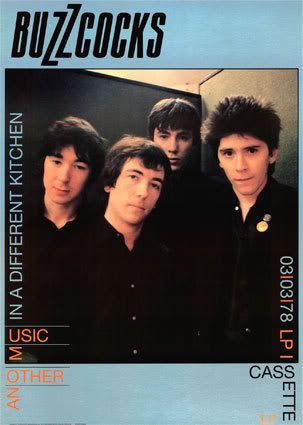
The band would then get a record deal with United Artists Records. The band would be a singles band the first being the song "Orgasm Addict" in 1977. The single was too controversial (lyrically) for radio. Garth Smith would be replaced with Steve Garvey after this single. The next and second single "What Do I Get?" cracked the top 40 charts. The band now fronted by Shelley was more pop oriented, lyrically the subject matter would mostly pertain to the topic of love, but other topics were also used. In 1978 Another Music in a Different Kitchen was released, the bands first full length album. The album would contain songs originally sung by Howard Devoto in the bands early days, but were re-sung by Shelley on this album. The songs "Fast Cars", "You Tear Me Up", and "Love Battery" were the songs done originally written and performed with Howard Devoto. The album would be the first pop punk album, it contained repetitious rhythms, simple solos, all packaged in undeniably catchy songs. "I Don't Mind", "Sixteen", Autonomy", "Fiction Romance" and "Get on Your Own" are all perfect examples of Buzzcocks catchy pop yet punk style.  "Moving Away from the Pulsebeat" was a simple yet longer song by the band which showcased Maher's excellent drumming abilities. The album would also contain brief intros and outros. Before the first track "Fast Cars" some of the song "Boredom" is performed by the band. The album would have a single that would do well chart-wise "I Don't Mind" would go to # 55 on the UK charts.


In 1978, Love Bites was released. The Martin Rushent produced album showed the band coming into their own not having any influence by their previous vocalist, Howard Devoto. It is a more shiny and pop album than Another Music; The album featured 11 songs. "Real World" opens the album which features harmonics and traditional buzzing guitars lyrically it is about love and life (as a good majority of the bands songs are). "Ever Fallen In Love" one of the bands catchiest songs and one of their signature songs is also featured here, the song is a romantic pop song that is about romance gone wrong. The album also contained two instrumental tracks ("Late For The Train", and "Walking Distance") and Steve Diggle's first lead vocal track on an album "Love Is Lies" an acoustic track. Other highlights include "Nothing Left", "Sixteen Again", and "E.S.P.".

A year later the band released their third album A Different Kind of Tension in 1979. The album which was made after tours supporting the bands two previous albums was made at a time when the band was showing signs of wear and tear; Another reason for this is because of their alcohol and drug consumption. The album came off sounding as more of a New Wave album. The album which I consider their best also featured more Steve Diggle songs that any previous album. It was a more sophisticated album and was inspired lyrically by literature. The title came from American writer William Burroughs, and the track "Everybody's Happy Nowadays" (which was a single not included on the album) was about the novel Brave New World by Aldous Huxley. Diggle's songs included "Sitting Around At Home", "Mad Mad Judy" and "You Know You Can't Help It". Shelley's songs were also brought up a notch with songs like "Paradise", "Raison D'etre", "I Don't Know What To Do With My Life", he also had some songs that seem of a darker nature lyrically and musically ("Money" and "Hollow Inside"). "I Believe" is a longer track in which the band follows along the same repetitious rhythm and Shelley gives his opinions and views; the song ends with the line "There is no love in this world anymore" being repeated over and over again. The album ends with "Radio Nine" a short 41 second outro that emulates a radio station tuning into Buzzcocks songs "Everybody's Happy Nowadays" and "Why Can't I Touch It?", songs that were singles for the album, but not put on the album.

Singles Going Steady was released in America in 1979 to coincide with their first American tour. The album contained 16 tracks which were all of the bands UK singles and B-sides. It featured songs such as "Ever Fallen In Love", "What Do I Get?", "Love You More" and "What Ever Happened To". The album also contains the songs "Everybody's Happy Nowadays", "Harmony in My Head" (one of Diggle's finest songs), and "What Can't I Touch It?" (a six and a half minute track fuelled by a heavy hypnotic bassline). Some people compare this album to being similar (impact and quality-wise) as Nevermind The Bollocks (Sex Pistols), and London Calling (The Clash). In 1980 the band was signed to Liberty Records. They would release the Parts 1, 2, 3 EP which featured a series of singles (3 singles, with the B-sides totalling six songs). The EP showed a band that sounded confused and the songs had things such as horn sections. The EP's songs were induced by drug addiction and the chaotic nature of the band just before its demise. There were three Diggle songs, and three Shelley songs. In 2001, Singles Going Steady was re-released with bonus tracks that included the Parts 1, 2, 3 EP. Around 1981 the band would start demoting songs for a fourth album, they would also have to deal with record label conflicts (United Artists were bought out by EMI Records). The band broke up in 1981 and Shelley would pursue a solo career. Other band members would form other groups (Diggle and Maher formed the short lived Flag of Convenience, Garvey would play with Motivation).

In 1989, Buzzcocks would reform with the same line up as in 1980 for a reunion tour of the United States. Maher and Garvey would leave the group shortly after and Maher would be replaced by Mike Joyce (The Smiths) on drums and Tony Barber would take over the bass. In 1993, Trade Test Transmissions would be released, the bands first album with the new line up. The band would also open up for the band Nirvana on some European tour dates as well. Three more albums would follow in 1996 All Set, in 1999 Modern, and in 2003 Buzzcocks. In 2003 the band also secured an opening slot for the band Pearl Jam on their American tour. Finally in 2006, Flat-Pack Philosophy was released. It is an album that sounds like a return to the early Buzzcocks style. The band continues to tour.

In October of 2008, Buzzcocks Released their first three albums in special edition format, with numerous bonus tracks. More information on these releases can be found in my A Different Music in a Different Kitchen Post, my Love Bites post, and my Different Kind of Tension post. In June of 2008, I also did a radio special celebrating the music of Buzzcocks, which can be found in my Harmoines in My Head Post.

Here's the play list:

1. Stray Cats – rumble in brighton (live 82) 
2. The Jam – news of the world
3. Undertones – here comes the summer
4. The Numbers – when I get older
5. The Wipers – can this be
6. DM3 – high rotations
7. Northwest Company – eight hour day
8. 49th Parallel – citizen freak
9. White Stripes – handsprings
10. Generation X – day by day
11. The Scavengers – twentyone
12. Only Ones – out there in the night
13. Buzzcocks – mad mad judy
14. Buzzcocks – raison d’etre
15. The Demics – the least you could do
16. The Gruesomes – who dat?
17. Hot Nasties - I am a confused teenager
18. The Onoffs – your loss
19. The Draytones – keep loveing me
20. Carbon/Silicon – the news
21. Marble Index – not impressed
22. Sloan – G turns to D
23. Arctic Monkeys – fluorescent adolescent
24. The Hives - Untitled (Live Hurricane Festival)
25. The D4 – rocknrule
26. Sex Pistols - pretty vacant
27. X - adult books
28. The Jam - in the city

Monday, May 21, 2007

Stop Making Sense...Show # 146


Forming in 1974, Talking Heads began as a three piece group. The group consisted of David Byrne (vocals/guitar), Tina Weymouth (bass), and Chris Franz on drums. The group formed while at school (Rhode Island School of Design). The name Talking Heads would come from a term that is used when filming in TV. In 1975 the group got an opening spot for the Ramones at CBGB's. A year later in 1976, another member would be added to the group, Jerry Harrison (formerly of The Modern Lovers). He would be the Keyboardist and another guitarist for Talking Heads. The group got a record deal through Sire Records (as did Ramones) and released their first single Love → Building on Fire in 1977. It was recorded when the band was still just a three piece group. It was also produced by Tony Bongiovi (also known as Tommy Ramone). The band’s first album would also be released shortly after in 1977, it would be titled Talking Heads ‘77. The album would also be one of the first albums labelled under the New Wave genre. It featured songs such as "Psycho Killer", "Don't Worry About the Government", "Uh-oh When Love Comes to Town". The album would make it to the charts despite low album sales (#97 on the Billboard charts), it would be their first, but minor taste of success. The lyrics would not be your of your normal topics they were intelligent and were of varying topics, they were also delivered in a quirky, sporadic style.

1978 saw the release of More Songs About Buildings and Food. The album drew more on the bands funk influences as opposed to the first which seemed to be fueled by the energy of the new and emerging New York punk scene at the time. The album did not do as well in sales, but it did display the energy of the band as did the first album. The album would reach # 29 on the Billboard charts, and it would also feature a cover of the Al Green song "Take Me To the River". The album showed that the band was still full of energy. Songs such as "Found a Job" a funky five minute piece, "Artists Only" a keyboard new wave track, and "Stay Hungry" a song eerily similar to the more recent Red Hot Chilli Peppers track "By The Way". The band who was known as an Art-Rock, New Wave band, definitely showed it on this album. The album was also produced by Brian Eno (Roxy Music, David Bowie), he gave them a new sense of direction and song structure.


In 1979, Fear of Music was released. Eno once again worked with the band. The album would jump into a different musical direction while still remaining New Wave. African rhythms would be added to the mix. The album mostly written and recorded in the live setting, was a step into a different direction for the band, yet again. The first song of the album "I Zimbra" is a African vibed song with lyrics inspired from a Dadist poem. "Life During Wartime" is a powerful track, lyrically and musically. The song is about guerrilla movements in the US and live underground music scenes, referenced in the lyrics "This ain't no party/This ain't no disco/This ain't no fooling around". The album also contained the eerie and melodic "Heaven" and "Air" a song about air pollution. Also Robert Frip known for the work he's done with King Crimson, added some guitar to the tracks. The album is just as good as any in the bands catalog.

Remain in Light came in 1980. It was yet again produced by Brain Eno he is even credited for some of the music compositions. The band jumped further into the African rhythms, but also added funk with a New Wave spin. The album contained the track "Once in a Lifetime" which would do good in the UK but not in the US. There also seems to be some early New York rap influence on this album as well with the song "Houses in Motion". This would be the groups last album with Eno. The band would go on tour in support of the album then take a short break and embark on some side projects. In 1983 the band returned with Speaking in Tongues. The album had a more 80's vibe, it also featured the song that would be a big hit for the band "Burning Down the House". The album also featured the pop masterpiece "This Must Be the Place (Naive Melody)". The band would go on a tour which would be filmed and can be seen in the film Stop Making Sense, which was directed by Johnathan Demme. This would also be the bands last tour. In 1982, a double live album was released titled The Name of The Band Is Talking Heads. The album featured songs from the bands early and later career. In 1984, Stop Making Sense, the soundtrack from the film was released, consisting of live performances from the film.


David Byrne would then direct his first film titled True Stories in 1985, which was a musical comedy. Little Creatures another Talking Heads album was released in the same year. The album was said to be more of a pop album than any of the previous albums by the band. The album drew in new influences such as Country. The album contained great tracks such as "And She Was", "Stay Up Late", and "Road to Nowhere". In 1986, the album True Stories was released, which was named after the Byrne film. It is a collection of odds and ends from the bands catalog, but there are some great worth while tracks on it. "Wild Wild Life" (which would be the bands biggest hit), "Love For Sale" (created for the film), and "Radio Head" (the song where the modern band Radiohead got their name from). Apparently Byrne originally did not want his vocals on the tracks, but those of the actors in his musical film instead (these would be later released as B-sides).

1988 saw the release of the last Talking Heads album Naked. This time the band combined the sound of Little Creatures with Remain in Light and Latin and world music. The album contained songs such as "Blind" and "Mr. Jones". The band would then go on hiatus for a while. After recording one more song for a movie "Sax & Violin's" in 1991, the band called it quits. Byrne would go onto his solo career and Tina Weymouth and Chris Franz would continue recording with their side project Tom Tom Club; They were recording since 1981. Jerry Harrison would also do solo projects and produce albums such as Foo Fighters (on the song "Walking After You"), Von Bondies, No Doubt, and Live. In 1996, the group wanted to reunite for an album, but Byrne did not want any part of it, so the band got some guest musicians and released an album called No Talking Just Head, and the band would be known as The Heads. In 2002, when the band was inducted into the Rock & Roll Hall of Fame they played together for one last time. Despite playing together again, Byrne still says there will be no reunion for the group.

In 2003, a boxset Once in a Lifetime was released compiling material from the bands career on to three discs and a DVD containing the bands music videos. The set also contains a few rarities and B-sides. 2004 saw the release of a greatest hits album The Best of the Talking Heads by Rhino Records. In 2005, Talking Heads Brick Boxset was released. The album contained all eight studio albums remastered with bonus tracks. It was a dual disc boxset which meant that one side was the remastered CD with bonus tracks (which includes B-sides, demos, and outtakes), and the other side was a DVD that contained a 5.1 Surround Sound mix of the album and videos of the band. In 2006, all the albums were released individually in the dual disc format.


For more information on the band visit Talkingheads.net.

Here's the play list from the show:

1. Magazine – my mind ain’t so open (bbc session)
2. Gang of Four – return the gift
3. Devo – wiggly world
4. 4/4 – all wound up
5. The Fans – you don’t live here anymore
6. Blondie – hanging on the telephone
7. The Victims - TV freak
8. The Diodes – tennis (again)
9. The Diodes – headache
10. Pointed Sticks – waiting for the real thing
11. Wire – fragile
12. Wire – champs
13. The Police – low life
14. Talking Heads – paper
15. Talking Heads – mind (alt version)
16. Ultravox! – frozen ones
17. Bureaucrats – feel the pain
18. Modernettes – teen city
19. Ride Theory – walk the line
20. Young Rival – dead end scene (demo)
21. Television – double exposure (1974 demo)
22. Richard Hell & the Voidoids – ignore that door
23. Tricky Woo – altamont raven
24. Tricky Woo – alright
25. Fiction Plane – anyone
26. Fiction Plane - death machine
27. Exploding Hearts – boulevard trash
28. The Caesars - may the rain

Here's some Cool Talking Heads Videos:

David Byrne on Letterman 1983 Part 1
Talking Heads on Letterman Part 2
Once in a Lifetime Music Video
This Must Be the Place Video
Found a Job from the Stop Making Sense Movie
Born Under Punches Live in Rome 1980
Psycho Killer 1982

Wednesday, May 16, 2007

Pump It Up.. The Elvis Costello Story & Show # 145


This post used to feature information about Elvis Costello & The Attractions.  For more information on Elvis Costello & The Attractions visit these links:

Get Happy: An Article On Elvis Costello & The Attractions Get Happy! Album

Here's what was played on the show:

1. Ramones - carbona not glue
2. The Damned - neat, neat, neat
3. Ugly Ducklings - nothin'
4. The Jury - who dat?
5. Midnight Angels - i'm suffering
6. The Pretty Things - buzz the jerk
7. 13th Floor Elevators - you're gonna miss me
8. The Dogs - my life
9. Dead Boys - sonic reducer
10. Teenage Head - something else
11. The Gruesomes - the witch
12. Young Canadians - Hawaii
13. 999 - emergency
14. The Clash - pressure drop
15. The Saints - lost and found
16. Madness - the prince
17. The Beat - twist & crawl
18. The Selector - street felling
19. The Specials - nite klub
20. Elvis Costello & The Attractions - accidents will happen
21. Elvis Costello & The Attractions - clean money
22. The Features - city scenes
23. Albert Hammond Jr. - postal blowfish
24. Arctic Monkeys - balaclava
25. Queens of the Stone Age - era vulgaris
26. The Stooges - end of christianity
27. KO & the Knockouts - go-getter
28. King Beez - little girl

Thursday, May 10, 2007

What Do You Call That Noise?...Show # 144


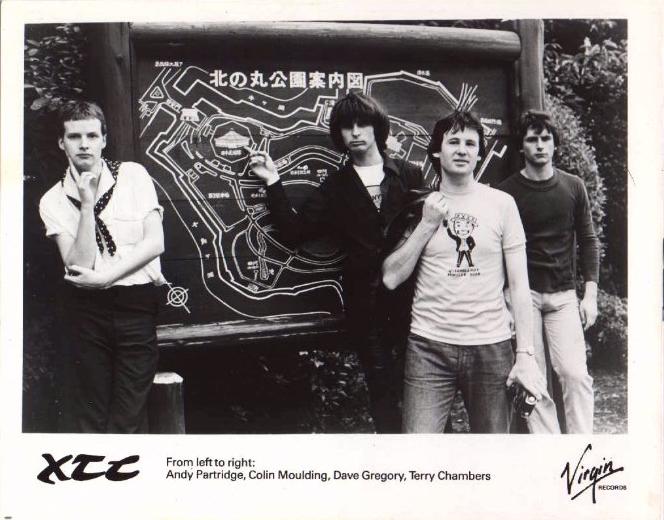
Coming from Swindon, in London England, one of the first incarnations of XTC was in 1976, but they were then known as Star Park. After going through a few name changes, they changed thier name to XTC (taking its name from the drug known as Ecstasy, XTC being the shorter street name for the drug) in 1977 after being turned down by CBS. An EP titled 3-D was then released in 1977 on Virgin records. The band consisted of Andy Partridge (guitar/vocals), Colin Moulding (bass), Terry Chambers (drums), and keyboardist Barry Andrews. They were a British New Wave Pop band that came out at the time of the UK punk explosion in the late 70s. Influenced largely by the New York Punk scene, XTC also had a vareity of influcences. Bands such as The Clash, Sex Pistols, Dub Music, Bob Dylan, The Kinks, Pink Floyd, The Beach Boys and The Beatles were some of the msuical influence that built up XTC's sound.


White Music was released in 1977. It featured Catchy but odd pop songs such as, "Statue of Liberty", "This is Pop?", and "Radio's in Motion". The album also contained a cover the Bob Dylan song "All Along the Watch Tower", in true XTC style. None of punk inspired pop songs charted. In 1978 Go 2, was released. The album featured a different tracklisting in the UK than in Canada/The US. The album's cover is also very unique. Instead of a typical cover, it features typewriter text. After a quick US tour there would be some line up changes amongst the band. Keyboardist Barry Andrews would leave the band and would go on with Robert Fripp to form The League of Gentleman. Another guitarist was added at this time David Gregory. Gregory was added instead of finding another keyboardist. XTC would then record the single "Life Begins at the Hop", their first single to chart. The album Drums & Wires followed in 1979. The record was a more poppier album than the first two. It would reach #37 on the charts. Black Sea came out in 1980, which produced more hits for the band. "Sgt. Rock", and "Generals and Majors" were singles. English Settlement would be released next in 1982. It would be a double album that gave the band a top ten hit, "Senses Working Overtime". 

In support of English Settlement in 1982, while the band was on a major tour, Partridge suffered a complete mental breakdown, causing panic attacks. The tour would be canceled. Also at this time drummer Terry Chambers would leave the band. Partridge said that the band would never perform on stage again. They then announced that they would be a studio only band, not performing live, except for some TV appearances. This would last from 1982 until the present. Mummur was released in 1983, and the band had a new drummer Pete Phipps. The Big Express followed in 1984, and Skylarking in 1986. The Todd Rundgren produced album brought the band back to commercial success, despite the fact that Partridge was not happy with the finished product. The band would continue to record, and in the late 90s the band would no longer be with Virgin Records. 


XTC would go independent in 1998. Partridge discovered around this time that the record company was with holding royalties from the band. After a settlement, Partridge and Moulding built their own studio, and formed their own label Idea Records. When recording their next album Apple Venus Volume 1, Dave Gregory left the band. The band would continue to record and release albums despite losing Gregory who had a great impact on XTC's sound. The next album Wasp Star (Apple Venus Volume 2) was released in 2000.

Here's the play list:

1. Big Audio Dynamite – v. thirteen
2. Public Image Limited – f.f.f.
3. Rich Kids – empty words
4. The Police – bombs away
5. Elvis Costello & The Attractions – radio, radio
6. Gang of Four - at home he's a tourist (bbc)
7. Only Ones – another girl, another planet
8. Active Dog – nothing holding you
9. AKA – 634 dog
10. Hot, Hot, Heat – get in or get out
11. XTC – life begins at the hop
12. Talking Heads – artists only
13. The Mods – out of your hands
14. The Odds – say you mean it
15. Wire – too late
16. The Pretenders – the wait
17. Iggy Pop – five foot one
18. Offspring – I got a right
19. Love Me Nots – move in tight
20. The Rapture – whoo! Yeah alright…uh-huh
21. Joe Strummer & the mescaleros – globo a go-go
22. The D4 – mysterex
23. Sloan – living with the masses
24. Sloan – HFXNSHC
25. X – we’re desperate

Here's some cool XTC Videos:

Tuesday, May 01, 2007

Another Band, Another Planet... Show # 143


The Only Ones were formed in 1976 by Peter Perrett. John Perry was on guitar, Alan Mair on Bass and Mike Kellie on drums. The band was influenced by bands such as The Clash, Buzzcocks, Ramones, but also bands such as New York Dolls, 60s garage and psychedelic music. The band was lumped in with the late 70s Punk and early 80s New Wave movement. The band is more of power pop band that just came out at the time of punk, but never the less are punk in nature.  The band was known for Perrett's sleazy romantic pop songs.

After independently releasing a single in 1976 ("Lovers of Today") the band got a record deal with CBS in 1977. Their first album The Only Ones was released in 1978 and contained the single and one of their best songs, "Another Girl, Another Planet". The album received good reviews, but the band would never really gain mainstream or popular status. In 1979 Even Serpents Shine came out and Special View was released in America. Basically Special View was like a compilation-type album for America (similar to the US release of the first Clash album). In 1980 Baby's Got A Gun was released. Both Even Serpents Shine and Baby's Got a Gun were slightly different than the first Only Ones album, but still maintained the Only Ones Sound.

In 1981, the group split up. They would release three albums, but would gain a cult following partly due to the fact that "Another Girl, Another Planet" was liked so much by fans. The band would have many post-humous releases after this. In the 80's Perrett would record and release solo albums, and one in the 90s. In 2007, The band reunited. The Only Ones did a UK tour in June of 2007 and toured thorough out 2008 and 2009.

I also played a new track from Queens of the Stone Age titled, "Sick Sick Sick". The song features Julian Casablancas from The Strokes and will be on the Upcoming Queens of the Stone Age album Era Vulgaris.

Queens of the Stone Age - Sick Sick Sick Video

Here's the play list:

1. Ultravox! – rockwrock
2. Demics – talk, talk
3. Vibrators – wake up
4. Blam Blam Blam – there is no depression in New Zealand
5. The Radiators – prison bars
6. Sex Pistols – did you no wrong
7. Johnny Thunders – leave me alone
8. The Gruesomes – serves you right
9. Smugglers – to serve, protect, and entertain
10. Tricky Woo – let us sing
11. Marble Index – we can make it
12. The Strokes – the way it is
13. Arctic Monkeys – d is for dangerous
14. Queens of the Stone Age – sick sick sick (featuring Julian Casablancas)
15. Neil Young – see the sky about to rain (live Massey Hall 1971)
16. Undertones – I told you so
17. Buzzcocks – nothing left
18. Generation X – live medley (Live in Sheffield 1978)
19. Carbon/Silicon – the system
20. Nirvana – stay away
21. Nirvana - territorial pissings
22. Pearl Jam – grievance
23. Pearl Jam - God's dice
24. Soundgarden – no attention
25. Soundgarden - Ty Cobb
26. Rage Against The Machine – tire me

Thursday, April 26, 2007

You Can't Put Your Arms Around a Memory... Show # 142


Johnny Thunders was born John Anthony Genzale Jr. in Queens, New York and is known as being the guitar player in the proto punk glam rock band, New York Dolls. A band that influenced numerous punk bands such as Sex Pistols and The Clash. Johnny Thunders was a guitarist that would struggle with battles of drug and alcohol addiction throughout his life, living similar to his idol Rolling Stones guitarist Keith Richards. Thunders influences included The Rolling Stones, Chuck Berry, The Kinks, The Yardbirds, and various blues and R&B artists.

Thunders originally went under the name Johnny Volume being in various bands before joining the New York Dolls in 1971. At this time he renamed himself Johnny Thunders, possibly due to the fact that the Kinks had a song called "Johnny Thunder" on their 1968 album The Village Green Preservation Society. After releasing two albums The New York Dolls and Too Much Too Soon, The New York Dolls broke up. They were also managed by a short time by future Sex Pistols manager Malcolm Mcclaren.

The Heartbreakers were formed shortly after with New York Dolls drummer Jerry Nolan, Walter Lure on guitar, and Richard Hell on bass. Richard Hell would leave just after being in this band for a short while, he was replaced by Billy Rath. With Johnny Thunders as the band leader, Johnny Thunders & The Heartbreakers released L.A.M.F. (Like a Mother Fucker) in 1977. The album was one of the best punk albums to come out of New York at this time. It featured Sleazy punkish rock and roll in true Rolling Stones fashion. The album contained numerous tracks and one titled "Chinese Rocks" that was written by Johnny Thunders, Dee Dee Ramone, Richard Hell, and Jerry Nolan. The song a reference to heroin was featured not only on L.A.M.F., but also on the Ramones album End of The Century. The song makes reference to Dee Dee Ramone in the Thunders version with the line "Hey is Dee Dee Home" and to Johnny in the Ramones version with the line "Hey is Johnny Home". 


The band was featured on the Anarchy Tour with UK punk acts such as Sex Pistols, The Clash, and The Damned in 1977. The tour known for having more shows cancelled than played was an infamous tour in UK punk history. The band would move to the UK as well. The band would tour on and off, but would split up after this album, which got poor promotion. 

In 1978, So Alone a Johnny Thunders solo album was released. The album would feature guest musicians such as Steve Jones and Paul Cook of Sex Pistols, but also Chryssie Hynde (Pretenders), Walter Lure, Billy Rath, and Peter Perrett (Only Ones). The basic band was Thunders, Jones, and Cook though. The album featured a remake of a New York Dolls song "Chatterbox" from their album Too Much Too Soon; It was retitled "Leave Me Alone". The album also featured a cover of the Chantay's surf classic "Pipeline", and the excellent Johnny Thunders track "You Can't Put Your Arms Around A Memory". This album along with L.A.M.F. is Johnny Thunders best work. Due to laziness probably caused due to drug addiction, Thunders continued to record, but it was off and on. Apparently shortly after its release Thunders played in the band The Living Dead for a little while. In 1984 L.A.M.F. was re-released as L.A.M.F. Revisited. It was a remixed version of the 1977 album done by Thunders and members of The Heartbreakers. In 1985 a collection of new songs by Thunders was released Que Sera Sera.

Thunders would continue to perform throughout the 80s and was also in the band Gang War with MC5 guitarist Wayne Kramer. The band has several live bootleg recordings, but also did record some demos. In 1991, Thunders died of what many people believe was a drug overdose. The issue of his death is controversial because some people believe that he was murdered. The details of how he passed may never be known, but his music still stands up in not only the New York Dolls, but also Johnny Thunders & The Heartbreakers and as a solo artist.

Several years after this post, I wrote an article on The Heartbreakers L.A.M.F. album.  Check that out here.  

Here's this weeks play list:

1. MC5 – keep movin’
2. Velvet Underground – foggy notion
3. The Who – (I’m a) road runner (live)
4. The Stooges – she took my money
5. Johnny Thunders & The Heartbreakers – pirate love
6. Diodes – blonde fever
7. The Furies – what do you want me to be
8. Corsage – shame I feel
9. U-J3rks – Eisenhower and the hippies
10. The Saints – messin’ with the kid
11. John Lennon – cold turkey
12. The Clash – Janie Jones
13. The Clash – Capital radio one
14. The Dogs – no way
15. Modernettes – Barbra
16. Popular Front – synchronized swimmers
17. Ramones – rockaway beach
18. Ramones – cretin hop
19. Libertines – vertigo
20. Ride Theory - i'm on board
21. Dirty Pretty Things – blood thirsty bastards
22. Radio 4 – as far as the eye can see
23. Subways – with you
24. Raconteurs – broken boy soldier
25. Arctic Monkeys – brianstorm
26. Arctic Monkeys – teddy picker
27. The Gruesomes - come and see me (i'm your man)

Tuesday, April 17, 2007

Friction... The Television Story ... Show # 141


Television was interesing band that came out of the New York CBGB's scene in the late 70s. The group would be influenced by The Rolling Stones, 13th Floor Elevators, Count Five and Velvet Underground. In addition to this, it is apparent that Tom Verlaine and the band had an interest in Jazz music. In 1975, Tom Verlaine and Richard Hell formed Television. After recording a demo and playing live with the band, Hell would leave the group to form his own. Fred Smith (ex Blondie bassist) would replace Hell. The group would have Richard Lloyd on rhythm guitar and Billy Ficca on drums (Verlaine would be vocalist/guitarist). Despite making a demo produced by Brian Eno, the band did not get signed. It wasn't until the group recorded the song "Little Johnny Jewel" (a song apparently about Iggy Pop) on their own record label that they would get notice. The song became a hit with the underground and in 1976 they would sign to Elektra Records. The group also convinced CBGB's owner Hilly Kristal to let them play at his club which stood for (Country Blue Grass and Blues music), Television were the first rock band to play at CBGB's. The place would become a significant venue for the New York Punk Rock movement of the late 70s.


When Marquee Moon was released in 1977 it received recognition, but did poorly in album sales. It did fairly well in the UK (reaching #28 on the charts), but it did not do well in America. The album is a classic album, that employed garage rock, jazz influenced guitar lines and a rhythm style that would influence New Wave and Post Punk. The album was originally made up of eight tracks. When it was re-issued in 2003, it was expanded with alternate versions of songs and other bonus tracks. Songs featured on the album such as "See No Evil", "Prove It", and "Friction" really stand out. The song "Venus" is an interesting composition. Lyrically it addresses finding safety in the lost arms of the mythological Greek statue Venus de Milo. There is also the ten minute "Marquee Moon". When "Marquee Moon" was originally released in 1977, it faded out a little after 9 minutes. The re-issue contains the full version of the song without a fade out, it lasts for almost 11 minutes. These songs combined with the wonderful weaving guitars supplied by Verlaine and Lloyd, all make the album a work of art.

Television's second album Adventure, would be released in 1978. The album did better sales-wise in America, and would eventually become a top ten hit in the UK. It was produced differently. Instead of the album sounding straight to the point (as Marquee Moon did), Adventure features a different side of the band. It still had great songs such as "Foxhole", "Careful" and "Glory". Both "Foxhole" and "Careful" were songs that the band played during their early lives shows. Members of the band all had their own visions of what Television should be which would partly lead to their break up. That combined with Richard Lloyd's drug related issues, would cause Television to break up in 1978. Fred Smith would re-join Blondie and the two guitarists, Verlaine and Llyod would pursue solo careers.

In 1991, the group re-formed and recorded an album Television that would come out in 1992. The reunion did not last long, they would stop touring in 1993. In 2001, the group reformed again for a few shows in the UK. Several bootlegs of the band exist. There are live releases such as The Blow-Up, Live At The Academy and Live At The Old Wardorf are all excellent examples of the bands live qualities. Television was yet another band that were around for a short time that made a huge impact. While the albums did not sell that much at the time they influenced numerous other bands musically.

Here's the play list:

1. Neil Young – don’t let it bring you down (live Massey Hall 1971)
2. Tell-tale hearts – I get up in the morning
3. The Shades – new clientele
4. The Jam – going underground
5. The Zeros – radio fun
6. Riff Raff – what’s the latest
7. Klark Kent – don’t care
8. The Gears – baby runaround
9. Magazine – shot by both sides (single version)
10. Elvis Costello & The Attractions – (i don't want to go to) chelsea (BBC)
11. XTC – science friction
12. Hot, Hot, Heat – save us s.o.s.
13. Pointed Sticks – somebody’s mom
14. Young Canadians – just a loser
15. Smugglers – paper doll
16. Rolling Stones – she said yeah
17. The Metros – on the radio waves
18. Television – prove it
19. Television - see no evil (alternate version)
20. Red Hot Chili Peppers – I get around (live)
20. Talking Heads – with our love
21. The Visitors – hell yes
22. The Hives – see through head
23. Dead 60’s – horizontal
24. Fiction Plane – two sisters
25. The Jam - that's entertainment
26. Buzzcocks - ever fallen in love
27. Wire - i am the fly

Saturday, April 07, 2007

Blank Generation comes in spurts... Show # 140


Richard Hell was one of the originators of punk in the CBGB's scene. Richard Hell (real name Richard Myers) is known for his fashion, poetry and music. He would move to New York (originally he was from Lexington, Kentucky) to join his friend Tom Miller (later he would change his name to Tom Verlaine) and the two formed the Neon Boys in 1972. They would be a three piece with Hell on bass, Verlaine on guitar and Billy Ficca on drums. The group would not last long and would eventually the Neon Boys would Morph into the band known as Television. Richard Hell would not last long in Television due to the positions of creative control within the band. It has been said that Verlaine eventually refused to play Richard Hell written songs and would tell Hell to stop jumping around on stage during the songs. Despite this Richard played with Television for a short while, Hell would leave in 1975 along with his compositions. It was around this time that The New York Dolls split up and guitarist Johnny Thunders and drummer Jerry Nolan were looking for a new group. Lasting for approximately eight months, Richard Hell briefly played Bass with Johnny Thunders & the Heartbreakers. He would quit due to various reasons, one being that he felt cramped and was not very happy with the musical situation amongst the band.


A few months after this, Hell formed his own band. They would be known as Richard Hell & the Voidoids. Consisting of Hell on bass, Ivan Julian on guitar, Robert Quine on guitar and Marc Bell on drums (later he would be known as Marky Ramone), the bands first release was Another World EP in 1976. It only featured three songs, "Blank Generation", "You Gotta Lose", and "(I Could Live With You In) Another World". In 1977 Blank Generation was released on Sire Records. Being the bands first full length album, It is a punk classic from the era which was fresh and both artistic. The album would feature songs such as "Blank Generation", "Love Comes in Spurts", "Liars Beware" and "Betrayal Takes Two". It should be noted that the versions of "Blank Generation" and "(I Could Live With You In) Another World" on the Blank Generation LP are different than the versions found on the Another World EP.

The group would play among the CBGB's crowd alongside Blondie, Ramones and Talking Heads. Hell would wear a fashion style of ripped clothing that would become known as the punk fashion in the UK when punk broke there in 1977. The band would open for the Clash, but they would never gain the popularity of a band such as The Clash or Sex Pistols. They did not tour enough to support their albums. The group seemingly broke up, but in 1982 they returned minus guitar player Ivan Julian. In 82, Destiny Street was released. The album would feature covers and few new compositions. The band gained new members Naux as the second guitarist and Fred Maher on drums (Marc Bell left to become a member of the Ramones during the Voidoids hiatus). The album would feature six new compositions (one B-side), and three covers (the Kinks, Them, and Bob Dylan). After this the group once again failed to tour behind the album and would break up.

In the 80's Hell would continue to do poetry and was in a few movies. In 1980 he was in the film Blank Generation, and in 1985 he was in Desperately Seeking Susan with Madonna. In 1984 a collection of outtakes was released titled R.I.P., and later Funhunt (a live album). Hell would be involved with various smaller musical projects, in 1992 he joined Dim Stars (a group that had Quine from the Voidiods and Thurston Moore from Sonic Youth) and would release an album. He would release various novels of his poetry, and in the late 90's he was featured in a book called Please Kill Me : The Uncensored Oral History of Punk. In 2000, the Voidoids reformed with the original line-up and recorded a new song "Oh". In 2005, Spurts: The Richard Hell Story would be released, an anthology cataloging Hell's career with various groups.

I also played two new Arctic Monkeys tracks "The Bad Thing", and "Old Yellow Bricks" which is on their new upcoming album Your Favorite Worst Nightmare. The album isn't released until April 24th, but if you look hard enough on the net you can find it. I also suggest if you do download it and you like it, go and buy it when it comes out on April 24th, as I will be doing.

Here's the play list:

1. Sex Pistols – problems
2. Chuck Berry – too much monkey business
3. The Kinks – harry rag
4. Scavengers – money in the bank
5. Buzzcocks – paradise
6. The Demics – new york city
7. Teenage Head – picture my face
8. Gruesomes – what’s your problem?
9. Los Strait Jackets - all day and all of the night
10. Richard Hell & The Voidoids – kid with the replaceable head
11. Richard Hell & The Voidoids – time
12. Generation X – flash as hell
13. Public Image Limited – analisa
14. Wire – outdoor miner
15. The Police – does everyone stare
16. Neil Young – cowgirl in the sand
17. Modernettes – I can only give you everything
18. Marble Index – I don’t wan to try and change your life
19. The Stooges – greedy awful people
20. The Stooges - she took my money
21. The Briefs – stuck on you
22. The D4 – exit to the city
23. Sloan - nothing lasts forever anymore
24. Sloan – back stabbin’
25. Arctic Monkeys – the bad thing
26. Arctic Monkeys - old yellow bricks

Tuesday, April 03, 2007

Terminal Rock...Show # 139


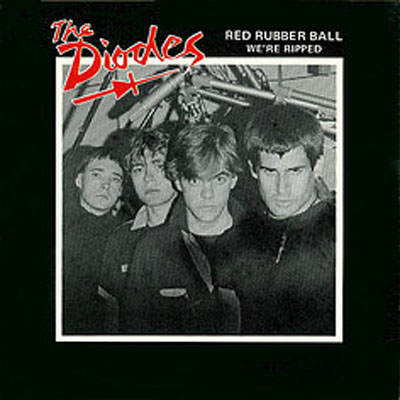
The Diodes are a Canadian band from Toronto, Ontario. They were signed to Columbia Records in 1977 making them the first Canadian punk band to be signed to a major label. In 1978 their first self-titled debut was released. It featured a cover of the Paul Simon song "Red Rubber Ball". The band was influenced by punk bands such as The Clash and Ramones, but they also had a different melodic almost new wave style to their songs. It was obvious that the band was punk influenced and the album was available in the US and UK. The band would tour with other acts such as Ramones, the Nerves, Talking Heads, Ultravox! and U2. They had credibility. The band consisted of Paul Robinson (vocals), John Catto (guitar), Ian Mackay (bass), Mike Lengyell (Drums).

In 1979, their second album Released came out. The song "Burn Down Your Daddies House" was cut from the final album due to the fact that it was seen as controversial. Due to poor album sales, the band was dropped from their label after this album. The band would move to England and release Action/Reaction in 1980. The band would break up after this and release an album featuring outtakes and demos in 1982 titled Survivors. In 1983 members of The Diodes and The Barracudas formed a band called High Noon. They recorded material in London, but it has never been released. In 1998 Tired of Waking Up Tired a combination of the bands first two albums, served as a greatest hits of their material released for Columbia (from 1977-1979). The band also reformed in January 1999 to play on The Mike Bullard Show in Canada, for one time only to promote Tired of Waking Up Tired.

One more thing I have to mention please visit the CJAM Jammie web page and vote for the Jammies. The voting ends on April 6th.

Here's the Play List:

1. Pretty Things – midnight to six man
2. Small Faces – sha-la-la-la-lee
3. MC5 – shakin’ street
4. Diodes – midnight movie star
5. Neon Boys – that's all I know
6. Real Kids – reggae reggae
7. Piranhas – green don’t suit me
8. Pointed Sticks – the witch
9. Tricky Woo – get around
10. The Stems – can’t resist
11. Lime Spiders – out of control
12. The Saints – one way street
13. Ramones – Havana affair
14. The Clash – (whiteman) in Hammersmith Palais
15. Undertones – more songs about chocolate and girls
16. Fastbacks – won’t have to worry
17. Vindicators – thinking of birds
18. Joy Division - leaders of men
19. Mudhoney – poisoned water
20. The Stooges – free & freaky
21. The Doors – take it as it comes
22. Neil Young – the needle and the damage done (live at Massey Hall 1971)
23. Neil Young - tell me why (live at Massey Hall 1971)
24. Ride Theory – hey sugar
25. White Stripes – walking with a ghost
26. The Scientists - atom bomb baby