Tuesday, April 16, 2013

Mudhoney's Vanishing Point & Show # 452


Mudhoney released Vanishing Point their ninth full length album on April 4th, 2013 via Sub Pop Records. The band has come a long way from 1988’s Superfuzz Bigmuff, however this new album builds on some of the bands earlier sounds and influences, while at the same time bringing in elements of 2008’s The Lucky Ones and their 2000 era sound, featuring more Stooges based freak out instrumentation. Lyrically, vocalist Mark Arm sharply hones his lyrics in a humorous, wit filled style, the kind that Mudhoney fans have come to love. Vanishing Point attacks the mainstream stereotypical rock star image, over rated popular champagne and douchebags. On the musical side the band reveals sounds that remind us of 60s Garage, Psychedelic Garage and just loud distorted Rock and Roll.

“Slipping Away” starts off with a drum solo and bass riff, before Mudhoney’s distorted Garage guitars come in. Mark Arm expels lyrics such as “I try to hold you, but you’re like sand / Slipping through these broken hands” playing into the albums artwork which also seems to reference a cult classic B-Movie, but more on that later. The song ends in a Psych Rock rave up, bringing up echoes of Ron Asheton and 60’s Psychedelia. “I Like It Small”, the lead off single for this album is also one of the strongest and fitting songs to Mudhoney’s discography. This track is reminiscent of older songs in the bands catalog minus the overloading distortion, making it sound musically like a Garage/Nugget track influenced by The Stooges and 80s Punk. With lyrics like “And when I orgy I cap it at twelve/Anymore than that I get overwhelmed” and “I’m not on some grandiose trip/I’m fine with little sips” this song lyrically attacks as mentioned, the stereotypical rock star image, by proclaiming they like it small, Mudhoney is addressing their minimalist motto, doing music their own way, not doing anything that is considered the norm. “What We Do Is Neutral” is a slow driving song, sounding like a song from 2002's Since We’ve Become Translucent, while “Chardonnay” burns through in less than two minutes following with razor sharp 70s Punk riffs, as lyrically Arm attacks the drink of the same name, considered a mainstream popular drink of choice to the famous with his witty and tongue-in-cheek lyrics. “The Final Course” is a slow riff filled song with disturbing lyrics that tell a tale involving issues of murder, cannibalism and out of body experiences, in classic lyrical Mudhoney offensive style.

“I Don’t Remember You” pokes fun at memory loss and grocery stores as it musically pulls influences from The Sonics, “The Song of Joy” musically seems to conjure up sounds not unlike “Need” and “If I Think” from 88’s Superfuzz Bigmuff, while adding their 2002-2008 Psych Garage element, finally the album ends with the track “Douchebag Parade”. This final track on the album eats at good looking, richer people that fall into that category we all know as “Douchbag” with its caustic, sharp witted lyrics and driving bass, drums and spacious lead guitar lines from Steve Turner. Mudhoney celbrates 25 years of being a band with this album, their label Sub Pop does as well. While both Sub Pop and Mudhoney have gone through their own troubles and turmoil’s over the last 25 years, they have persevered in their own way. Both the label and band have evolved to something that people can still indentify with and still love.

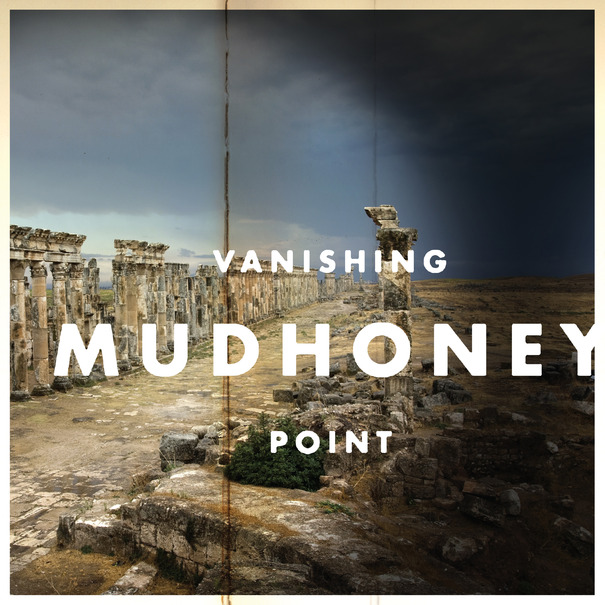
Now back to the title and album cover. The album cover is a photo that was taken by Emily Rieman of the ruins in Apamea, Syria, Arm revealed in an interview with Exclaim! He also said that the title was influenced by this photo referencing a movie where everything goes off into the distance, what many believe is the 70s’ B-Movie Vanishing Point. But this is an interesting point to leave you with when considering this album and Mudhoney as a whole. Like the end of the film Vanishing Point, many believe that Mudhoney had hit a wall in the 90s when signing to a major label, yet Mudhoney has risen from the so called ashes of their past evolving into something different and familiar at the same time. With Vanishing Point Mudhoney shows us that they still have the ability to sound like the Mudhoney that we used to love, but at the same time sound fresh and unspoiled.


----------------------------------------------------------------------------------------------

Another thing I would like to mention, last weekend at CJAM FM’s annual Jammy Awards I received a Lifetime Achievement award for my work with Revolution Rock and within the station and its community becoming the youngest programmer to do so. I initially started Revolution Rock in June of 2004, where it aired in the late night hours broadcasting from CJAM FM’s airwaves. The show started off dealing specifically with 70s Punk/New Wave, but over the years grew to incorporate other genres such as 60s Garage, Surf, Alternative, Indie and a variety of other associated genres, still remaining despite the genre in the attitude, realm and spirit of 70s Punk. In 2006, I started this blog. Its purpose was to have weekly posts which would profile a different band every week and also to host the play list and download links to the corresponding program for people to discover. This was before the term social media and facebook really started to affect the internet in a large way, this site too has grown to include exclusive interviews and content at times. I would like to thank CJAM FM, its staff and volunteers and anyone who has ever paid any interest in my show or website. While at first I didn’t think I had been at CJAM that long, nine years is a long time, a lifetime to some. Thanks CJAM!


This week's play list:

1. Paul Revere & The Raiders – Steppin’ Out
2. Chit Chat – Jelly
3. Tom Waits - Chicago
4. Captain Beefheart - Ella Guru
5. Syd Barrett - Octopus
6. Colleen Green – Only You
7. Japandroids - Fire's Highway
8. Mudhoney - I Like It Small
9. Mudhoney - Chardonnay
10. Johnny Cash – Remember The Alamo
11. Cellos – Feeding Through The Breathing Tube
12. Iceage - You're Nothing
13. Mission of Burma - New Nail
14. Big Black - Jordan Minesota
16. Sloan - Emergency 911
17. Deja Voodoo – Gotta Have Money
18. The Revolvers – Apocalypse Surfin’
19. Suuns - 20/20
20. Unicorns - I Was Born A Unicorn
21. Shotgun Jimmie - 3012
22. Simply Saucer - Instant Pleasure
23. Wreckless Eric - A Pop Song
24. The Gruesomes – The Deal

To download this weeks program, visit CJAM's schedule page for Revolution Rock and download the file for April 16. Or subscribe to Revolution Rock as a Podcast.

Tuesday, April 09, 2013

The Black Angels Go Indigo & Show # 451


Austin, Texas Psych Garage Rock band The Black Angels released their fourth full length album Indigo Meadow on April 2nd, 2013. On this album the band shows us their heavier Psychedelic side, adding more organ and Pop hooks, all mixed up in a sun baked Texas style haze. Many critics have claimed that this album isn’t really different from their previous releases, but this album slowly builds on the Psychedelic sounds of Phosphene Dream adding a new type of heaviness that some may classify as Grunge influenced, while at the same time reverting to catchy Garage Nuggets styled hooks.

“Indigo Meadow” opens the album, with its fuzzy bass, dissonant guitar parts and heavy pounding drum beats, as vocalist Alex Maas executes the lyrics “Always Indigo” in a Syd Barrett fashion, “Evil Things” comes in next which emphasizes the Grunge styled influenced that was mentioned earlier, but with enough of a Psychedelic edge to keep the listener hooked. This is one of the tracks in which critics have claimed is lacking in the lyrical department, however it is a song like songs the band has been writing for years as they strike an apocalyptic chord with their catchy choruses, Doors styled organ and lumbering fuzzy riffs. “Don’t Play With Guns” has been attracting ever since it was released as a pre-cursor preview to Indigo Meadow. The song moves along with its Horror movie organ stabs, swirling Psychedelic guitar supplied by Christian Bland, heavy distortion and a catchy chorus. Contrary to some beliefs this song, while it seems to be written based on the recent tragic mass shootings in Aurora, Colorado, it was written a year before this occurrence. However this song reveals a poignancy that any listener can identify with as it tells the story of Josephine. This was best described by vocalist Alex Maas on http://www.theblackangels.com/info:

“In ‘Don’t Play With Guns’ the antagonist is a female who has the power of persuasion over a man,” he continues. “Substitute the female antagonist with a Nation, substitute the manipulated man with yourself. Heed the warning: Don’t Play With Guns.”


Other highlights on this album include the slow, organ fuelled Psychedelic trip of “Holland”, The Nuggets-era Doors influenced “The Day”, “You’re Mine” is a catchy fuzzy Zombies/60s Garage Nugget-era induced track and one of the Poppiest tracks found on this album, as “I Hear Colors (Chromaesthesia)” drips with acid induced images and backwards sounding effects, building on sounds found on 2008’s Directions To See A Ghost. The album also addresses several political themed messages, not counting “Don’t Play With Guns”, on songs such as “War On Holiday” and “Broken Soldiers”. “War On Holiday” looms musically as lyrics such as “We’re wounding and dying/making no change” and “I found one of us/wounded yet fine/It’s sad how I found/We sleepwalking around” filter into the listeners mind, while “Broken Soldier” attacks with hypnotizing guitar/organ riffs. “Broken Soldier” features lyrics such as “It’s hard to kill when you don’t know whose side you’re on” and “Will you be the same when this is over/You’ll never be the same when this is over”, these lyrics coupled with the lyrics found on “War On Holiday” tap into the social subconsciousness that we are all thinking about regarding war, yet projecting the dark, yet realistic realities that these situations result in.

Indigo Meadow ends with the track “Black Isn’t Black” a song which hints that perhaps despite all this apocalypse-themed imagery that there is a glimmer of hope, ending the album in slow creepy intense, yet somewhat positive note. This is backed up when we hear the lyrics “Before I met you/Blackness everywhere” and “Girl when I see you/I think the world’s OK”. Overall, Indigo Meadow may have similarities to previous releases from the bands past, but it also gleams with its super production supplied by John Congleton (Explosions In The Sky, David Byrne & St. Vincent) emphasizing the growing development and journey that the band is to and has taken. While it may not be that obvious to some, Indigo Meadow blooms and burns slowly with profound insights, incandescent thoughts and Psychedelic goodness.


This Week's Play List:

1. Thee Oh Sees – Toe Cutter Thumb Buster
2. Brazilian Money – Slowly Soaking Up Some Rays On A Sofa
3. The Fabulous St. Knicholas Cage – Bloody Beach Blanket
4. Future of The Left - Stand By Your Manatee
5. Anagram - Favourite Place
6. PIssed Jeans - Cafeteria Food
7. Woodsman Orphan – One Year
8. Velvet Underground - I Found A Reason
9. Deerhunter - Memory Boy
10. Husker Du – Girl Who Lives On Heaven Hill
11. Orphan Choir – New Rituals
12. The Action – Downtown Boy
13. The Demics – The Grey And The Black
14. Ramones – She's The One
15. X-Ray Spex - Germ Free Adolescents
16. Gang of Four – Ether (Live The Second Chance, Ann Arbor, MI 1981)
17. Sam Coffey & The Iron Lungs – Do Ya Feel It Too?
18. Doldrums - Sunrise
19. Patti Smith Group - Distant Fingers
20. Sleater-Kinney - Dig Me Out
21. Black Angels – Indigo Meadow
22. Black Angels - Evil Things
23. Black Angels – The Day

To download this weeks program, visit CJAM's schedule page for Revolution Rock and download the file for April 9. Or subscribe to Revolution Rock as a Podcast.

Tuesday, April 02, 2013

50/50 ... The Strokes Comedown Machine & Show # 450


On March 26th, 2013, The Strokes released their fifth full length album Comedown Machine. Critics have been fast to jump on The Strokes hate wagon ever since 2003’s misunderstood Room On Fire, an album in which The Strokes first began to flirt with their 80’s influences and move forward beyond the Garage sounds of Is This It? This album is no different. Comedown Machine picks up from where 2011’s Angles started, also mixing in elements of Julian Cassablancas’ 2009 album Phrazes For The Young. The album starts off with the 80’s funkified rhythms of “Tap Out” as lyrics such as “Decide my past/Define my life/Don’t ask questions cause I don’t know why” come in, it brings the albums beginning into a different sounding, yet poignant lyrical context.

“All The Time” comes in next with its traditional Strokes Rock dynamics sounding like a song exhumed from the bands past, while a song like “One Way Trigger” is drastically different. With tropical sounding synthesizers ala 80s band A-ha "One Way Trigger" ventures in to an almost Electronica territory, a sound that is pushed throughout various moments of this album. “Welcome To Japan” is a song that has familiar classic Strokes song structures with their new sense of Angles-addled 80s dynamics and lyrics “Didn’t really know this/what kind of asshole drives a lotus” we are reminded of the deadpan humorous lyrics that made us first fall in love with The Strokes. “50/50” is a glorious Rock and Roll Strokes moment, one of the strongest tracks on Comedown Machine with lyrics “I will say/I will say/Don’t Judge me”, which couldn’t be more relevant to this album as a whole. Other interesting tracks of note are “80s Comedown Machine” a slow, synth almost Dub influenced track, “Chances’, “Happy Ending” sounding like a song from Room On Fire meets First Impressions of Earth, and the ending track “Call It Fate, Call It Karma”. This track is a song like “Ask Me Anything” on 2006’s First Impressions of Earth, in the context of it being so different with the overall songs found on the album. It is a slow tropical Jazz Pop track as the opening lyrics “Close the door/Not all the way” haunt us in Casablancas’ crooning, yet falsetto style.

Comedown Machine was recorded at Electric Lady Land Studios in New York, with the full band working together as opposed to 2011’s Angles in which singer Julian Casablancas deliberately removed himself from being present at the sessions. This album also marks the final album in the bands contract with RCA, causing some fans and critics to speculate in conjunction with the lyrical subject matter that this is the end of The Strokes. The band has also not scheduled any touring in support of this album as of yet, and there has been no press from the band members themselves. But some light was shed on this subject in a recent post on twitter by guitarist Albert Hammond Jr. in the tweet, Hammond was commenting on the artwork inside the album which features silhouettes of each band member, his tweet commented on the bands cycle with RCA and as a band in general stating: “The Strokes as a band cycle? Or just The Strokes on RCA cycle?” Obviously the RCA cycle”

Whether or not The Strokes will continue to make records time will tell, but it hasn’t been the first time a band has left their label and continued on in some other fashion. As a whole Comedown Machine sounds like a mixing of Room On Fire with Phrazes For The Young, using Angles as a starting point. Love it or hate it, Comedown Machine is a creative, yet fresh take on the bands old once heralded and established sound mixed with their new sense of 80’s obsessionism. While the title of the album may be Comedown Machine, that title is reserved for the ones that place The Strokes under a harsh lens. For all others Comedown Machine is in a completely different category or status, being a machine all of its own.


This week's play list:

1. David Bowie – Dirty Boys
2. The Strangers – Nice N’ Sleazy
3. Pete Shelley – In Love With Somebody Else
4. Lumina – I’ll Be With You
5. The Hoa Hoa’s - Falling In Love Is For Young People
6. Blackpool – Standing Over There
7. The Kingsmen – Haunted Castle Party
8. The Uprisers – Let Me Take You Down
9. The Cheap Speakers – Window
10. Ghostkeeper – Horse Chief! War Thief!
11. 100 Mile House – Last Call
12. The Men – The Brass
13. Guided By Voices -Little Whirl
14. The Wipers – Up Front
15. X – Nausea
16. Nick Cave & The Bad Seeds - We No Who U R
17. Vic Godard & The Subway Sect – Rock and Roll Even (A Different Story)
18. Elvis Costello & The Attractions – Party Girl
19. The Jam – In The Crowd
20. TEENANGER – The Ballad of Robert McNamarra
21. Pow Wows – Shock Corridor
22. The Strokes – 50/50

To download this weeks program, visit CJAM's schedule page for Revolution Rock and download the file for April 2. Or subscribe to Revolution Rock as a Podcast.

Tuesday, March 26, 2013

Jay Sad Disappears & Show # 449


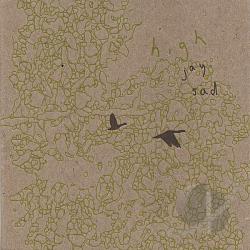
On February 19th 2013, Jay Sad released his full length album entitled Disappears. The album is an eleven track construction of songs ranging from genres such as lo-fi Indie Pop to Alternative and a variety of atmospheric sounding concoctions. Jay Sad has released several recordings starting in 2002.  A full length album was released in 2005 entitled High. It was his only commercially released album. All other releases since then have been on a more low key scale, mostly copies being passed around to friends and fellow musicians or being distributed online. It should also be noted that from approximately 2006-2012, Jay Sad (or Jason Sadlowski) owned and operated the Chemical Sound recording studio in Toronto along with another musician and friend Dean Marino (from the band Papermaps). The studio closed its doors after twenty years of operation in February 2012. Disappears is one of the last recordings to come from the beloved Toronto studio.

The band for this album was primarily Dean Pomeroy (drums, vibraphone), Rob MacDonald (guitar) and Jay Sad on vocals, guitar and a variety of other instrumentation. The album also features guest musicians from The Elwins (Mathew Sweeney), Dilly Dally (Katie Monk), and Drew Smith (The Bicycles). Disappears first seven tracks were recorded live to analog tape by Dean Marino who also helped to produce those tracks. The other four songs on the album were produced and recorded by Jay Sad. Given an internet-only release, Disappears starts off with the song “Three Floor’s/It’s Over”, which is the first of many architectural based song titles and structures found on this album. The song starts off on a heavy note with its dirty Alternative fuzzy sounding guitars and feedback as the drums keep a steady, yet sleazy pace in the background. "Good Health” follows next with its playful drumming, fuzzy bass and reverb drenched vocals. In addition to this, the song also features guest vocals from Katie Monks of Dilly Dally. The song is reflective, but caustic with lyrics such as “I was only trying to help/to keep us in good health for you”. “Only You” features Pop dynamics, it also portrays an almost Jazz trio vibe. As you listen to this song you can feel it as it was recorded, live to analog tape as the drums roll on, it is an almost rain sounding dynamic while bass, xylophone, guitar and vocals fill in the rest of this songs forecast.

“Home” is a slow paced yet melodic track seemingly about a relationship. The song captures the feeling of being away from home and feeling at home at the same time. With lyrics such as “This is home Toronto/For a while studio”, one can’t help but think of the connection to Chemical Sound that these lyrics evoke. “Shortwave In Spanish” is built up with a Spanish radio broadcast transmission as guitar arpeggios filter in and the song builds up to its late night feel while the lyrics “And in time I’m learning/And in time I’ll be fine” the songs lyrics and atmosphere build around the listener. Lyrically, the song portrays finding new forms of relevant communication in the modern world.

As the album wraps up, “Moving Day” calms the listener with its atmospheric Pop song grooves, acoustic guitars and distorted distant sounding drums. The final song on the album “Wood & Plaster” not only completes the album, but also the architectural building theme we were first introduced to with “Three Floor’s/It’s Over”. This song evokes experimental Musique Concrete influences as the background is filled with an intense distorted static landscape, while vocals and guitar fill in the rest of this nine minute piece. Lyrically the song is a reflection of the past and the present with lyrics such as “If you could go back you surely would/its something that you’ve thought of for a while/the memories that you have will all be gone”. The lyrics, as the title emphasizes, are about the making up of a structure whether physical or emotional. It poses the question of "if you were to take away the wood and plaster that makes up an important part of your past what would happen?" But as the song carries on we see that if you were to rebuild part of the past you would lose something. As Disappears ends we are reminded of the albums musical and lyrical structures that are built up around us. These songs suggest a growing or building, if you will, towards a new beginning, something different. Even if it means you have to disappear for a while from parts of your past that have been built up in order to get there.

The following questions were done between myself (Dave Konstantino of Revolution Rock) and Jay Sad of the band of the same name. We talk of the bands recording history and the making of Disappears:

RR: When was this album recorded and how long was the process? Who did you work on this album? For example producers, musicians?

JS: Seven of the eleven songs were recorded live by producer Dean Marino at Chemical Sound in 2 days; with Dean Pomeroy on drums and Rob MacDonald on guitar. He put us straight to tape: 2 guitars and drums. A few things were added here and there, but those 7 songs are pretty minimal / live.

The other 4 songs…

Three Floors and Good Health were done at Chemical by me.

Moving Day and Wood & Plaster were recorded at my place on my 4-track cassette deck.

Three Floors: Dean Marino played drums on this one, I added everything else. Originally this song had me playing 3 floor toms for the drum track, but then Marino did a really good job adding a real drum track.

Good Health: This is all me, except Katie Monks (Dilly Dally) sings in the last bit.

Home: Matthew Sweeney (The Elwins) added the some back-up singing in the verses.

Spirit Remover: Katie Monks (Dilly Dally) added vocals near the end of the song.

Can't Watch TV: Drew Smith (The Bicycles, Dr. Ew) added vocals to this one.

Shortwave in Spanish: Dean Marino added bass.

Moving Day: Matthew Sweeney (The Elwins) sings the chorus and added some piano.

Wood & Plaster: This was all me.

I got James Hicken to master the record for me. I also sent him a recording of an antique toy with instructions to play with the sound and put it in-between some songs at his discretion. The 7 band songs were recorded in 2 days in 2011. I don't know exactly when the other stuff done, around the same time though. Dean mixed the songs he recorded, but because it was hard to find the time it took us about a year to finish. And then I had other stuff to deal with so it was months later that I finally put it on the internet.

RR: How would you compare your new album 2013’s Disappears to 2012’s Demonstrations? Going back a bit further you had a full length album called High in 2005 how do the two differ?

JS: I hope that every record is better than the last. Technically (and sound-wise) the albums are different; but I'm always the same me.

The sound of "Disappears" is because of Chemical Sound.  While I was there I really wanted to try the live band thing because some of the best albums I've recorded at Chemical were live.  Working with Dean Marino pushes me to be more solid and accessible. Rob MacDonald and Dean Pomeroy are both trained musicians, so they also push me to be more precise with playing and structuring the songs.  They also add their own thing.  It's the most collaborative album I've done.

"Demonstrations" is a compilation of demos I did in the time between "Goes" and "Disappears".  Almost everything on "Demonstrations" is done in my apartment on a four track cassette machine.  I did it all by myself, and I guess that gives it a more personal feel than the studio stuff.  It's also more experimental. It was actually done with a very limited amount of gear; so I would do things like run an acoustic guitar through a broken mixer to get distortion, or record vocals in a stairwell to get reverb.  A lot of the time I would write the song right into the tape; verses the studio stuff where the songs are planned beforehand.  Also, a lot of the songs were taken from my contribution to a group I was in called "song club / song of the week".  This group was me and a few others musicians: members of The Elwins, The Bicycles… Every Monday we would send each other a new song. Since you had to do a new song every week, you ended up with some pretty wacky stuff.

"High" was the first and only album I actually manufactured and released. I sent copies to a few radio stations and reviewers, put it on CD baby, had a release show… "High" was done mostly by me alone.  Dean Marino helped, mixing a couple of songs, and adding drums to one song.  And drummer Silvana Bruni played on two of the songs. I also had an album between "High" and "Demonstrations" called "Goes".   "Goes" was recorded pretty much all by myself at Chemical. Dean Marino helped with some of it and Rob MacDonald played some guitar. I also had Krista Muir guest vocal on one of the songs.  I did it over the first couple years Dean Marino and I had Chemical. I never really officially released this record; I just made a handful of CDR copies.

There is also a series of CD's before "High" called "Spring 02", "Summer 02", "Fall 02", "Winter 02" [ie. I refer to them now as "02 demos"].  These were mini CD’s I made with hand screen printed cases.  Also, I made a few custom printed box sets. The "02 demos" were done by me alone on my 4-track cassette deck in 2002. These CDs are very lo-fi sounding.

Jay Sad Discography…

- Spring 02
- Summer 02
- Fall 02
- Winter 02
- High: 2005
- They Stole My Computer
2007
- Goes 2008
- Demonstrations 2012
- Disappears 2013

RR: What do you plan to do musically with Jay Sad in the future?

JS: I'm doing a "Jay Sad" show on April 17 at the Drake Hotel in Toronto.

Also, I'm writing and recording a new album with James Hicken (Wallscenery demos).  And I've started a new band with a female singer.

Listen to Jay Sad music here:


The Play List:

1. The Cave Singers – It’s A Crime
2. Twin Library – I Dare You To Leave
3. Neil Jarvis – Figure It Out
4. The Human Beings – An Inside Look
5. The Levis – Hear What I Say
6. The Bloody Five – (I Wanna Go To) New York City
7. Raised By Weeds – Fun And Games
8. Raised By Weeds – The Telephone
9. The Visible Targets – Just For Money
10. Pin Group – Ambivilance
11. Suuns – Edie’s Dream
12. Toy Love - Sheep (Live At The Gluepot 1980)
13. Link Wray – New Studio Blues (The Epic Sessions 1958-1961)
14. Legato Vipers – Angel Dust
15. The Bell Peppers – Bouddha
16. The Bell Peppers – 1959
17. Jay Sad – Three Floors/It’s Over
18. Jay Sad – Only For You
19. Jay Sad – Shortwave In Spanish
20. Diamond Rugs – I Took Note
21. Devo – Love Without Anger
22. Talking Heads – Electric Guitar
23. 999 – Emergency
24. The Clash – Radio Clash (Live Bonds Casino, NYC June 9th, 1981)

To download this weeks program, visit CJAM's schedule page for Revolution Rock and download the file for March 26. Or subscribe to Revolution Rock as a Podcast.

Tuesday, March 19, 2013

Reverse Shark Attack & Show # 448

 
“Life is a shotgun/It’s just gonna blow you away” is one of the lyrics in the title and final track on Ty Segall & Mikal Cronin’s album Reverse Shark Attack, the lyrics couldn’t be more potent and relevant to this album as a whole. The album was originally released in 2009 on the Kill Shaman record label on vinyl only. Reverse Shark Attack serves as a collaboration between two long time friends from Laguna Beach, California Ty Segall and Mikal Cronin. The two had previously been in numerous other bands before this point in 2009, Ty in The Epsilons, The Traditional Fools, Sic Alps, Mikal in Okie Dokie, The Moonhearts, Party Fowl they have both also recorded as solo artists. Mikal is also a member of Ty Segall’s live touring band the Ty Segall Band, playing bass and supplying back up vocals. The album is a mix of distorted lo-fi Garage, Psychedelic and Surf Rock influences, it also is overloaded with reverb drenched effects.

“I Wear Black” is the opener to this release, it is a short and powerful Garage/Stooges/Troggs influenced track with reverb drenched distorted vocals, guitars and feedback. It is executed in a way that is both lo-fi, yet psychedelic at the same time in terms of the effects. The next set of songs are short fast blasts of Rock and Roll with vocal harmonies such as “Drop Dead Baby”, “High School” which reflects a Garage Punk dynamic, and “Ramona” which is a drum heavy hyper Ramones influenced track,. “Bikini Babes” comes in as the third last track which switches up the pace on this sun baked, reverb filled album. “Take up Ty Stethoscope And Walk” is an almost note for note cover of the song of the same name from Pink Floyd’ Piper At The Gates of Dawn with added distortion of course. This Syd Barrett-era Pink Floyd track is an indication of where their Psychedelic influences come from, which has been later explored by both artists. Ty recently explored his Psychedelic influences in more detail on his collaboration with White Fence entitled Hair and also on his Goodbye Bread release in 2011.


The album ends with the ten minute opus “Reverse Shark Attack”, which when this album was originally released filled side B of the vinyl. The song is a mix of Beatles-esque Pop, Folk, Psychedelics, Garage and Surf all in one. As we reach the ending of the song it ends out in a distorted Surfy, Dick Dale sounding transmission. Lyrically the song tells a peculiar love story of sorts in which the narrator proclaims his love for someone, not wanting to ever let them go. But as she goes for a walk one day to clear her head on the beach, she never comes back. Assuming that she was attacked by a shark the narrator plots his revenge on the sharks for taking this love away from him, a reverse shark attack if you will. This is how the album ends, the lyrics “Life is a shotgun/It’s just gonna blow you away” come back to mind. When listening to this track that lyric with it’s loaded double meaning makes you think. With its ability to switch genres so seamlessly, this song is evidence of the developmental talent that both Ty Segall and Mikal Cronin possess.

When Reverse Shark Attack was originally released in 2009, it was put out on limited edition vinyl and it sold out very quickly. In The Red re-issued this album in January of 2013 along with another previous Ty Segall band/collaboration from his prolific past The Traditional Fools, a Surf/Garage group. Reverse Shark Attack proves to be a collaboration of two hyper prolific artists, this album sounds as if it were created after sitting in the sun too long resulting in a shambolic, yet fresh sounding collection of songs combining both Ty Segall and Mikal Cronin’s musical influences. Reverse Shark Attack grabs a hold of the listener and doesn’t let go even though its been four years since its original release. 


This Week's Play List:

1. Sam Coffey and The Iron Lungs – Have A 100
2. The Coastliners – I’ll Be Gone
3. Jan & Dean – Horace The Swinging School Bus Driver
4. The Reply – Better You
5. The Waldos – Busted
6. Alex Chilton – Just To See You
7. Steak House Mints – Don’t Mess With Me
8. Shotgun Jimmie – Growing Like A Garden
9. Wire – Love Bends
10. Boats – O Telescope
11. Papermaps – You Are My Gallows
12. The Evens – Sooner Or Later
13. Vice Creems – Won’t You Be My Girl
14. The Sonics – Maintaining My Cool
15. The Scenics – No Sleep
16. Travel Check – Tripping Waves
17. Carbonas – Butcher
18. The Adverts – Back From The Dead (BBC Session)
19. UK Subs – Tomorrow’s Girls (Single Version)
20. Undertones – Get Over You
21. Buzzcocks – I Don’t Mind
22. Paul Jacobs – Being Yourself
23. Paul Jacobs – Wrong Medication
24. Ty Segall & Mikal Cronin – High School
25. Ty Segall & Mikal Cronin – I Wear Black

To download this weeks program, visit CJAM's schedule page for Revolution Rock and download the file for March 19. Or subscribe to Revolution Rock as a Podcast.

Tuesday, March 12, 2013

The Painted Ship Will Hay Interview & Show # 447


Vancouver’s The Painted Ship sailed into the mid 60s with their own unique sound. Often described as Garage, the bands sound contained elements from the Psychedelic genres of the 60s, but also had an undeniable Punk chemistry which was supplied by their buckskin clad frontman, lead vocalist and songwriter Bill “The Captain” Hay. While the band did go through a few line up changes, Bill (or William) Hay stayed the only consistent member of the band.

The Painted Ship formed in 1965 and after playing around town for a bit, they signed a record deal with London/Mercury Records in 1966. The band produced two singles in 1966, the first being the Little White Lies/Frustration single. This single was recorded with the first line up of the group which featured Rob Rowden on guitar, Barry Rowden on drums, Ken Wain on Keyboards and of course William Hay on vocals. When recording the single, the song “Frustration” was initially intended to be the A-side, but this gritty organ driven track was flipped to the B-side after an odd situation where the band/management decided to change it without Hay’s knowledge. Ironically the title “Frustration” proved to be more accurate than expected when the single was released it became a regional hit in Vancouver going to #7 in the area on the singles charts. But it was not the A-Side “Little White Lies” that got airplay it was the B-side “Frustration” which was the originally intended A-side. The single also received some US airplay.

The bands second single, also released in 1966 was the And She Said Yes/Audience Reflections single. This single displayed the dynamicism of the band and emphasized Bill Hay’s intention of making music that was to be very different from the commercial R&B top forty that was overpopulating radio stations nation wide at the time. “And She Said Yes" is perhaps the bands rawest moment, the song starts with its marching like drum roll as the distorted guitar riff and Mr. Hay’s raw vocals which attack the listener. The song also features the bands intensifying organ parts that we first heard on the Little White Lies single. The vocals on this pre-Stooges romp are not unlike an early Iggy Pop. The B-side to this song is the “Audience Reflections” an organ, bass, drum and vocal driven track.  This song features no guitar, but hasplenty of psychedelic connotations and elements.

What happened next adds to the bands legend and mystery. Through a series of events a full length album was recorded and intended to get released through Polydor records, but the album was never seen or heard from again after being recorded. The band were told that the master tapes were lost in the mail while being sent. Since then people still wonder and probe this mystery as The Painted Ship has gone on to become a beloved band in Vancouver’s music history being placed alongside bands such as The Collectors and The Haunted. They hold a cult like status still being discovered to this day, and while it has been many years since The Painted Ship has set sail, the paint from The Painted Ship has still not peeled off. It is still intact as they are just as treasured today in Vancouver and other parts amongst Garage/Punk enthusiasts and fans as they were in 1966.

The following interview was done between myself (Dave Konstantino of Revolution Rock) and William Hay of The Painted Ship. We talk of the bands formation, their two singles, lost album and more:

RR: When did Painted Ship form and how did everyone meet?

WH: I was introduced to Rob (the first guitar player) by a mutual friend while we were both attending The University of British Columbia. The year is 1965. Over the weeks and months we talk when we bump into one another in the library. One day I tell him that I'm going to start a band. A very different kind of a band. I'd been writing a lot of poetry and I thought that it might be interesting to add some music (I'd played in a youth orchestra for 6 years) Rob played guitar in a club band that covered commercial R&B and his brother played the drums. We recruit, Ken on keyboards and the first incarnation of the band takes shape.

RR: What were some of the influences that brought the band together and how did you decide on your sound and band name?
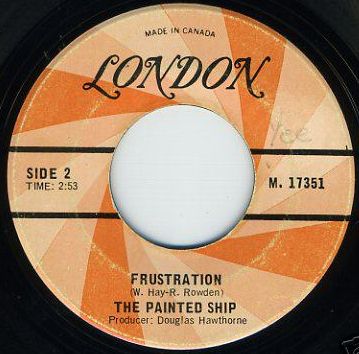
WH: Sadly, the musical influences that each individual brought with them would soon tear this first line-up apart. These were very good musicians but they did not have any real liking for the wild and wonderful tunes that I heard in my head. What happened with the first single is a perfect example. When I brought the ideas for “Frustration” and “Little White Lies” to the band I stated that “Frustration” would be the a-side. Everyone agreed. But the other band members did not like this song. One of the guys went out of his way to tell everyone how much he hated it.

Without telling me, they tell our manager to get London to place “Frustration” on the b-side. I knew nothing about this until I was driving in my car and heard “Little White Lies” played as the a-side. Betrayal. I'm pissed. It was just not the right mix of people.

The name "The Painted Ship" must have been taken from the poem "The Rime of the Ancient Mariner". Not consciously, but as I've stated I was reading and writing a lot of poetry. But, this is not our first name. The first name that I gave the band was "The Wee Beasties". We never performed under this name, we'd already become The Painted Ship by the time we recorded and started to perform.

The sound? I take full responsibility for it. These are the sounds that I heard in my head. This is what I wanted to write and record. Guilty!

RR: Painted Ship signed to the London/Mercury label how did that come about?

WH: London had an office in Vancouver so we decided to give them a try. The Canadian division of the company was good to us but the U.S. and European branches refused to release our second single. They said it was "too primitive and too weird".

RR: Painted Ship released two singles Little White Lies b/w Frustration and And She Said Yes b/w Audience Reflections. What was the inspiration behind these songs and were they both recorded at the same session or separately?

WH: At this point it's important to note that there were many different line-ups of musicians over the years. I was the only constant.

The first single was recorded by the first line- up.

“Frustration”. I wanted to explore the essential but "frustrating" tension between the push of enculturation and the pull of individuation. All of us must adopt at least a minimum of the beliefs of our culture in order to function. Yet, at the same time, it's just as important that we discover and nourish our individuality. This is the theme I was exploring enculturation vs. individuation.

“Little White Lies”. This is my realization of how relationships really are much different from the ridiculous, inane, sappy love songs that populate the top 40 charts.
The second single was recorded with a new line-up of musicians. Only, Ken, the brilliant keyboard player, remains from the first band.

“And She Said Yes”. Now, this is my idea of a love song. That's right a real, damn, love song. Pure testosterone joy.

“Audience Reflections”. I've always been involved with esoteric studies. This is our attempt to capture a particular meditative experience.
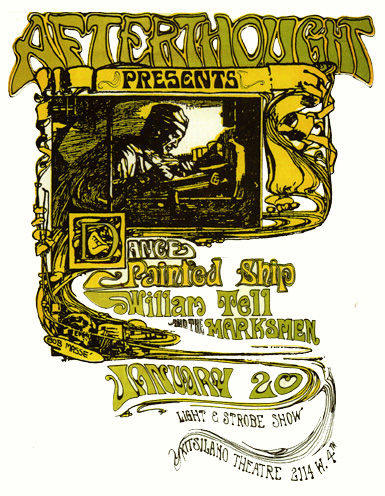
RR: What do you remember of how and when these songs were recorded? Who did you work with for these songs (for example producer, engineers etc.)?

WH: We were very lucky, Robin Spurgin owned and operated the Vancouver Recording Studio. He told me that he didn't really understand the type of music that we were bringing him but his job was to work the boards and get the best possible sound. He was a good guy and very good at what he did. He never tried to impose his values on us or try to make us more commercial. Everything was recorded on simple 4-track equipment.


RR: Were there any other recordings made with Painted Ship during these sessions that you can recall? I read online that the band did make some recordings for an LP and that those recordings were lost. Is that true and if so what happened to those recordings?

WH: It is true. We recorded an album for the London, England office of Polydor. I guess I'd better start at the beginning.

The Who and Herman's Hermits came to see one of our shows after they'd done a concert together. We hung out and talked afterwards and John Alec Entwistle (R.I.P.), the bass player for The Who, gave me the name of an English producer. John told me that this producer worked for Polydor and he thought that he would like the kind of stuff that we were doing. Over the next few months the producer and I talked back and forth over the phone. At his request I sent him some rough tapes that we'd made during a practice session. They were very rough but he liked what he heard and arranged for Polydor to pay for an albums worth of songs. This particular line-up of the band had amassed a lot of original material so it didn't take us long to finish the project.

Several weeks later I got a call from the producer. He had "good news and bad news". He really liked the songs and wanted to work with us but he'd been told that North American acts had to be handled out of a North American office.

He offered me a tempting proposition. If I'd come to London on my own he'd set me up with first class musicians and produce us for Polydor. It was flattering of course but I just couldn't desert the Vancouver boys in the band. I had to decline. The producer was disappointed but he said he understood and he'd send the master to Chicago.

And the mystery began. We were told that the master had been lost. No one knew exactly by who or how. But it was gone. And there were no copies.

RR: The bands sound has often been cited as having elements of what was to become known as Punk Rock. Many people when talking of the band often use the word Garage Punk to describe the sound. Do you feel that is an accurate description of your sound and how would you describe the music of Painted Ship?

WH: This is an interesting question. One I get asked from time to time. First, let me say that we never labeled ourselves. We just thought of our stuff as Painted Ship songs.
If I had to attach a label to our sound I'd say we were a PUNK band with a few weird psyche moments (who me?) I don't see us as garage. To me, the garage sound has a more traditional element of R&B running through it. Our stuff does not. I say we are pure punk. I think the garage label is attached to us because some people think that punk didn't exist when we played. They think that punk evolved some time later so we couldn't be a punk band. If you accept this idea than you'd have to put us in with the garage folks, I don't accept the idea. We were a punk band. Punk began long before some people think it did.

RR: It has been many years since Painted Ship has released new music, yet people are still listening to you guys. What do you think it is about Painted Ships music that has survived in the digital age and keeps people listening?

WH: Before I answer, on behalf of the many musicians who crewed the Painted Ship, I send huge hugs to everyone who supports our music. It is appreciated more than you could know.

I think some people see and appreciate the fact that we did it our way. We didn't try to be the Canadian Rolling Stones or the Canadian Beatles or copy anyone's sound. And we didn't buckle under the pressure to vomit out some idiotic commercial bullshit. Like us or hate us ; you have to admit that we were true to ourselves. I think this resonates with folks.

RR: Speaking of the digital age, what is your preferred format for listening to music (vinyl, CD, mp3s/digital)?

WH: I'm old school, I still prefer vinyl. Everything about it is better from the packaging to the warmer sound (and of course the crackles and pops). Having said this I have to admit that I did not replace my record player when it stopped working a couple of years ago

RR: What did you do after your days with Painted Ship? And what have you been up to recently?

WH: A couple of years after the lost album incident I received an unexpected call from Polydor. They informed me that their world convention was going to be held in Montreal and asked if I'd like to attend. They said that it would be an interesting experience because all of the top execs from around the world be there. I thought it over and decided to go. I did meet some good people and I was offered a job with the company. But, there is a problem. And it is not a small one. The record labels at this time were accepting little or no alternative music. I just didn't want to spend my life promoting or producing commercial crap. I had to decline the offer. I returned to Vancouver and pursued interests outside of music. But do not sit so comfortably gently reader. This does not mean that eardrums are safe. I have written more songs. And I have received kind offers from musicians who've said that they'd like to work with me.

Captain Will may set sail once again. Earplugs, people!!

Finally, a big hug to everyone who's supported us with their kind thoughts and attentive ears. Thank you.

This Week's Play List:

1. Queens of the Stone Age – This Lullaby
2. Psychic Ills – I Get By
3. Dog Day – Nothing To Du
4. Dee Dee Ramone – Negative Creep
5. Thighs – Russ
6. Idols – Reajean
7. Wayouts – Red Rover
8. Big Harp – You Can’t Save’ Em All
9. Neil Young – Don’t Be Denied
10. Painted Ship – Little White Lies
11. Painted Ship – Frustration
12. Painted Ship – And She Said Yes
13. Painted Ship – Audience Reflections
14. The Standells – Why Did You Hurt Me?
15. The Future Primitives – Sea of Words
16. Ty Segall – Imaginary Person (Live in Brooklyn, NY 2013)
17. Zebra Hunt – Sun Drenched Island
18. The Real Kids – Rave On
19. Lou Reed – Nobody’s Business
20. Ramones – It’s Not My Place (In The 9 to 5 World)
21. The Saints –One Way Street
22. The Victims – T.V. Freak
23. The Hives – State Control
24. The Gruesomes - My Dad's A Ho-Dad (Live)
25. Young Rival – Night Song

To download this weeks program, visit CJAM's schedule page for Revolution Rock and download the file for March 12. Or subscribe to Revolution Rock as a Podcast.

Tuesday, March 05, 2013

Foxygen, The Stems & Show # 446


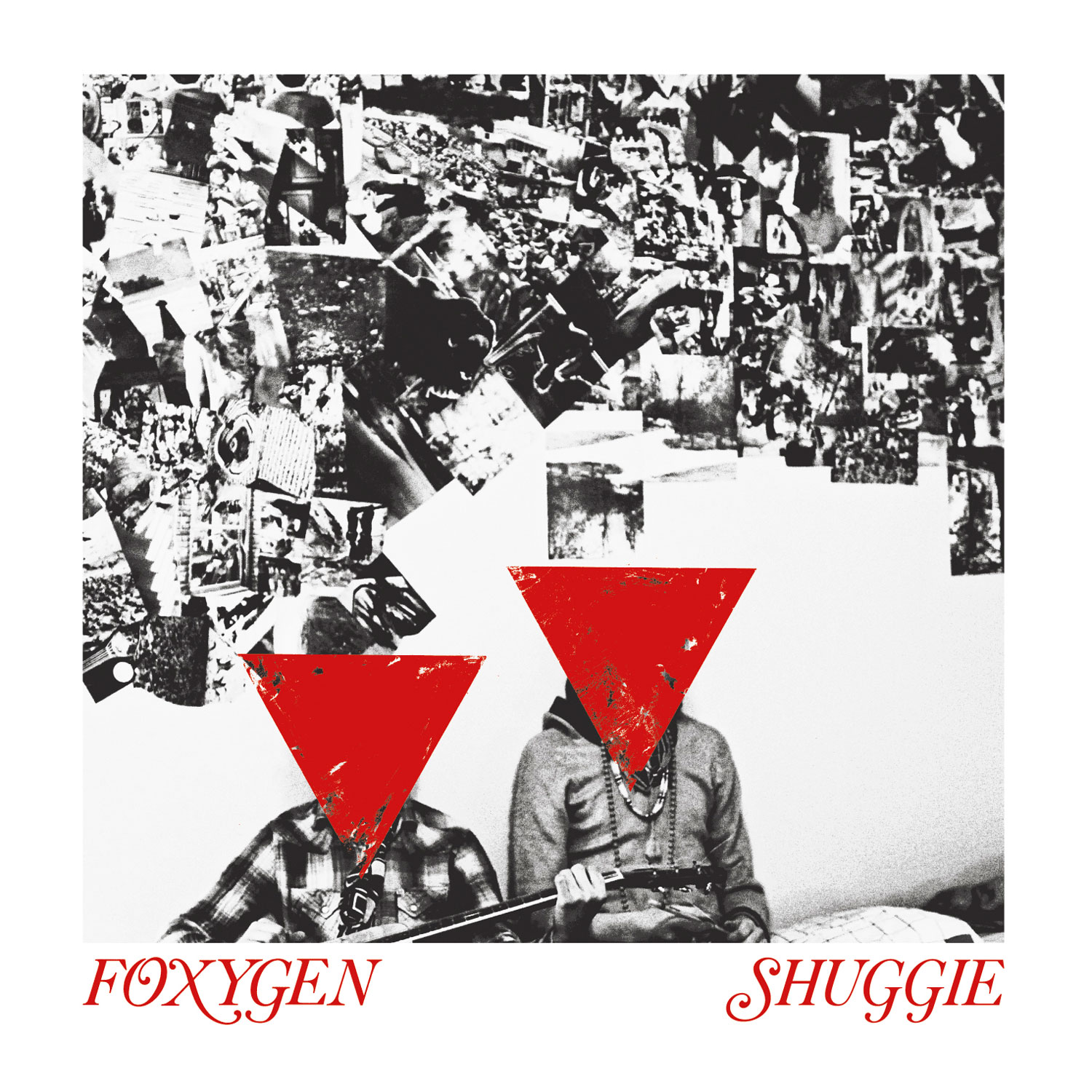
Foxygen is an American Indie Rock duo that recently has released their second full length album We Are the 21st Century Ambassadors of Peace & Magic on Jagjaguwar Records. The band initially started out in 2005 in Westlake Village located in California and their music is often called experimental. In the early days of the band they were labelled as very experimental, they released several EP’s from 2005 to 2011 many of which are now long out of print. The duo consists of Sam France (vocals) and Jonathon Radio (guitar/keys) and following the release of 2011’s Take The Kids Off Broadway, produced by American producer Richard Swift they were signed to Jagjaguwar Records. The bands sound mixes elements of 60s Psychedellia, Pop and Indie and draws influences from artists such as The Rolling Stones, The Kinks, Velvet Underground and David Bowie while adding an experimental twist. In 2012 Foxygen released their second full length album We Are the 21st Century Ambassadors of Peace & Magic, once again produced by Richard Swift and has received high acclaim following the release of its first single “Shruggie”.


The Stems are a Garage Rock band from Perth in Western Australia. They initially formed in 1983 drawing on 60s Garage and 70s Power Pop influences for a sound all their own. They released one full length album (At First Sight, Violets Are Blue in 1987) and an EP (Love Will Grow – Rosebud Volume 1 in 1986). The band also put out several singles, in 1985 they put out the Tears Me In Two/Can’t Resist single on Citadel Records. “Tears Me In Two” was initially recorded the sessions for their first single “She’s A Monster”. After interest developed in the band they signed to Citadel Records, released the “She’s A Monster” single and re-recorded the “Tears Me In Two” single which was produced by Rob Younger of Radio Birdman along with their Love Will Grow - Rosebud Volume 1 EP. The single apparently climbed the Australian Indie charts and reached number one in the late 80s. The song itself was a 60s fuzz driven Garage Punk explosion right down to the opening scream and authentic organ. The band split up in 1987, reuniting in 2003 and releasing a new full length album entitled Heads Up in 2007. The Stems are still currently active.


This week's play list:

1. Johnny Thunders & the Heartbreakers – Born To Lose
2. MC5 – Highschool
3. The Ramrods –Take Me Back To My Boots and Saddle
4. B-Girls – “B”Side
5. X-Ray Spex – Let’s Submerge (Live The Roxy London 1977)
6. The Unwanted – Freedom (Live The Roxy London 1977)
7. Craig Martinson – If I Had A Blame
8. Unknown Mortal Orchestra – From The Sun
9. Yo La Tengo – Ohm
10. A Volatile Mixture – Cinnamon Girl
11. Elliot Knapp – Instant Gratification
12. Smoke Faires – Three of Us
13. Adam and The Ants – Beat My Guest
14. Dishrags – Sold Out
15. Modernettes – Surf City Strangler (Live)
16. Lost Patrol – I’m Not The One
17. The Lyrics – They Can’t Hurt Me
18. The Canadian Rogues – Keep In Touch
19. Foxygen – Shuggie
20. The Damned – Born To Kill
21. Mystics – Bad Times
22. Paul Jacobs – You Got Soul (Demo)
23. Fruit Tones – One Foot Loose
24. The Stems - Tears Me In Two

To download this weeks program, visit CJAM's schedule page for Revolution Rock and download the file for March 5. Or subscribe to Revolution Rock as a Podcast.
Tuesday, February 26, 2013

The Ventures Walk Don't Run & Show # 445


Walk Don’t Run was the debut album released in 1960 by the instrumental Rock and Roll group The Ventures. Coming from Tacoma, Washington The Ventures had a big hit with the song “Walk Don’t Run”, it went to number two on the Billboard singles charts, but the beginnings of this song and album is a story just as impressive as their forty plus album career. The band had its beginnings in the late 50s, 1958 to be exact. Bob Bogle first met Don Wilson in 1958 at a car dealership of all places, and after finding they had a common interest in music they decided to form a band. They then added Nokie Edwards on bass and Skip Moore on drums. Initially going by the name The Versatones, they began playing clubs in the Northwest Pacific area of the USA.

It was when they first heard the song “Walk Don’t Run” on a Chet Atkins album that they decided to record their own version of it. The song was originally by Jazz guitarist Johnny Smith and although the Chet Atkins version was different The Ventures put their own spin on this song making it their own. They originally recorded a rough demo version of the song and it was rejected by Dolton Records. Not being deterred, the band recorded a single in 1959 entitled "Cookies and Coke" backed with the song "The McCoy", but it failed to chart. They recorded “Walk Don’t Run” and self financed and released the single themselves on their own Blue Horizon label, but it wasn’t until it got airplay on KJR a radio station in Seattle by a DJ prior to a news broadcast that they took off. As soon as it got played people called in, including the man from Dolton Records that previously turned down the band. The song became an unexpected hit when it was released as a single climbing to the number two spot on the Billboard singles charts.

The band was launched into a tour immediately to capitalize on its success, but before they did the band laid down tracks for their first full length album. The band decided to record a collection of original songs and cover songs reworked in their own style, which were essentially their favourite tracks from their live sets. The album was record so quickly that the band didn’t even have time to be photographed for its cover. On the cover of Walk Don’t Run, the men in the background are not the band at all, but in fact people that worked in the stock room at Liberty Records. Don Wilson had this to say of the albums cover as quoted on donwalker.net:

"When we did the first album, they didn’t have any pictures of us because we went on the road right away. In our place they used a picture of the guys who worked in the stock room downstairs at Liberty. They put dark glasses on them and had them falling over the drums and stuff. They put some pretty model walking by in the forefront so no one would notice their faces."

The songs that would appear on Walk Don’t Run were different. Being 1960 The Ventures instrumental sound would be associated with Surf Rock and was something of note. It would be greatly influential on the music of the late 60s. Bob Bogle initially was the lead guitarist, but would switch to bass when Nokie joined the group, Don Wilson was on rhythm guitar. The songs on this album do have certain intensity, one that you can tell by listening was not only different, but bound to be influential. The sounds on Walk Don’t Run were developed and later used in elements of bands of the 60s British Invasion. Bob Bogle had this to say of the bands reworking of cover songs, original material and the bands style in Classic Tracks from an article by Gary Eskow for Mix Magazine:

“No matter what we play, we ‘Venturize’ it,” says Bogle. “It's certainly fair to say that our music is not R&B. Everything we do has an aggressive, driving sound, but it's not the kind of aggression you hear with rock groups that feature a distorted guitar.”

The albums recording process was also unique in that it was recorded on a 2 track Ampex recorder by Jon Boles. Don Wilson had this to say of the recording process of the Walk Don’t Run album in the book Classic Tracks from an article by Gary Eskow for Mix Magazine:

“Joe Boles used a 2-track Ampex recorder,” Wilson recalls. “He was a very good engineer who had recorded a couple of Number One hits — ‘Come Softly to Me’ and ‘Mr. Blue’ — for The Fleetwoods. Joe always used a tape-based delay effect. When you're using a 2-track tape player without a board, there's a lot less going on in the recording process, but Joe had plenty of tricks up his sleeve. He'd even mike the pick sound when you were playing! We were so impressed with him that we recorded our first two LPs there."

Regardless of the issues in which this album was created its title could not be more representative of The Ventures career as a whole. While initially the band was not accepted to a label, they took their time and self financed and released their own singles until “Walk Don’t Run” caught Dolton Records attention. They would eventually go on to record over forty albums and chart numerous times in the US. The band also has the distinction of being the best selling instrumental Rock group in the US and would again rise to popularity when they recorded the theme for the television show Hawaii Five-O.  The Ventures also have a devout following in Japan and despite some line up changes throughout the years, they still remain active to this day. By not running into the music business and continuing to make music their way, The Ventures walked their way right into the Billboard charts and into Rock and Roll music history.


This week's program also featured a special segment by Derk Brigante a good friend of mine and formerly of CJAM's SURFphony of Derstruciton. He currently has restarted his blog and has begun doing exclusive Surf podcasts. Check out his SURFphony blog, for podcasts and other Surf related goodness.

Revolution Surf Play List:

1. Kenny & The Fiends – Moon Shot
2. The Surfdusters – Phantom Train
3. Spring Break Shark Attack! – The Great White
4. The Lancasters – Earthshaker
5. The Journeymen – Rum Runner
6. The Sentinals – Big Surf
7. The Astronuts – Montezuma
8. The Treblemakers – The Grudge
9. The Bambi Molesters - Hot Water Pool
10.Takeshi Terauchi - Cruel Sea
11.The New Dimensions - The Phantom Skier
12.The High Tides - On Desert Sands
13. Luau or Die! - Launch Code 2 4 5 10
14. Vampire Beach Babes - Dropping Da Curl
15. The Kustom Kings - Firecracker 400
16. Legato Vipers - Rat King
17. Legato Vipers – Brian's Beard
18. PJ and The Galaxies – One Mint Julep
19. The Impacts – Church Key
20. The Ventures – Raunchy
21. The Ventures –Walk Don’t Run
22. The Ventures - The McCoy
23. Shadowy Men On A Shadowy Planet – I Know A Guy Named Larry
24. Shadowy Men On A Shadowy Planet – Siesta Cinema
25. Thomm Starr & The Galaxies – Heatwave
26. Link Wray – The Earth Is Crying
27. Traditional Fools – Davey Crockett
28. The Tornadoes - Bustin' Surfboards
29. The Lively Ones - Surf Rider
30. The Bell Peppers – Tourettes
31. The Bell Peppers – Gravy Trainers (Demo)

To download this weeks program, visit CJAM's schedule page for Revolution Rock and download the file for February 26. Or subscribe to Revolution Rock as a Podcast.

Tuesday, February 19, 2013

Subterranean Pop & Show # 444


Sub Pop has a deep history, before becoming the label that produced releases by the Seattle Grunge music scene it had its beginnings as a fanzine. Its beginnings were in a radio program on KAOS FM in Olympia, Washington put forth by Bruce Pavitt. Calling his program Subterranean Pop he released his first fanzine issue of Subterranean Pop as an extension of the radio program in 1980 discussing a variety of independent and underground artists in the US. By the fourth issue the fanzines title was shortened to Sub Pop, which would stick as a name. With these fanzines in alternating issues there would be a cassette compilation tape, the fanzine would last for nine issues. Alternatively, Jonathan Poneman was a music promoter and DJ on KMCU FM a public radio station in Seattle.


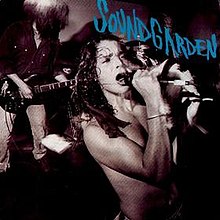
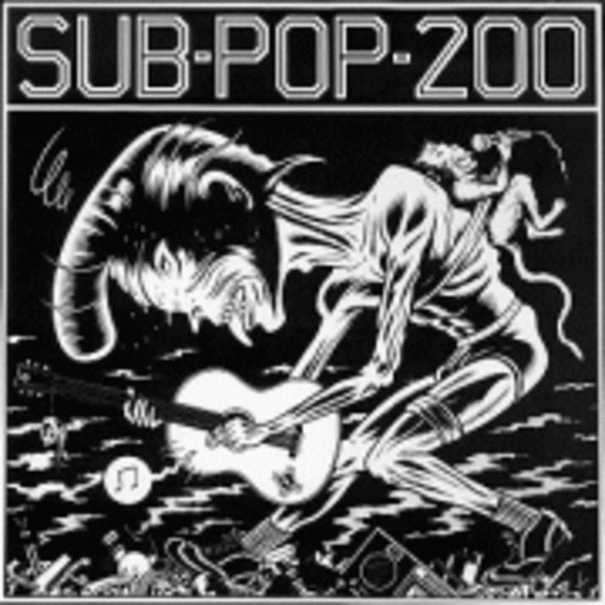
The two joined forces to create Sub Pop as a label and brand. Coming together to release Soundgarden’s Screaming Life EP, both Poneman and Pavitt quit their day jobs and opened up shop in Seattle’s Terminal Sales building in 1988. Pavitt had put together the Sub Pop 100 compilation album in 1986, but when they opened up office in Seattle in 1988 this is considered the beginning of the label.  It should also be noted that Sub Pop put out the Sub Pop 200 compilation album in 1988.  Bruce Pavitt and Jonathan Poneman put together a look and brand that had a specific style. Jack Endino was hired as producer and Charles Peterson as the photographer, together the two would help to create a sound and look that would become what the label was known for in a similar fashion to record labels such as Motown and SST. Poneman and Pavitt were also on the cusp of a cultural phenomenon that would be labelled Grunge. Sub Pop put out music by artists such as Mudhoney, Soundgarden, Tad, Nirvana and countless others. They had to work for their status and reputation often times dealing with financial difficulties, but they kept their dream alive by always finding ways to put out music by their emerging roster.

Nirvana signed to Geffen in 1991 after releasing a few recordings most notably 1989’s Bleach. As part of the deal Sub Pop would get a 2 percent royalty from Nirvana’s next two albums (due to a previous contract that the band had with Sub Pop), one of which was the multi-million dollar seller Nevermind. Following that point Sub Pop continued to release albums from different and interesting independent artists not just from Seattle. In 1995, Bruce Pavitt left Sub Pop to spend more time with his family selling all but one percent of his ownership in the business. The label went through a somewhat turbulent period at this point in time from about 1995 to the early 2000’s where they had opened offices on a world wide scale and had major label support. But Sub Pop came out on top eventually with the assistance of its staff and vice president Megan Jasper who helped Poneman and the label refocus. The label continued to release music during these times.  Sub Pop had a Singles Club which would last from 1988 to 1993 and then again 1998 to 2002. During this time the label put out singles by bands such as White Stripes, Flaming Lips, L7, Ron Sexsmith, Modest Mouse, Fugazi. They restarted the Singles Club for one year in 2008 to celebrate their 20th anniversary.

Currently Sub Pop is host to new artists such as Fleet Foxes, Jaill, No Age, Wolf Parade, Pissed Jeans, The Ruby Suns and many others. In 2013, Sub Pop turned twenty Five years old and has managed to thrive and persevere through the adversity that they faced. When Subterranean Pop was started back in 1980 as a fanzine it was out of a love of independent American record label releases, Sub Pop is now a beloved American record label. They even have a subsidiary label now entitled Hardly Art, which was launched in 2007. In 1995, Pavitt declared in a statement that Sub Pop had a goal of building “into a label that combines the vision of an indie with the clout of a major” and that is exactly what they have done.

For more information on the label and their releases check out their official website.

Sub Pop Play List:

1. The Day And Nights - Split (Sub Pop 200 - 1988)
2. Jaill - Everyone's Hip (That's How We Burn - 2010)
3. Cool Rays - Diary of You (Sub Pop 5 Cassette - 1980)
4. Zumpano - Orange Air (Wraparound Cool - 1994)
5. Hot Hot Heat - No, Not Now (Make Up The Breakdown - 2002)
6. Obits - Let Me Dream If I Want To (Let Me Dream If I Want To/The City Is Dead - 2012)
7. Sonic Youth - Kill Yr Idols (Sup Pop 100 - 1986)
8. Scratch Acid - Greatest Gift (Sup Pop 100 - 1986)
9, L7 - Shove (Shove/Packin' A Rod - 1990)
10. Soundgarden - Sup Pop Rock City (Sub Pop 200 - 1988)
11. Green River - This Town (Dry As A Bone - 1987)
12. Eric's Trip - Anytime You Want (Love Tara - 1993)
13. Sebadoh - Rebound (Bake Sale - 1994)
14. White Stripes - China Pig (Party of Special Things To Do/China Pig/Ashtray Heart - 2000)
15. Iron & Wine - Dearest Forsaken (Around The Well - 2009)
16. Jungle Nausea - Job Club (Sub Pop 5 Cassette - 1980)
17. Jason and The Nasheville Scorch - Broken Whiskey Glass (Sub Pop 7 Cassette - 1982)
18. Reverend Horton Heat - Psychobilly Freakout (Smoke 'Em If You Got 'Em - 1991)
19. The Shins - Know Your Onion! (Oh, Inverted World - 2001)
20. Pissed Jeans - Romanticize Me (Honeys - 2013)
21. Wolf Parade – You Are A Runner And I Am My Father's Son (Apologies To Queen Mary - 2005)
22. Handsome Furs - Cannot Get Started (Plague Park - 2007)
23. The Go - Meet Me At The Movies (Whatcha Doin' - 1999)
24. Dum Dum Girls - Bhang, Bhang, I'm A Burnout (Bhang, Bhang, I'm A Burnout/Last Caress - 2010)
25. Nirvana - Been A Son (Blew EP - 1989)
26. Mudhoney - In 'n' Out Of Grace (Superfuzz Bigmuff EP - 1988)

To download this weeks program, visit CJAM's schedule page for Revolution Rock and download the file for February 19. Or subscribe to Revolution Rock as a Podcast.

Tuesday, February 12, 2013

The Ugly Ducklings "Nothin'" & Show # 443


“Nothin’” was the first single released by The Ugly Ducklings, a Garage Rock band that originated from the Yorkville section of Toronto. This raw sounding single was released in 1966 on the York Town label and was recorded in the style of British R&B bands such as The Rolling Stones, The Kinks and The Yardbirds. The song is often called a Proto-Punk classic and everything about the song rectifies that statement whether lyrically or musically. The song was recorded in just a couple of hours by this five piece Canadian Garage group and self funded by guitarist Roger Mayne for just over $300. The song was recorded live with few overdubs to capture the bands live sound on tape. Singer Dave Bingham had this to say of the song and its content in book The Top 100 Canadian Singles by Bob Mersereau:

“I was one of those guys that was always rebelling against something. So Roger and I thought, what are gonna write about? Because we really hadn’t lived a life yet that we could write about, so I said “Why don’t we write about nothin’?” The idea of writing a song called “Nothin” was just perfect and anti to me.”


Shortly after its release (backed with a cover of Bo Diddley’s “I Can Tell”) the single was a small local hit in Toronto reaching number 70 on the Canadian singles charts. The Ugly Ducklings would release several singles and one full length album entitled Somewhere Outside. In 1967 they released the single “Gaslight” which was an even bigger success across Canada reaching number 17 on the RPM Charts and #1 at CHUM 1050 AM in Toronto. Following the “Gaslight” single the band broke up in 1968. The Ugly Ducklings experienced a resurgence in popularity by the late 70s Punk scene and would reform around this time releasing an album entitled Off The Wall in 1980. Most recently an album was released called Thump & Twang which was a series of live studio demos that were going to make up a second album following 1967’s Somewhere Outside, but once the band broke up in 1968 the album was scrapped. “Nothin’” still remains a lost Canadian Garage cult classic and was featured on numerous Garage compilation albums. While it may not be that well known these days, “Nothin’” stands on its own as a Garage Rock song filled with a rebellious R&B Punk attitude, lyrically it emphasises the need to rebel against a bad relationship in order to have personal freedom, even if that results in having nothing.

This Week's Play List:

1. Painted Ship – And She Said Yes
2. King Beez – Found and Lost
3. The Secrets – Cryin’ Over Her
4. 49th Parallel – Citizen Freak
5. The Cryptics – You’re Evil
6. The Ten Commandments – Not True
7. The Bohemians – I Need You Baby
8. The Esquires – It’s A Dirty Shame
9. Tom Northcot Trio – Just Don’t
10. Munks – Long Time Waitin’
11. The Worst – Get That Thing
12. The 14th Wray – Your Face Is On My Mind
13. The Polyester Explosion – Madeline
14. The Beaumonts – She Treats Me Right
15. The Smugglers – That Is Rock ‘N’ Roll
16. Prehistoric Cavestrokers - You're In You're Out
17. The Legend Killers – Born Loser
18. Deja Voodoo - Monsters In My Garage Got Married
19. Great Scots – Ball & Chain
20. The Haunted – 1-2-5 (Original Version)
21. The Northwest Company – Eight Hour Day
22. The Gentle Touch – Visitors Parking Only
23. The Ugly Ducklings – Nothin’
24. The Ugly Ducklings – I Can Tell
25. The Ugly Ducklings - Gaslight
26. The Gruesomes – I’m Searching

To download this weeks program, visit CJAM's schedule page for Revolution Rock and download the file for February 12. Or subscribe to Revolution Rock as a Podcast.

Tuesday, February 05, 2013

Miles Davis Kind of Blue & Show # 442

 
Kind of Blue was released by Miles Davis in 1959 and has gone on to be called one of the greatest Jazz albums of all time and one of the most commercially successful Jazz albums ever. But what is it about this album that makes it so great and what is it that makes people respond this way? The road to this album was a long one, Miles had previously released music in a Hard Bop Jazz style prior to this albums release in 1959. After years of playing that particular style of Jazz he began to grow disillusioned and dissatisfied with it, Miles felt as he said in Ashley Khan’s Kind of Blue: The Making of The Miles Davis Masterpiece that the complexity of the chord structures in the songs were limiting his creativity. Here is a quote from Miles Davis from that book that elaborates more on what I am referring to:

"No chords ... gives you a lot more freedom and space to hear things. When you go this way, you can go on forever. You don't have to worry about changes and you can do more with the [melody] line. It becomes a challenge to see how melodically innovative you can be. When you're based on chords, you know at the end of 32 bars that the chords have run out and there's nothing to do but repeat what you've just done—with variations."

Miles Davis began to experiment with a new style of Jazz which stripped away this complex structure simplifying what he did, as a result leaving more room for improvisation within each song. Not to get too technical, but the style is based on Jazz Modal scales and structures. This style was first experimented and recorded on 1958’s Milestone. On this album Miles first ventured into the aforementioned Jazz Modal style which he would expand on more on Kind of Blue. Kind of Blue was made up of two recording sessions both done at Columbia 300th Street Studio in New York City. The first three tracks (“So What”, “Freddy Freeloader”, “Blue In Green”) were all recorded on March 2nd, 1959, while the last two tracks (“All Blues” and "Flamenco Sketches”) were recorded on April 29th, 1959. Another interesting fact about this album is that all of the tracks featured on this release are the first recorded takes of the song. This is partially due to two factors one, the band that is found on these recordings and two, the process in which these songs were created and recorded.

For these songs the band had no idea what they were going to sound like prior to recording them, the were only given what was commonly referred to as “sketches” by Miles Davis which were given to the band just before recording the songs. They weren’t told specifically what the songs were going to be, but given a general idea of what was to be played. The band was made up of an all star cast of musicians John Coltrane and Cannonball Adderley on sax, Paul Chambers on bass, Jimmy Cobb on drums and of course Miles Davis on trumpet. The combination of experienced musicians and improvisation on each song captured a certain spontaneity that people identified with. The atmosphere and mysteriousness that is captured on this recording is part of what makes it so beloved, because even non Jazz fans know about it and like it. Kind of Blue was released on August 17th, 1959 and greatly influenced and helped to shape the future of Jazz music and music in general going beyond Jazz having a huge impact on Rock and Classical music genres. Even more than fifty years after its release people are still discovering Kind of Blue and talking about it.


This Week's Play List:

1. John Coltrane – Village Blues
2. Sun Ra – Enlightenment
3. John Lee Hooker – Devil's Jump
4. Leadbelly – Ella Speed
5. Marie Knight – Come On Baby
6. Dave Bartholomew – Hey Hey
7. Burning Spear – Marcus Garvey
8. James Eastwood – Darkest Night
9. Tawny Reed – Needle In A Haystack
10. Chuck Berry – Tulane
11. Albert & Charles Bedeaux– Weird
12. Rudy Greene – Wild Life
13. James Berry – Spider Bite Blues
14. Grant Green – Speak Low
15. Miles Davis – Freddie Freeloader
16. Miles Davis – Blu In Green
17. Otis Redding – You Don't Miss Your Water
18. U-Roy & The Tree Tops – Do It Right
19. Howlin’ Wolf – Moanin’ At Midnight
20. James Brown – I Can’t Stand It


To download this weeks program, visit CJAM's schedule page for Revolution Rock and download the file for February 5. Or subscribe to Revolution Rock as a Podcast.

Friday, February 01, 2013

Coming Up on Revolution Rock in February 2013!

February is once again theme month for Revolution Rock. This year I will doing four themed shows (one for each week in February). Each program will air on a Tuesday from 10:30-Noon and can be streamed/listened to online via www.cjam.ca or on the FM dial at 99.1 FM in the Windsor/Detroit area.

The shows will be as follows:

Revolution Rock Celebrates Black History Month – Miles Davis’ Kind of Blue
February 5th, 2013
10:30 AM - Noon
CJAM 99.1 FM (www.cjam.ca)

In the last few years I have started off theme month on Revolution Rock by celebrating Black History Month and venturing into genres that aren’t normally featured on the show such as Jazz, Blues, Soul, R&B, Reggae, etc. This year I will be playing a mix of those genres, but also focusing on Miles Davis’ Kind of Blue from 1959. I will be playing a selection of tracks from this highly influential and breakthrough album.


Retro Canadian Garage
February 13th, 2013
10:30 AM - Noon
CJAM 99.1 FM (www.cjam.ca)

While Revolution Rock usually features Garage Rock weekly, this program will feature tracks from Canadian Garage Rock bands from the 60s-80s and perhaps some bands from the 90s. It is specifically a look at Garage Rock from Canada’s past, not present. Expect to hear music from The Ugly Ducklings, The Gruesomes, The Haunted, The Northwest Company, Painted Ship and more!


Sub Pop Rock City
February 20th, 2013
10:30 AM - Noon
CJAM 99.1 FM (www.cjam.ca)

Sub Pop Records started out as an independent record label in 1986 by Bruce Pavitt and Jonathan Poneman in Seattle, Washington. The label was host to the Seattle Grunge music scene and has released music by Soundgarden, Mudhoney, Nirvana and countless others. Since then the label has expanded their roster releasing several albums by other bands mostly in the Indie Rock related genres.  They have put out releases by bands such as The Shins, Fleet Foxes, Fugazi, Shabazz Palaces, No Age, Jaill and several others. This program will focus on a selection of recordings that have been released by this wonderful label known as Sub Pop.


Revolution Surf (The 7th Edition)
February 27th, 2013
10:30 AM - Noon
CJAM 99.1 FM (www.cjam.ca)

I originally started the annual Surf program seven years ago as an excuse to play only Surf music on the program, I have since then incorporated it with a variety of other genres for that matter into the programs format, but still stick to this yearly special. This year will be no different. This February will mark my seventh annual Surf Rock program on CJAM FM. I will be playing a variety of new and old Surf bands focusing on The Ventures Walk Don’t Run album, which was originally released in 1960. The program will also feature a segment from Derk Brigante formerly of CJAM's Surfphony of Derstruction. He recently made a new postcast which can be heard at his blog here.